Arthrobacter corchori, a new species of bacteria capable of degrading high concentrations of herbicides
Published in Microbiology
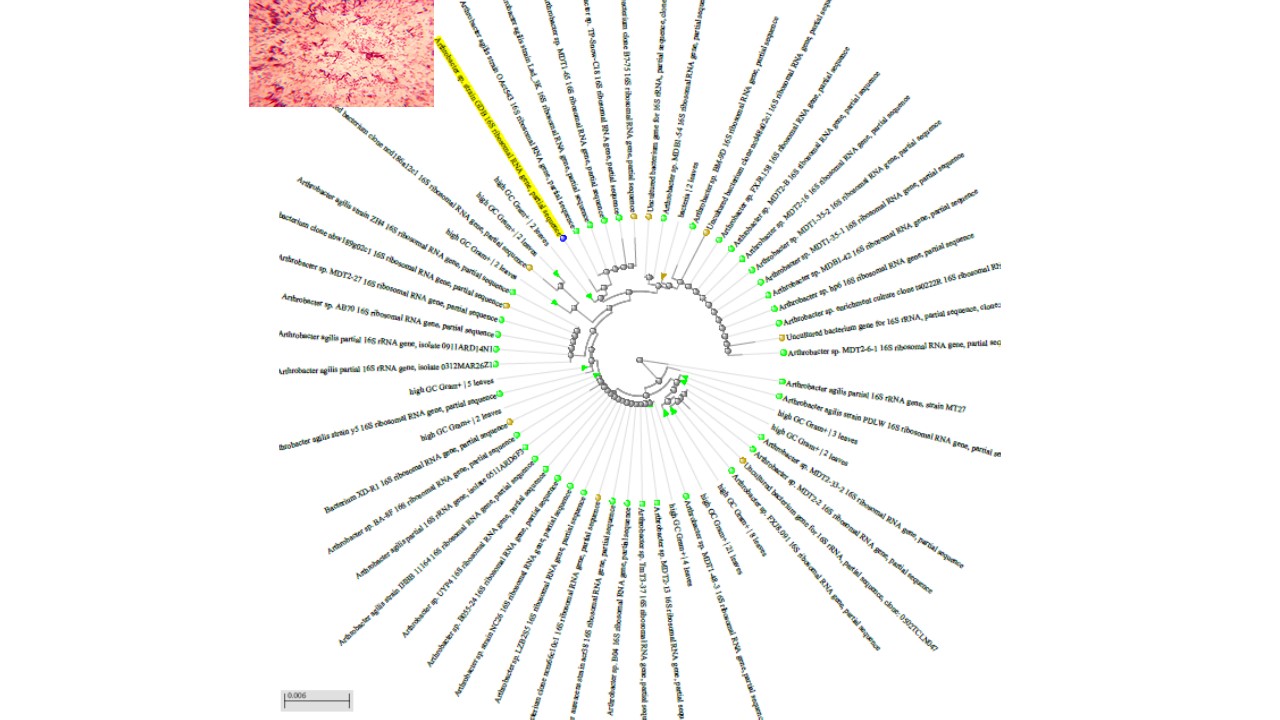
A novel herbicide degrading bacterial isolate LK1, strain GDB, which could grow on high concentrations [up to 30 ml l-1 Glyphosate and up to 12 g l-1 2,4-Dichlorophenoxyacetic acid (2,4-D)] of herbicides was isolated from jute (Corchorus olitorius) rhizosphere in Barrackpore, India. The isolate was obtained from soil suspensions that had been selectively enriched with gradually increasing concentrations of herbicides. The isolate was Gram-positive, non-motile, rod-coccus and formed creamy white colonies on Luria agar plates. Phylogenetic analysis, based on 16S rRNA gene sequence, revealed that the isolate had highest similarity (99%) with Arthrobacter agilis (strains OAct543 and Lad_3K). The isolate formed a separate lineage with A. agilis in the genus Arthrobacter, but out-branched. Physiological and biochemical properties clearly differentiated the isolate from A. agilis and represented a novel species in the genus Arthrobacter. The name Arthrobacter corchori sp. nov. is proposed for this species with the type strain, GDB.


Please sign in or register for FREE
If you are a registered user on Research Communities by Springer Nature, please sign in