Editor Stories: Dr. Roberto Giambò
Published in Physics

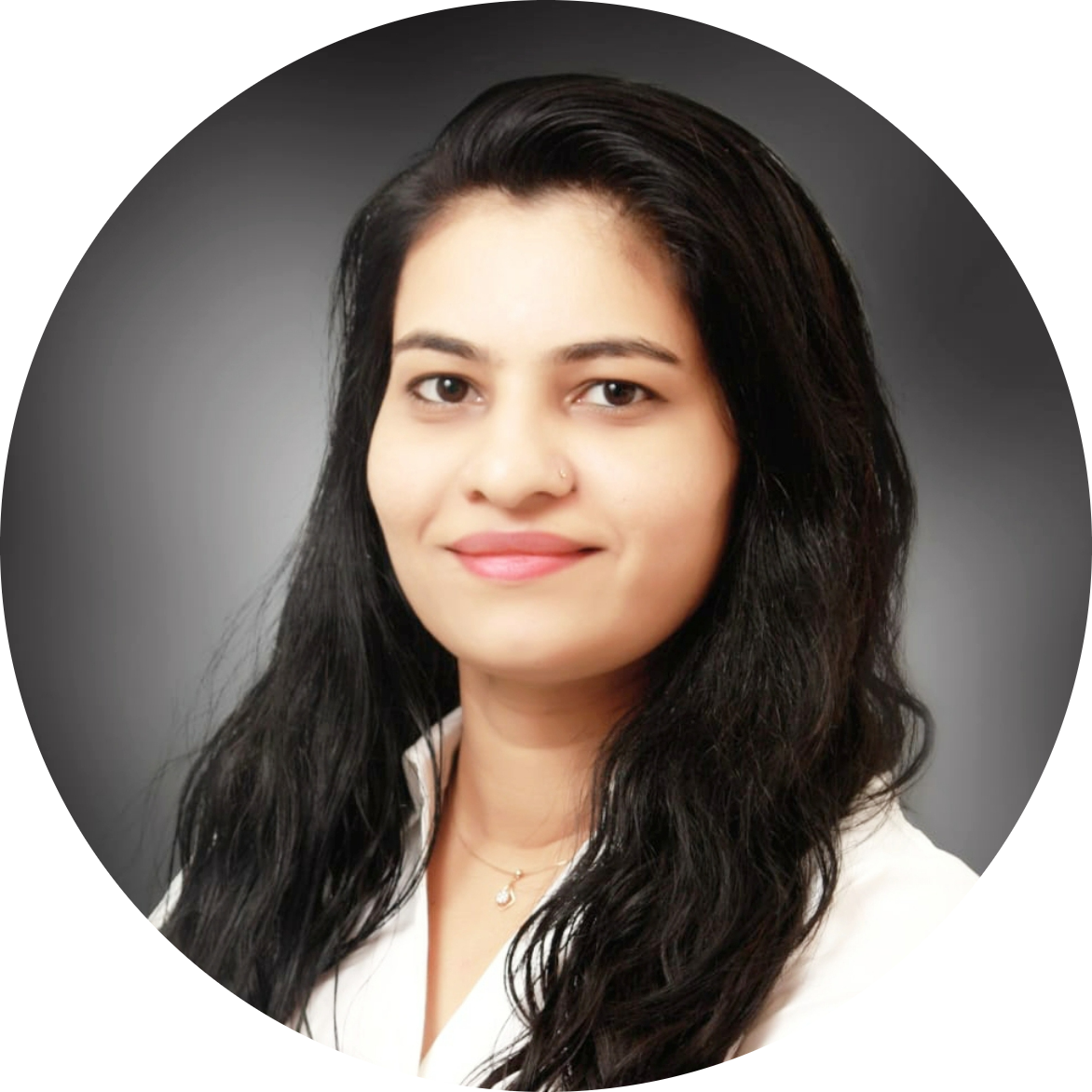
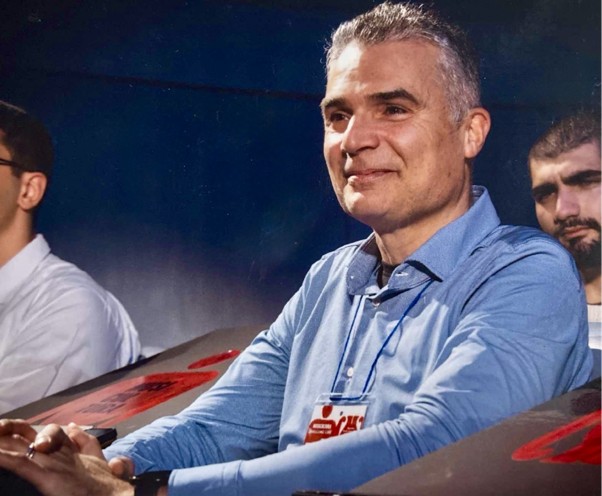
Dr. @Roberto Giambò is a full professor of Mathematical Analysis at the University of Camerino, Italy.
Throughout his research career he has focused on Applied Mathematics, understanding Physics through the laws of Mathematics. His earliest work was in Nonlinear Analysis, a field he has never completely left, though his main focus is now General Relativity and Cosmology. He joined the editorial board of Scientific Reports in February 2026.
***
In this interview, we asked Prof. Giambò to talk to us about his work as an Editor at Scientific Reports. Read on to find out more.
What do you like most about being an Editorial Board Member for Scientific Reports?
Almost every scientist has had a paper rejected in a way that felt unfair. I would like to start from there: I enjoy being able to help make peer review a fair process, constructive for authors and of high quality for the journal. For me, it is a great privilege to be part of a group that works to maintain the high-quality standards of Scientific Reports.
What do you like most about handling manuscripts at Scientific Reports?
I especially find the initial phase very interesting, when you try to understand the essence of the submitted work. I prefer to always make a first personal assessment of the paper, even if I will not be the final judge, and to see whether it can reasonably meet the standards of Scientific Reports. It is also interesting to identify the key aspects of the work, which then guide the choice of suitable referees to invite. At that stage, I try to put myself in the referee’s position and look for colleagues who are active experts and who have already reviewed papers before. Peer review must be fair and, when needed, strict, but never humiliating.
How important is reproducibility in research?
I think reproducibility is a fundamental pillar of scientific research, even though today it is increasingly difficult to verify, especially for experimental results. However, even in mathematics or theoretical physics, reproducibility matters: even for the most complex theorems, authors should give readers the tools needed to reconstruct every step of the argument.
What would you like to share with your fellow researchers on publishing in an inclusive journal?
To be honest, I sometimes feel that this distinctive feature of Scientific Reports is underestimated by some colleagues involved in the review process. Often, people silently judge a paper mainly by the impact they expect it might have. At Scientific Reports this should not happen, because the journal’s policy is clear: potential impact is not a decisive factor in evaluating a submitted manuscript. I think it is very important that high-profile journals follow this policy; otherwise, there is a risk of publishing only mainstream work, which does not serve Science well. The impact‑neutral policy at Scientific Reports lets us focus on rigor and sound methods rather than expected visibility. This makes room for solid results that may be negative, incremental or outside the mainstream, which are still important for scientific progress.
What are the biggest challenges that you see for the future of research and research dissemination?
First, I believe we must protect ourselves from questionable practices that arise when competition gets out of control, forcing researchers to publish papers in series and to cite each other in an excessive and sometimes improper way. Another concern is the widespread use of generative AI tools, which can produce papers that appear sound at first sight but lack solid scientific foundations.
Leaning on your expertise in variational methods and mathematical modelling across both fundamental physics and applied systems, when assessing mathematically driven studies, what criteria do you consider essential to ensure that the theoretical framework is convincingly translated into a verifiable or practically relevant application?
In my opinion, authors must be honest: they should clearly acknowledge both the potential and the limitations of a toy model. At the same time, readers should realize that recognizing the limits of a model does not mean that the model is useless. No phenomenon has ever been modelled without going through intermediate steps, using simplified models that opened the way to a more complete understanding of the phenomenon itself.
ORCiD: https://orcid.org/0000-0002-7147-134X
Home Page: http://docenti.unicam.it/pdett.aspx?ids=N&tv=d&UteId=500&ru=PA

Claire joined Scientific Reports in April 2021 after obtaining a PhD from Imperial College London and undertaking postdoctoral work on vascular biology at King’s College London.
She is passionate about supporting interdisciplinary research.
Follow the Topic
-
Scientific Reports
An open access journal publishing original research from across all areas of the natural sciences, psychology, medicine and engineering.

Related Collections
With Collections, you can get published faster and increase your visibility.
Cancer Prevention and Control
Publishing Model: Hybrid
Deadline: Feb 19, 2027
Healthy Aging
Publishing Model: Open Access
Deadline: Dec 31, 2026