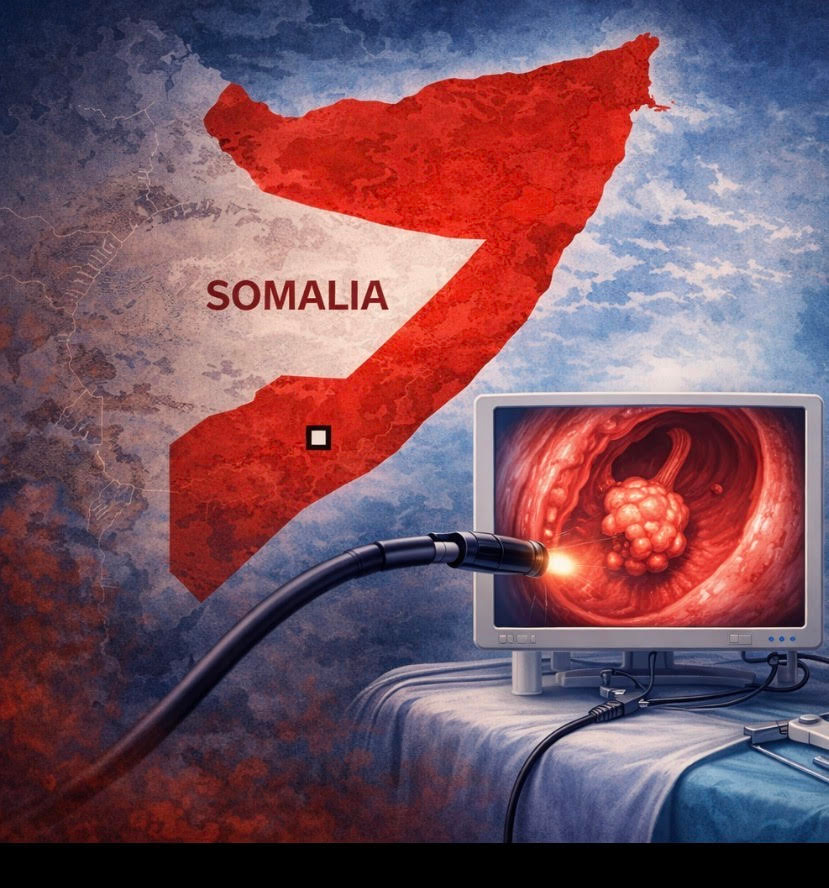
Our recent multicenter study Esophageal Cancer in Somalia: Burden and Outcomes From a Multicenter Observational Study in Mogadishu is among the first attempts to quantify this burden, bringing data to a disease long hidden in plain sight.
What we found: A familiar but devastating pattern
Across two major diagnostic centers in Mogadishu, we reviewed patients diagnosed between 2022 and 2024.
The findings were sobering—but not surprising.
-
Late-stage presentation dominated
-
Significant delays in diagnosis and referral pathways
-
Limited access to definitive cancer treatment
-
Fragmented care journeys across borders
In many ways, the Somali experience mirrors what we have already documented in northern Kenya, where late presentation, poor follow-up, and limited treatment access drive poor survival outcomes.
But in Somalia, these challenges are amplified by systemic absence—not just weak systems, but missing ones.
Beyond biology: The real drivers of disease
Esophageal cancer in this region is not just a biological disease—it is a social and structural disease.
Across Somali populations (both in Somalia and northern Kenya), recurring patterns emerge:
-
Rural and nomadic lifestyles
-
Limited awareness of early symptoms
-
Cultural and stigma-related delays
-
Financial toxicity and lack of insurance
-
Cross-border care seeking (often late)
Our previous Landscape of esophageal cancer in Northern Kenya: experience from Garissa Regional Cancer Center in Kenyan-Somali populations has already suggested unique epidemiologic patterns, including environmental, dietary, and possibly genetic contributors.
But what is increasingly clear is this:
The greatest risk factor is not just exposure—it is lack of access
The cross-border reality of cancer care
One of the most striking findings is the regionalization of survival.
Patients do not receive care within neat national boundaries. Instead:
-
Somalia → Kenya (Garissa, Nairobi)
-
Rural → urban migration for diagnosis
-
Late referrals after disease progression
This reflects a broader truth in East Africa:
Cancer care is already regional, but our systems are still national.
And that mismatch is costing lives.
A system problem, not a patient problem
It is easy to attribute late presentation to “health-seeking behavior.”
But the data tells a different story.
When:
-
There are no screening programs
-
Diagnostics are limited
-
Oncology services are sparse
-
Treatment requires out-of-pocket payment
Then late presentation is not a choice—it is an inevitability.
Why this paper matters
This study is more than a dataset.
It is:
-
A baseline for Somalia
-
A call for cancer registries
-
A case for decentralized oncology services
-
A blueprint for cross-border cancer care models
It also reinforces what we have seen repeatedly in Kenya and across the region:
Esophageal cancer is not rare here—it is one of the defining cancers of our population.
Where do we go from here?
If we are serious about changing outcomes, the solutions are clear:
1. Build cancer data systems
Without registries, there is no policy.
2. Invest in early detection
Even simple endoscopy access could shift stage at diagnosis.
3. Strengthen regional cancer networks
Somalia–Kenya collaboration is not optional—it is already happening informally.
4. Expand access to radiotherapy and oncology care
Decentralization works—we are seeing this in Kenya.
5. Integrate community awareness with cultural context
Awareness must be local, linguistic, and trusted.
Final reflection
In oncology, we often focus on innovation—new drugs, new technologies.
But in places like Somalia, the biggest innovation is still access.
This paper is a reminder that:
The challenge is not that we don’t know how to treat esophageal cancer.
The challenge is that too many patients never reach treatment in time.
About the Author
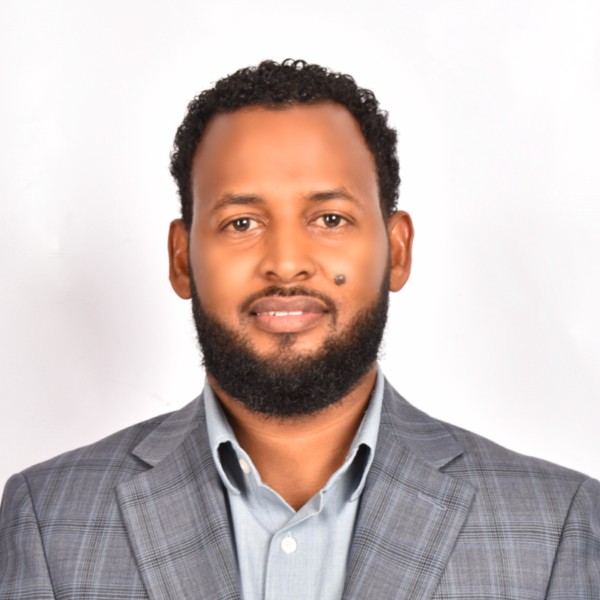
Dr. Omar Abdihamid is a Consultant Clinical Oncologist in Kenya and Vice President for East Africa at the Africa Organization of Research and Training in Cancer. His work focuses on improving access to cancer care in low-resource settings, Community education, with interests in cross-border oncology systems in East Africa
Email: omaryhamidy@gmail.com
About the Author
Dr. Omar Abdihamid is a Consultant Clinical Oncologist in Kenya and Vice President for East Africa at the Africa Organization of Research and Training in Cancer. His work focuses on improving access to cancer care in low-resource settings, Community education, with interests in cross-border oncology systems in East Africa
Email: omaryhamidy@gmail.com