Featured Editor’s Choice: Sustainable Biotechnology---Free to Read for Limited-Time
Published in Bioengineering & Biotechnology, Microbiology, and Sustainability


We are pleased to present a curated selection of Editor’s Choice papers from Systems Microbiology and Biomanufacturing, focusing on Sustainable Biotechnology. These articles will be free to read under a limited-time period from July 1, 2026, to August 31, 2026.
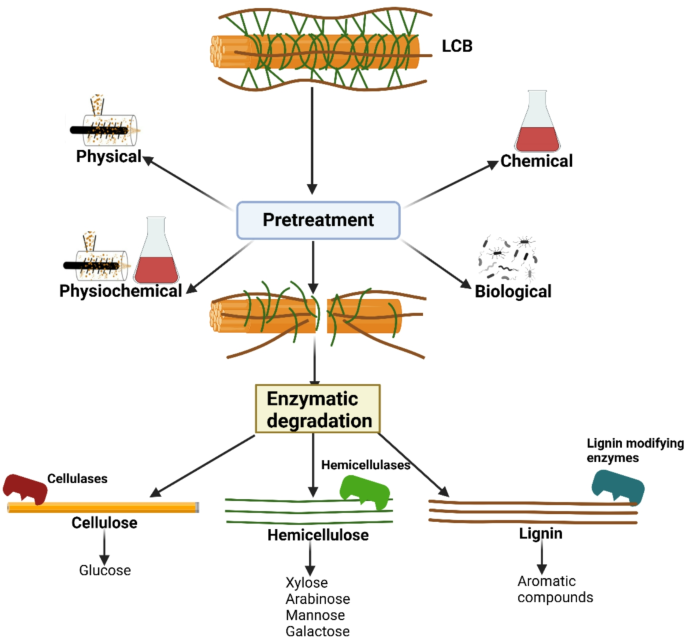
This collection highlights cutting-edge strategies to address global bioresource challenges. Key topics include advancements in lignocellulolytic enzyme production and the design of custom cellulolytic cocktails for second-generation (2G) ethanol, bridging laboratory research with industrial biorefineries. Further contributions explore the valorisation of waste streams, such as converting spent cultivated meat media into valuable recombinant proteins using Lactococcus lactis.
Additionally, the series delves into harnessing extremophiles by unlocking the potential of extremozymes for robust bioprocessing. Innovative approaches are also featured for mitigating biomass inhibitors, utilizing fungi like Paecilomyces variotiito improve lignocellulosic refining through integrated transcriptome analysis.
These selected works underscore the journal’s commitment to promoting circular bioeconomy principles and innovative biomanufacturing solutions. We invite readers to explore these high-impact studies and gain insights into the future of sustainable microbial systems.
| Title | Link |
| Advancement in lignocellulolytic enzyme production: tailored strategies to overcome challenges in biomass hydrolysis | https://doi.org/10.1007/s43393-025-00342-7 |
| Extremozymes: unlocking potential of extreme environments for sustainable biotechnology | https://doi.org/10.1007/s43393-025-00352-5 |
| From bench to biorefinery: custom cellulolytic cocktail development for 2G ethanol | https://doi.org/10.1007/s43393-025-00357-0 |
| Harnessing Paecilomyces variotii to remove lignocellulose-derived inhibitors: potential evaluation, lignocellulosic biorefining route design, and transcriptome analysis | https://doi.org/10.1007/s43393-025-00393-w |
| Valorisation of spent cultivated meat media for recombinant FGF2 production in Lactococcus lactis | https://doi.org/10.1007/s43393-025-00358-z |

Follow the Topic
-
Systems Microbiology and Biomanufacturing
This hybrid journal publishes high-quality research in the interdisciplinary areas of industrial microbiology and biomanufacturing process development.

Related Collections
With Collections, you can get published faster and increase your visibility.
Biomanufacturing from Agro-forestry Residues
This Special Issue (SI) of Systems Microbiology and Biomanufacturing focuses on "Biomanufacturing from Agro-forestry Residues" for the development of advanced bioprocesses to produce high-quality feed, fertilizers, bioenergy, and bioactive ingredients. The SI covers agricultural and environmental microbiology, biotechnology, and bioprocess engineering for the green valorization of agro-forestry residues. Specific topics include, but are not limited to, the processes and molecular mechanisms of aerobic fermentation, anaerobic digestion, and insect-mediated bioconversion, especially those integrating artificial intelligence, systems biology, or carbon emission analysis.
Publishing Model: Hybrid
Deadline: Oct 31, 2026
Algal Genetic and Metabolic Engineering to produce of fuels, chemicals and materials
Algae, including microalgae and macroalgae, are increasingly recognized as sustainable biological platforms to produce chemicals, food ingredients, and functional materials. Their photosynthetic efficiency, rapid growth, and capacity to utilize CO2 and diverse nutrient sources make them attractive cell factories within green biotechnology and circular bioeconomy frameworks. Recent advances in metabolic engineering, synthetic biology, and systems-level analysis have significantly expanded the scope of algal biotechnological applications.
This Special Issue aims to highlight recent progress and emerging strategies in algal genetic and metabolic engineering to produce chemicals, fuels, food, feed and materials, covering fundamental insights through applied bioprocess development, specifically focused on application of AI and ML. It seeks to bring together interdisciplinary contributions that advance the understanding, engineering, and industrial translation of algal systems.
Specific topics include studies on algal metabolism, photosynthetic carbon fixation, and systems biology approaches enabling rational pathway design and optimization. Research on genetic and metabolic engineering tools, such as genome editing, synthetic regulatory elements, and nuclear or chloroplast pathway engineering is strongly encouraged. Contributions focusing on the engineered production of bio-based chemicals, specialty metabolites, nutraceuticals, food and feed components, lipids, pigments, polysaccharides, and biopolymer precursors are within scope. It also focuses on algal-derived materials and biomaterials, stress-based and adaptive metabolic engineering strategies, and bioprocess engineering challenges including strain robustness, photobioreactor design, scale-up, and downstream processing. Studies integrating algal platforms with CO2 capture, waste valorization, life cycle assessment, techno-economic analysis, and circular bioeconomy concepts are particularly encouraged.
Both original research articles and critical reviews are welcome.
Publishing Model: Hybrid
Deadline: Oct 31, 2026