From Barriers to Breakthroughs in Women’s Health
Published in Sustainability and Public Health

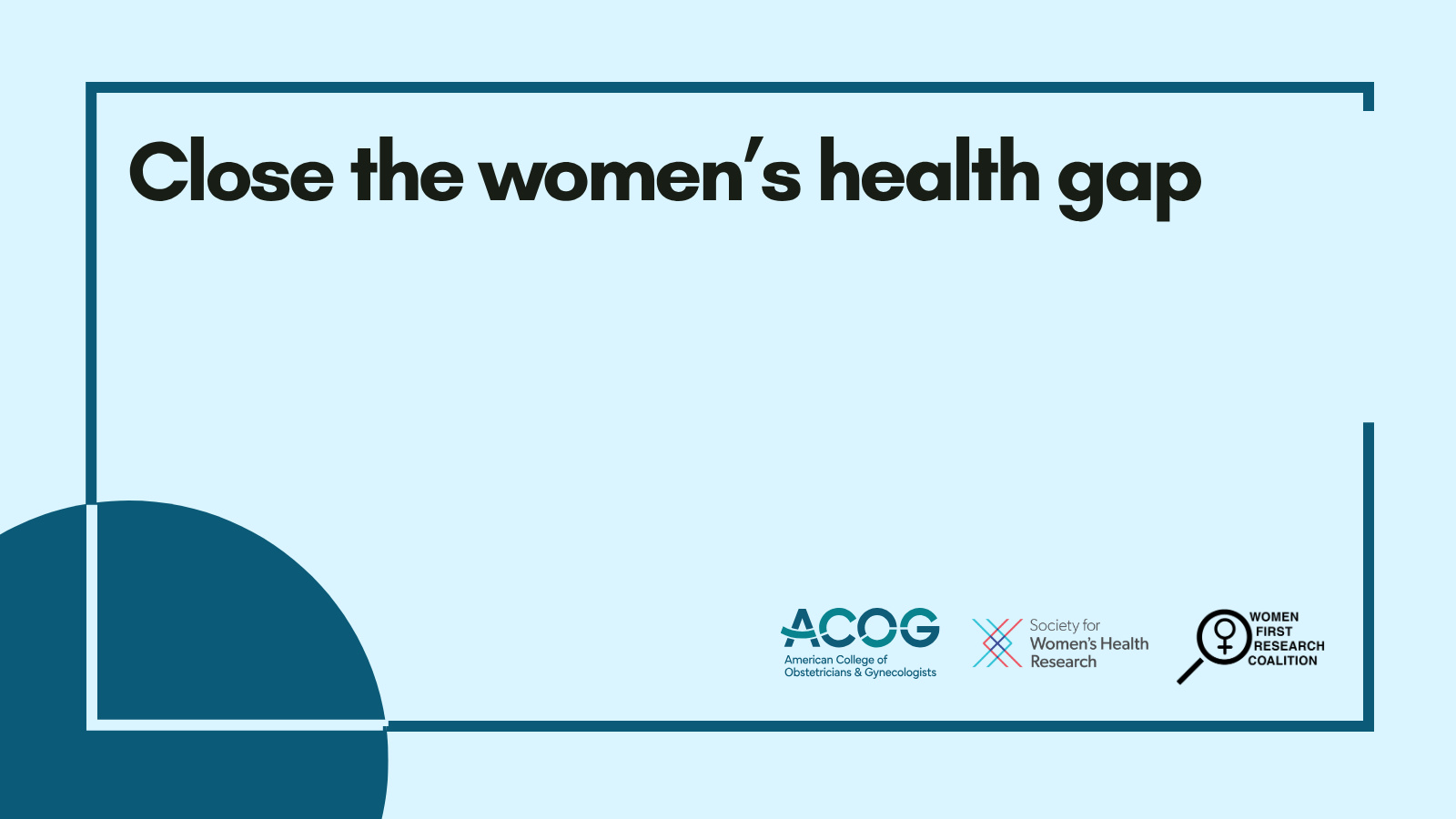

As a partner of our upcoming conference, Breaking Barriers for Gender Rights and Justice through Research, the Society for Women's Health Research (SWHR) continues to champion the role of research in advancing gender equality. In this blog, SWHR joins the American College of Obstetricians & Gynecologists and the Women First Research Coalition to explore how closing evidence gaps, strengthening sex-disaggregated data collection and reporting, and translating research into policy and practice can help address persistent inequalities in women's health. These priorities closely align with the themes of the conference and our panel, "Menstrual Health as a Human Rights Issue," and support progress towards SDG 5: Gender Equality.
 |
 |
 |
Kathryn G. Schubert Erika Miller Sandra E. Brooks
- Kathryn G. Schubert, MPP, CAE, President and CEO of the Society for Women’s Health Research
- Erika Miller, JD, Washington Representative for the Women First Research Coalition
- Sandra E. Brooks, MD, MBA, FACOG, CEO of the American College of Obstetricians & Gynecologists
We often hear about “breaking barriers” in women’s health. But what does it take to break them—and what could be possible if we make significant investment in women’s health. After decades of underinvestment, women’s health is being recognized as a critical area of inquiry. Researchers are deepening our understanding of how sex-specific factors influence health and disease across the lifespan; now, there is emerging evidence on the role of sex differences in autoimmune conditions and osteoporosis. Expanding focus beyond reproductive health helps us develop a more comprehensive and holistic understanding of women's health.
There has also been increased national attention to women’s health across the federal government. Topics like menopause, uterine fibrosis, and endometriosis are gaining attention in Congress and executive agencies. In 2025, the U.S. Department of Health and Human Services (HHS) removed the black box warning from estrogen-based hormone therapy products – a prime example of federal regulations catching up to current evidence. In 2023, the National Institutes of Health (NIH) added menopause as an official category in its Research Condition and Disease Categorization (RCDC) system. The NIH’s Sex as a Biological Variable policy celebrated its 10-year anniversary in 2026, and the Office of Research on Women’s Health continues to advance research on conditions that disproportionately or uniquely affect women.
This moment is promising, but there is still a significant gap between what we know and what we need to know in women’s health – within clinical care, research investments, and public education.
A National Strategy to Close the Women's Health Gap
The National Strategy to Close the Women's Health Gap outlines a comprehensive, coordinated approach to closing persistent gaps through strategic investment across women’s health.
This framework, led by the Society for Women's Health Gap, American College of Obstetricians & Gynecologists, and Women First Research Coalition, calls for investment across five pillars: Research and Innovation; Regulatory Coordination and Modernization; Data and Evidence Infrastructure; Bolstering the Women’s Health Clinical and Research Workforce; and Public Awareness and Education.
Together, these pillars recognize that advancing women’s health requires more than funding individual research. By advocating for investment across the ecosystem, the framework invites us to consider what could be achieved through a comprehensive approach to women’s health, spanning the continuum from discovery to implementation.
The National Strategy calls on the U.S. Congress to allocate $20 billion over 10 years. This level of investment could have a transformational impact on medical research in the U.S.
Consider the research gap alone.
A Northwestern University study found that, while a majority of NIH-funded studies published between 2017 and 2024 included both male and female participants, fewer than half reported or analyzed results by sex.
That distinction matters. Including women in research is not the same as understanding how findings may differ by sex. Data not properly analyzed and reported loses important information about how diseases develop, treatments work, and risks and outcomes differ for women and men.
The National Strategy aims to address this challenge by calling for modernization of NIH systems tracking federally funded research, allowing the government to more accurately account for investments in women’s health and identify areas of underinvestment. After all, we cannot close gaps we cannot clearly measure.
Global Implications
Although the National Strategy is U.S-based, its implications extend well beyond those borders.
The U.S. is a global leader in biomedical research. Discoveries made through federally funded research influence science, clinical practice, development, regulation, and health policy globally. A stronger, more coordinated approach to women’s health in the U.S. could help establish models for how other countries identify research gaps, improve the use of sex-disaggregated data, strengthen the women’s health workforce, and accelerate evidence into practice.
The U.S. can learn from other countries, too. The Canadian Institutes of Health Research requires researchers to consider sex and gender in research where relevant, and its National Women's Health Research Initiative funds research specifically aimed at closing evidence and care gaps. Meanwhile, Australia has treated menopause as a health care priority, including through Medicare-supported menopause assessments.
With greater investment, the U.S. health care ecosystem could align around shared goals of health, including the United Nations Sustainable Development Goals, particularly SDG 5: Gender Equality, which calls for achieving gender equality and empowering all women and girls. Health is foundational here – women cannot fully participate in education, employment, or civic life when health systems and research do not adequately address their needs.
Investing in women’s health is not simply an investment in better health and medicine; it is an investment with far-reaching implications for families and communities. Women’s ability to live longer, healthier lives and participate in society will benefit us all, globally. While current momentum is important, momentum alone will not close decades of gaps in women’s health. We need sustained, reliable, coordinated investment and a clear path forward. That means investing in research that asks the right questions, collecting and analyzing data in ways that reveal sex differences, building the workforce, modernizing systems that shape research and regulation, and ensuring scientific advances reach women who need them.
The U.S. should not miss this opportunity to lead. The $20 billion, 10-year National Strategy would create a health and research ecosystem that better reflects the needs of half the population, with benefits beyond the U.S. borders. Through the National Strategy, we have an opportunity to build a health care system without barriers for women's health. The opportunity is here; what matters now is the commitment to see it through.