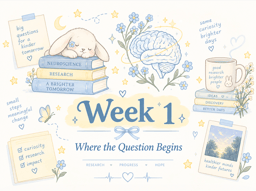
From Communication to Educational Technology: How My Research Journey Taught Me to Embrace Change
My research journey has taken me from communication and education to e-learning, educational technology and AI. Along the way, I learned that research is not a straight path, but a continuous journey of questions, challenges, adaptation and discovery.
Published in Education

Like
Be the first to like this
- The Beginning: Discovering the Connection Between Communication and Education
My academic journey began with an interest in communication. During my studies, I became increasingly interested in the ways people exchange knowledge, interact with one another, and construct meaning through communication.
This interest gradually led me towards education. I began asking myself a broader question:
What happens when communication is transformed by technology?
This question became particularly important as digital technologies began changing the ways in which students and teachers interact.
My doctoral journey in Communication and Educational Technology allowed me to explore this intersection more deeply.
Rather than viewing technology simply as a collection of tools, I became interested in understanding how communication technologies could be integrated into learning environments in meaningful and pedagogically appropriate ways. -
Learning That Technology Is Not Enough
One of the most important lessons I learned during my research was that introducing technology into education does not automatically create better learning.
A platform, a communication tool, or a digital resource can provide many possibilities, but its educational value depends on how it is designed and used.
This realisation influenced my research on e-learning, communication tools, online learning scenarios, and pedagogical design.
I became particularly interested in the relationship between technological structures and pedagogical intentions.
How can an online learning environment encourage meaningful interaction?
How can digital communication tools support collaboration?
How can learning experiences be designed around learners rather than around technology itself?
These questions continued to shape my research.
The Doctoral Journey: Learning Through Uncertainty
A PhD is often presented as a period in which a researcher becomes an expert.
For me, it was also a period of discovering how much I still had to learn.
There were moments when my research seemed clear, and there were moments when it became complicated again.
There were new methodologies to learn, countless papers to read, research questions to refine, and ideas that needed to be reconsidered.
I gradually understood that uncertainty is not necessarily a sign that research is going badly.
Sometimes, uncertainty is where research begins
My doctoral journey taught me patience. It also taught me that progress in research is rarely visible from one day to the next.
A small improvement in a research question, a better interpretation of a finding, or a new connection between two ideas can represent significant progress.
From E-Learning to Artificial Intelligence
As digital education continued to evolve, so did my research interests.
My work increasingly explored instructional design, online learning, collaborative learning, and the use of digital technologies in education.
More recently, artificial intelligence has become an important part of my research landscape.
This transition felt natural to me because AI raises many of the same questions that initially attracted me to educational technology.
How do technologies change communication?
How do they influence learning?
How should they be integrated into educational environments?
And how can technological innovation remain aligned with human and pedagogical needs?
My recent research has therefore expanded towards topics related to artificial intelligence in education, academic integrity, intelligent collaborative e-learning, and the role of AI in research and scholarly publishing.
The technologies may change, but the underlying question remains familiar:
How can technology genuinely serve people and learning?
Beyond the PhD: A New Chapter
Completing a PhD does not mean that the learning journey ends.
For me, it opened a new stage of academic life.
My experience has expanded through research, teaching, collaborations, peer review, editorial activities, book projects, and postdoctoral research.
Working with researchers from different backgrounds has also reminded me that research is increasingly collaborative.
Many of the questions we face today cannot be addressed from a single discipline.
Education, communication, computer science, artificial intelligence, and the social sciences increasingly overlap.
This interdisciplinary environment can be challenging, but it is also one of the aspects of research that I find most exciting.
What I Would Tell My Younger Self
If I could speak to the researcher I was at the beginning of my journey, I would say:
Do not worry about having everything figured out from the beginning.
Your research interests will evolve.
The technologies you work with will change.
Some projects will develop differently from what you expected.
Some opportunities will appear unexpectedly.
And some of the most valuable lessons will come from experiences that initially look like obstacles.
I would also say that building a research career is not only about publications and academic titles.
It is about developing your own voice as a researcher, learning to collaborate, communicating ideas clearly, and remaining curious.
Looking Ahead
My research journey is still evolving.
The rapid development of artificial intelligence, digital learning, and new forms of communication is creating new questions for researchers.
It is also creating new responsibilities.
As researchers working at the intersection of education and technology, we need to think not only about what technology can do, but also about what it should do, for whom, and under what conditions.
This is the direction in which I hope my research will continue: exploring technological innovation while keeping communication, pedagogy, and human needs at the centre.
Looking back, I no longer see my journey as a simple succession of degrees, positions, and publications.
I see it as a continuous conversation between questions, people, technologies, and ideas.
And perhaps that is one of the most rewarding things about being a researcher:
We begin with a question, but the journey teaches us to ask better ones.
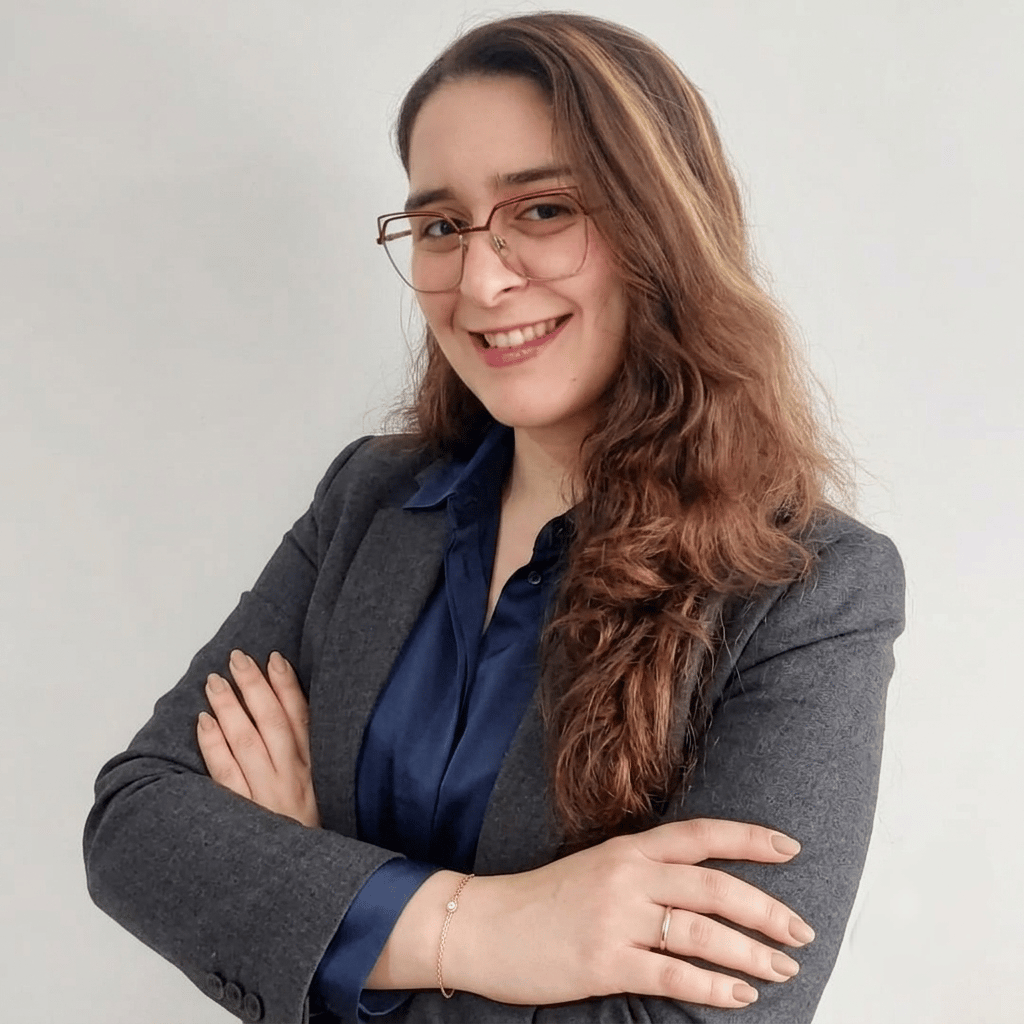
Doctor, Abdelmalek Essaadi University
Follow the Topic
Media Education
Humanities and Social Sciences > Education > Media Education