Every generation seeks to improve education. Governments invest in digital classrooms, artificial intelligence, competency-based curricula and sophisticated learning assessments. Universities compete in global rankings, while schools strive for better academic outcomes. These developments are important, but they often overlook one of the most influential factors shaping a child’s future: leadership.
Before children encounter governments, courts or public institutions, they experience governance in school. Their first understanding of justice, fairness, accountability and trust is often shaped not by a constitution but by a classroom and the office of a school principal. In that sense, good governance begins at school (OECD, 2008; UNESCO, 2023).
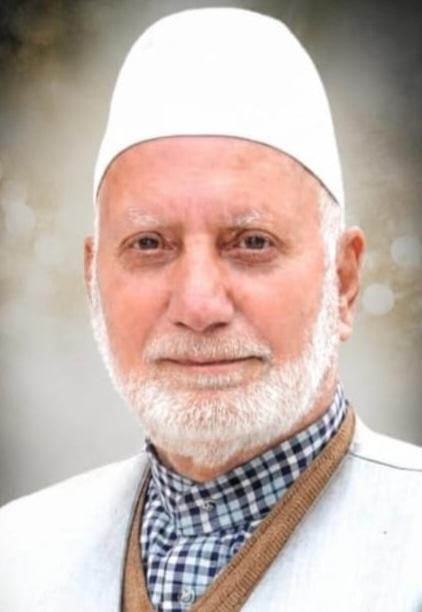
This perspective is inspired by the leadership philosophy of the late Master Ali Mohammad, Founder and Principal of Fayaz Educational Institute (FEI) Nowgam, Srinagar, Jammu and Kashmir, India. Although the experiences described here emerged from one school in the Himalayan region nearly three decades ago, the principles they represent are universal. Effective educational leadership is not defined merely by administrative efficiency or academic performance. It is revealed in the way leaders exercise authority when confronted with uncertainty, conflict and human vulnerability.
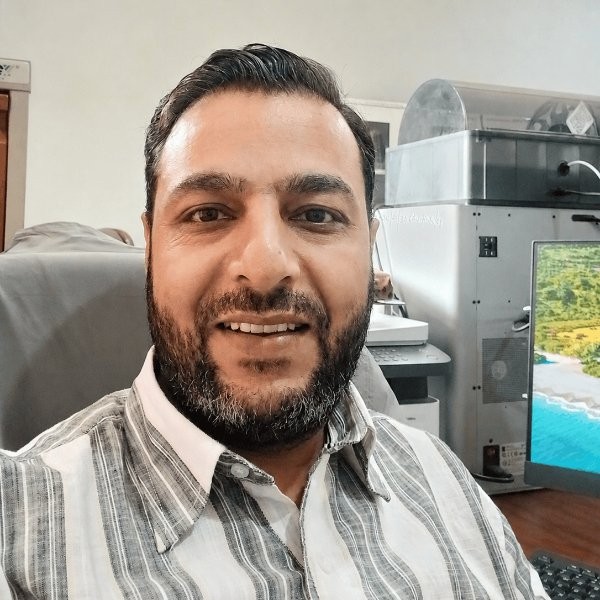
I first understood this as a fourteen-year-old student. Like many children entering a new school, I struggled to find my place. During my first year, a disciplinary incident occurred in which I was not directly involved. Yet circumstances placed my name alongside those who were responsible. For a young student, being summoned to the principal’s office carried only one expectation: punishment.
Instead, something unexpected happened. Master Ali Mohammad did not begin with accusations. He asked questions. He listened patiently. Rather than accepting appearances, he sought to understand what had actually happened. Only after establishing the facts did he make his decision. Those who had violated school rules were disciplined fairly. I was not, because he recognised that I had become part of the incident without being responsible for it.
At that age, I thought I had simply escaped punishment. Today, as a university teacher and researcher, I recognise that something much more significant had occurred. My confidence in institutions had been strengthened. I learned that authority could coexist with fairness, discipline with empathy and leadership with humility. Research consistently demonstrates that relational trust is one of the strongest foundations of successful schools. Where trust exists between school leaders, teachers, students and families, institutions are better equipped to improve learning, embrace innovation and sustain meaningful reform (Bryk & Schneider, 2002; Tschannen-Moran, 2014).
Another incident reinforced the same lesson. In 2000, I was selected for a government-sponsored national trekking programme. The opportunity meant everything to a village student, but my family could not afford the modest participation fee. Quietly, without any public announcement or expectation of gratitude, Master Ali Mohammad ensured that financial hardship did not become an educational barrier. Whether the support came from the school or from his own pocket, I never knew.
Looking back today, I realise that the amount of money was insignificant compared with the principle behind it. Good educational leaders do not simply administer institutions; they expand opportunities. They recognise potential before circumstances extinguish it. Research on student-centred leadership similarly suggests that successful educational leaders focus not only on organisational management but also on decisions that directly improve students’ opportunities to learn and flourish (Robinson, 2011).
These experiences invite a broader question for educators worldwide: Should the success of school leadership be measured only by examination results, or also by the degree of trust, fairness and human dignity that leaders cultivate within their institutions?
The answer, increasingly supported by educational research, is that both matter. Academic achievement remains a central purpose of schooling, but it is not the only outcome that defines a successful institution. International evidence consistently shows that effective school leadership influences teacher motivation, school climate, organisational learning and, ultimately, student achievement (Leithwood, Harris, & Hopkins, 2020; Day, Gu, & Sammons, 2016). Yet these outcomes are rarely achieved through authority alone. They emerge from relationships built on trust, fairness and credibility. Unfortunately, governance is often confused with administration.
Administration is concerned with procedures, regulations and compliance. Governance is concerned with values, judgement and accountability. Administration asks whether rules have been followed. Governance asks whether those rules have been applied fairly and wisely. The distinction is subtle, but it determines whether institutions inspire confidence or merely demand obedience. Research on organisational justice has repeatedly demonstrated that people’s willingness to trust institutions depends not only on outcomes but also on the fairness and transparency of the decision-making process (Greenberg, 1990; Colquitt et al., 2001).
This distinction has become even more important in the twenty-first century. Around the world, education systems are embracing artificial intelligence, learning analytics and digital technologies. These innovations are transforming classrooms and expanding educational opportunities. However, no technological advancement can replace ethical judgement. Artificial intelligence may assist decision-making, but it cannot substitute for empathy, moral reasoning or the ability to understand the human circumstances behind a student’s actions. Recent scholarship on AI governance in education similarly argues that technological innovation must be accompanied by responsible institutional leadership and ethical governance (Ghimire & Edwards, 2024).
My experience with Master Ali Mohammad illustrates this principle. During moments of uncertainty, he never confused quick decisions with good decisions. He understood that leadership is tested not on ordinary days but during difficult ones. Any administrator can enforce rules. Exceptional leaders first seek the truth, protect the dignity of every student and then act with fairness. That approach requires patience rather than haste, wisdom rather than impulse and humanity rather than authority.
These reflections suggest five principles that may help reframe educational leadership across cultures and educational systems. Listen before judging. Every complaint deserves careful listening before conclusions are reached. Investigate before acting. Justice depends on evidence, not assumptions. Protect dignity while enforcing discipline. Accountability and compassion are complementary, not contradictory. Remove barriers to opportunity. Leadership should ensure that financial hardship, social disadvantage or misunderstanding do not unnecessarily limit a learner’s future. Build trust deliberately. Trust is not simply a desirable quality; it is one of the most important outcomes of good governance (Bryk & Schneider, 2002; Tschannen-Moran, 2014).
These principles are neither expensive nor technologically sophisticated. Yet they may be among the most valuable investments an education system can make.
Students rarely remember every chapter they studied or every examination they completed. They remember how they were treated. They remember whether someone listened before making a decision. They remember whether authority inspired confidence or fear. Those memories quietly become part of what educational researchers describe as the hidden curriculum—the lessons about citizenship, justice and human relationships that are learned without appearing in any textbook (Cohen et al., 2009).
As governments continue investing in infrastructure, digital transformation and artificial intelligence, equal attention should be given to developing educational leaders capable of ethical judgement, emotional intelligence and evidence-informed decision-making. Leadership preparation programmes should train principals not only to manage schools efficiently but also to govern them wisely. UNESCO has repeatedly argued that educational leadership must evolve from administrative control towards stewardship, participation, transparency and trust (UNESCO, 2023). That transition is no longer optional; it is essential for building resilient and inclusive education systems.
Although this perspective is inspired by one school leader from a school in Kashmir, its message extends far beyond one institution or one country. The leadership philosophy demonstrated by Master Ali Mohammad, Founder and Principal of FEI Nowgam, reminds us that the most enduring educational reforms are often not written in policy documents. They are lived through everyday decisions that affirm justice, dignity and opportunity.
Nearly three decades have passed since I first entered his office as an anxious student. I have forgotten many lessons taught in classrooms. I have forgotten examination questions and report cards. But I have never forgotten the reassuring smile of a principal who chose understanding before punishment and wisdom before authority.
In an age increasingly defined by technology, perhaps the greatest innovation in education is still profoundly human. Good governance does not begin in ministries of education, parliaments or university boardrooms. It begins in the school.
References
Bryk, A. S., & Schneider, B. (2002). Trust in schools: A core resource for improvement. Russell Sage Foundation. https://doi.org/10.1086/424724
Cohen, J., McCabe, L., Michelli, N. M., & Pickeral, T. (2009). School climate: Research, policy, practice, and teacher education. Teachers College Record, 111(1), 180–213. https://doi.org/10.1177/016146810911100108
Colquitt, J. A., Conlon, D. E., Wesson, M. J., Porter, C. O., & Ng, K. Y. (2001). Justice at the millennium: a meta-analytic review of 25 years of organizational justice research. Journal of applied psychology, 86(3), 425. https://psycnet.apa.org/doi/10.1037/0021-9010.86.3.425
Day, C., Gu, Q., & Sammons, P. (2016). The impact of leadership on student outcomes: How successful school leaders use transformational and instructional strategies to make a difference. Educational administration quarterly, 52(2), 221-258. https://doi.org/10.1177/0013161X15616863
Edmondson, A. C. (2018). The fearless organization: Creating psychological safety in the workplace for learning, innovation, and growth. John Wiley & Sons. https://www.hbs.edu/faculty/Pages/item.aspx?num=54851&
Ghimire, A., & Edwards, J. (2024, July). From guidelines to governance: A study of AI policies in education. In International Conference on Artificial Intelligence in Education (pp. 299-307). Cham: Springer Nature Switzerland. https://www.springerprofessional.de/from-guidelines-to-governance-a-study-of-ai-policies-in-educatio/27290726
Greenberg, J. (1990). Organizational justice: Yesterday, today, and tomorrow. Journal of Management, 16(2), 399–432. https://doi.org/10.1177/014920639001600208
Leithwood, K., Harris, A., & Hopkins, D. (2020). Seven Strong Claims about Successful School Leadership Revisited. School Leadership & Management, 40, 5-22. https://doi.org/10.1080/13632434.2019.1596077
Pont, B., Nusche, D., Moorman, H., & Hopkins, D. (2008). Improving school leadership (Vol. 1, p. 578). Paris: OECD. https://www.oecd.org/en/publications/2008/07/improving-school-leadership-volume-1_g1gh8f44.html
Robinson, V. (2011). Student-centered leadership. John Wiley & Sons. https://eric.ed.gov/?id=ED529294
Tschannen-Moran, M. (2014). Trust matters: Leadership for successful schools (2nd ed.). Jossey-Bass, John Wiley & Sons, Inc. https://www.wiley.com/en-us/shop/general-introductory-education/trust-matters-leadership-for-successful-schools-2nd-edition-p-9781118837955
UNESCO. (2023). Leaderhood: Lessons for educational governance. https://www.unesco.org/en/articles/leaderhood-lessons-educational-governance