Optical Metamaterial Biosensors, Detection Instruments, and Assays for Point of Care Cancer Molecular Diagnostics
Published in Physics


Speakers
- Prof. Dr Chris D. Geddes FRSC — University of Maryland, Baltimore County
- Prof. Brian T. Cunningham — University of Illinois Urbana-Champaign
Abstract
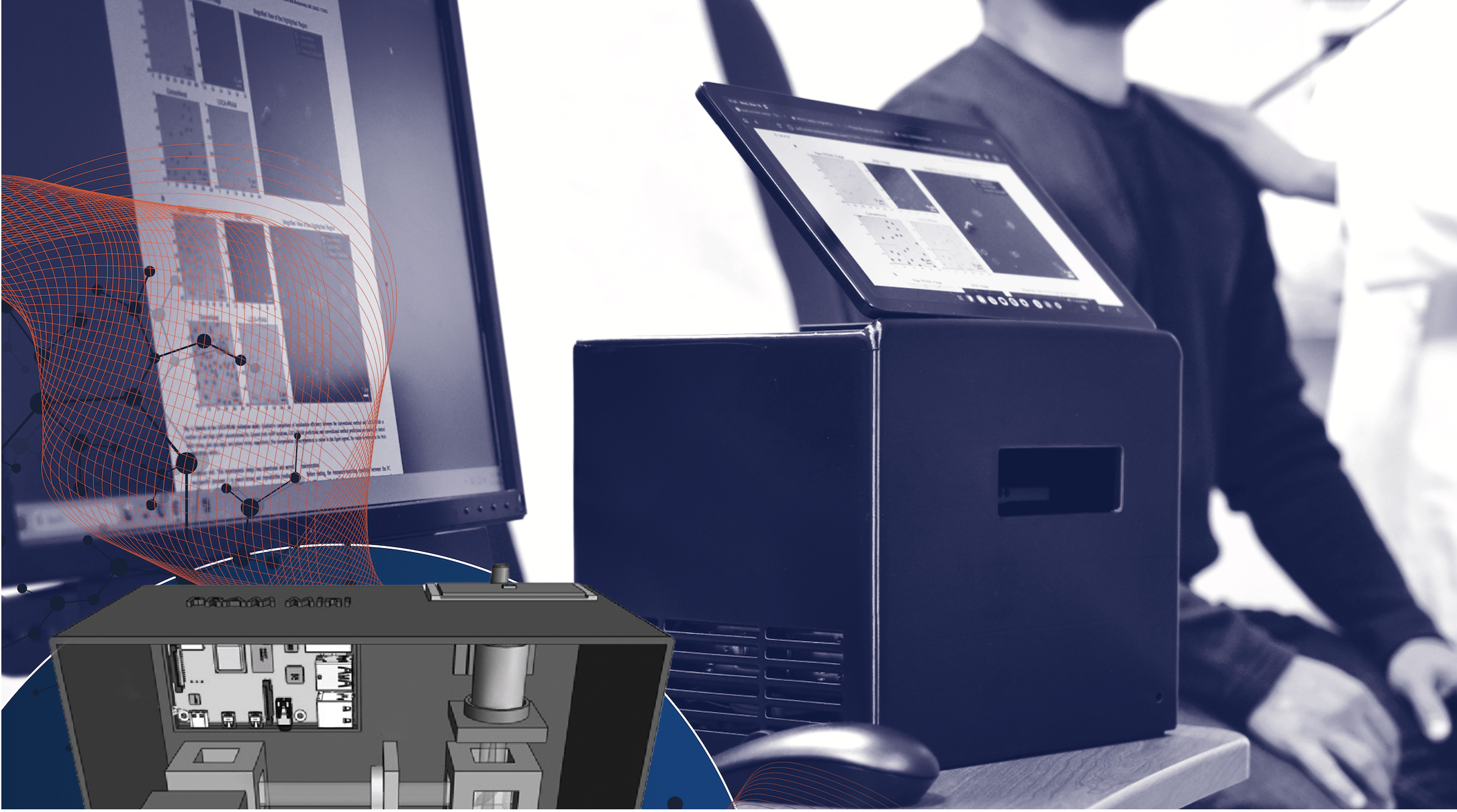
Next-generation technologies for genomic sequencing and proteome profiling are revealing the mechanisms of cancer biology, while generating panels of molecular biomarkers that characterize the stage and mechanisms driving disease within individual patients. While “liquid biopsy” samples can be obtained noninvasively and analyzed in centralized laboratory facilities, several clinical and human-centric factors motivate the need to perform cancer molecular diagnostics at the point of care, where obtaining immediate results in settings such as the oncologist’s office can inform initial therapy selection, therapy effectiveness monitoring, and longitudinal monitoring. Enabling such a vision requires development of novel sample preparation, assay methods, and biosensor detection that provides simple and rapid workflows performed on minimally processed samples, miniature and inexpensive detection instrumentation, low detection limits, quantitative accuracy, and multiplexing that incorporates experimental controls. This talk will summarize recent efforts to develop digital-resolution biodetection that utilizes photonic crystal surfaces and nanoparticle tags to amplify molecular detection contrast while utilizing novel biochemistry methods and machine-learning based image processing to detect nucleic acid and protein cancer biomarkers. Utilizing simple one-pot, room temperature assay workflows with <30 minute sample-to-answer time and detection with a ~$1K instrument, we are demonstrating attomolar-level detection limits with high selectivity in serum.
Looking for more in the field?
Explore more events from Springer Nature Biophysics Seminars and Springer Nature's Physics.

Research Seminars by Springer Nature - giving you access to the latest research talks, direct from authors and editors.
Follow the Topic
-
Journal of Fluorescence
Journal of Fluorescence serves as an international forum for original, peer-reviewed articles advancing the field of fluorescence spectroscopy
-
Journal of Bioenergetics and Biomembranes
This is an international journal devoted to the publication of original research that contributes to fundamental knowledge in the areas of bioenergetics, biomembranes, and transport.
-
Biophysical Reviews
This journal aims to publish critical and timely reviews from key figures in the field of biophysics.
-
Cell Biochemistry and Biophysics
This journal aims to publish papers on the nature of the biochemical and biophysical mechanisms underlying the structure, control and function of cellular systems
-
The Journal of Membrane Biology
This journal focuses on publishing high-quality scientific research related to membrane biology, biochemistry, and biophysics.
-
Plasmonics
This is a peer-reviewed journal that advances and reports on the interactions of free-metal electrons, Plasmons, and their applications.
-
Biomolecular NMR Assignments
This journal is a dedicated forum for publishing sequence-specific resonance assignments for proteins and nucleic acids.
-
Journal of Biomolecular NMR
This journal focuses on innovative applications of nuclear magnetic resonance spectroscopy in the study of biopolymer structures and dynamics.
-
Radiation and Environmental Biophysics
This journal is devoted to fundamental and applied issues in radiation research and biophysics.









Related Collections
With Collections, you can get published faster and increase your visibility.
2027 Special Issue of Biophysical Reviews: Vietnam Biophysics—Current Status, Challenges, and Future Opportunities
Publishing Model: Hybrid
Deadline: Oct 31, 2026
P-Type ATPase Meeting special issue
It is a pleasure to anounce that we have reached an agreement with the Editor-in-Chief of the Journal of Membrane Biology, Professor Amitabha Chattopadhyay, that oral and poster presentations at the P-Type ATPase Meeting will form a special issue of the journal. If you will be presenting as-yet unpublished data at the meeting please keep this possibility in mind. For more information on the meeting, please see here: https://iupab.org/atpase-conference-2025/
Publishing Model: Hybrid
Deadline: Nov 30, 2026