The shadow and the person casting it: TB and social protections
Published in Sustainability and General & Internal Medicine

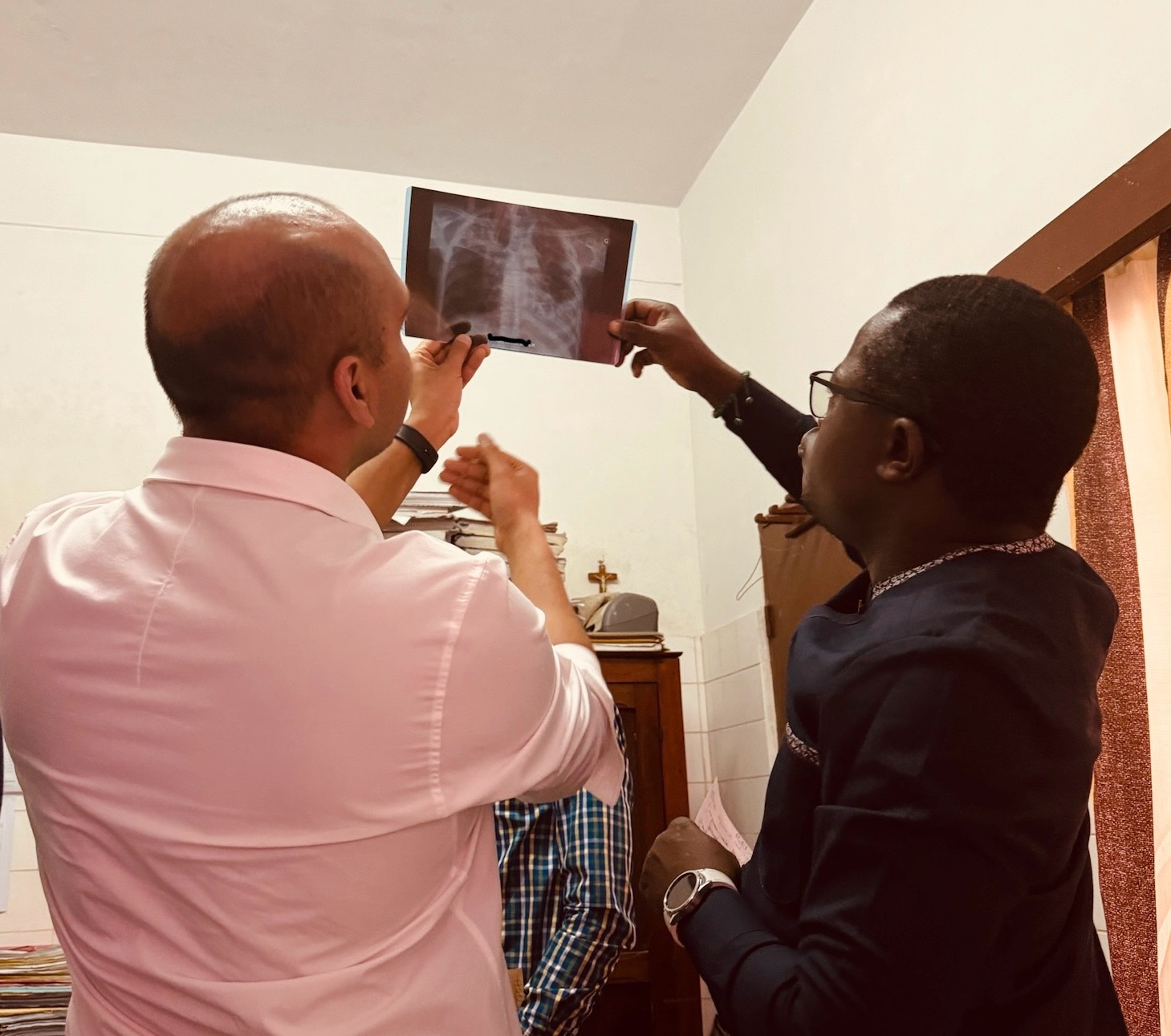

"How am I supposed to pay my rent?"
I had no answer. The irony of practicing medicine in the wealthiest country in the history of the world is that I could measure drug concentrations in his blood and even sequence the genome of his TB bacilli at the click of a button, but could not help him with his rent, which costs far less than either test.
TB has been described as the shadow of misery. Our biomedical response, for all its brilliance, ends up chasing the shadow and not the person casting it.
At conferences, it may appear as if the end of TB is just awaiting the arrival of a new drug, test, or vaccine. Indeed, our grant applications and buzzy press releases often signal as much. But the inconvenient truth, written plainly in the mortality curves, is that TB had already begun its retreat in the wealthy world before we had any effective tests or treatments. Death rates fell as people ate better, worked shorter hours, and moved out of airless tenements. The bacillus did not surrender to medicine alone. It receded as life got less brutal.
We have spent the decades since forgetting that lesson. We have bet, and bet heavily, on the biomedical paradigm — on the next diagnostic, the shorter regimen, the elusive vaccine. These are good bets, and I have placed many of them myself. But a disease that lives in the lungs is born in the conditions of a life: in undernutrition, in crowded and unventilated rooms, in the soot of the air, in the precariousness of being poor. We keep treating the cough and ignoring the world that produced it.
Although we routinely call TB a disease of poverty, we seem to design all our interventions downstream of this principal driver. For all its biological tricks and complexity, TB is ultimately a predictable disease. It goes where deprivation goes, and it leaves where deprivation lifts. When TB flares, it is telling us something true about hunger and housing and inequality long before our other instruments register it.
When a canary dies in a coal mine, we don't just apply an oxygen mask to its beak; we get the miners to safety.
This is the difference between public health and social medicine. Public health counts the sick and delivers the cure. Social medicine asks why this person, in this place, got sick in the first place — and treats the answer as part of the disease. Social protection is where that conviction becomes concrete. Cash transfers keep months of catastrophic costs from turning into generational poverty. Nutritional support turns a starving patient into a healing one. There is mounting evidence that this support does not merely comfort people, it helps cure them, keeps them in treatment, and protects those around them.
What we still lack is enough rigorous, real-world evidence on how to actualize this support for those who need it the most.
That is the gap this collection exists to close. Our goal is to extend our gaze past the shadow, and to build an evidence base that informs person-centered action. In the International Journal for Equity in Health, we have opened a collection on social protection for people affected by TB, and we are inviting the people doing this work to write it down. We want the implementation studies — how these programs are designed, financed, and adapted to fragile settings. We want the country experiences, the case studies, the honest accounts of what worked and what didn't, the analyses of the politics that decide whether a program is funded or forgotten. We want the evidence that lets an advocate walk into a finance ministry and make an undeniable case.
This is our chance to finally turn from the shadow and face the person. I do want better tests and better drugs, but I also want my patient to be able to pay his rent.
--
The collection "Social Protection for TB-Affected Individuals" is open for submissions in the International Journal for Equity in Health.
Guest Editors: Pranay Sinha and Ernesto Jaramillo, with the support of Delia Boccia, Priya Shete, and Jillian Kadota.
Follow the Topic
-
International Journal for Equity in Health
This journal presents evidence relevant to the search for, and attainment of, equity in health across and within countries and publishes research which improves the understanding of issues that influence the distribution of health and healthcare within populations.

📢 Introducing: # Mental Health
Mental Health is a Topic created to increase visibility and impact of research in this area and facilitate exchange amongst researchers.
Continue reading announcementRelated Collections
With Collections, you can get published faster and increase your visibility.
Equity in Health as the Center of Development
The International Journal for Equity in Health invites submissions for a new Collection titled “Equity in Health as the Center of Development.” As countries prepare for the post-2030 Sustainable Development Goals (SDGs), placing health equity at the heart of development is essential for achieving inclusive growth, social justice, and resilient health systems.
About the Collection
Health equity is increasingly recognized as a cornerstone of sustainable development. Persistent disparities—exposed and intensified by the COVID-19 pandemic—highlight the need for policies and systems that prioritize the needs of marginalized and underserved communities. Strengthening equitable governance, advancing universal health coverage, and addressing the structural determinants of health are critical steps for building fairer and more resilient societies.
This inaugural Collection will establish the foundation for the journal’s Super Collection, “Positioning IJEqH at the Center of the Debate on the Future of the SDGs Beyond 2030.” By defining key themes and priority areas, it will guide the structure of subsequent Collections.
Topics of Interest
We welcome submissions exploring the intersection of health equity and development, including but not limited to:
· Community-led health initiatives
· Governance frameworks for advancing equity
· Innovations in universal health coverage
· Health system resilience and adaptive capacity
· Strategies for engaging marginalized populations
· Equity considerations in global health crises
· Evaluation of inclusive development policies
· The future post-2030 SDG agenda and equity
Why This Collection Matters
This Collection launches a long-term strategic effort to shape the next decade of global health equity research. By identifying emerging priorities and highlighting evidence gaps, it will build the intellectual foundation for future parts of the Super Collection and help re-center health equity in global development debates.
This Collection supports and amplifies research related to SDG 3, Good Health and Well-Being.
All submissions in this collection undergo the journal’s standard peer review process. The Editors have no competing interests with the submissions which they handle through the peer review process. The peer review of any submissions for which the Editors have competing interests is handled by another Editorial Board Member or Guest Editor who has no competing interests. As an open access publication, this journal levies an article processing fee (details here). We recognize that many key stakeholders may not have access to such resources and are committed to supporting participation in this issue wherever resources are a barrier. For more information about what support may be available, please visit OA funding and support, or email OAfundingpolicy@springernature.com or the Editor-in-Chief.
Publishing Model: Open Access
Deadline: Jan 25, 2027
From Policy to Practice: Implementing Social Protection for Tuberculosis-Affected Populations
Social protection is widely recognized as a critical, yet under-implemented, component of the global response to tuberculosis (TB). Since 2015, it has been a key component of the WHO End TB Strategy, reflecting growing consensus that biomedical interventions alone are insufficient to end TB without addressing the social determinants that drive the disease. This commitment was recently reaffirmed by UN Member States through the adoption of a new global target: by 2027, all people affected by TB should receive a comprehensive package of health and social benefits to mitigate the financial, social, and livelihood-related consequences of the disease.
Despite this strong political mandate and an expanding evidence base demonstrating the protective effects of social protection on TB outcomes, implementation remains uneven and limited in many high-burden settings. Countries continue to face substantial challenges in translating global commitments into operational programs, including uncertainty around program design, intersectoral collaboration, targeting mechanisms, financing models, delivery platforms, and monitoring and evaluation frameworks. As a result, practical, context-specific guidance on how to effectively and sustainably integrate social protection into national TB responses remains scarce.
This special issue seeks to address this critical knowledge gap by bringing together empirical evidence, implementation research, and field-based experiences that can inform policy and practice. We invite submissions that provide concrete insights into the planning, implementation, scale-up, and evaluation of social protection interventions for people affected by TB. Specifically, we encourage contributions led by researchers and practitioners from TB and social protection sectors (including multidisciplinary and South-led teams), that illustrate generic protocols and real-life examples showcasing implementation research findings and/or how operational challenges have been addressed.
The overarching aim of this special issue is to assemble a coherent body of practical tools, conceptual approaches, and illustrative case studies that can strengthen the evidence base, stimulate scientific and financial investment, and support countries, research institutions, and civil society organizations in advancing the social protection and TB agenda.
This Collection supports and amplifies research related to SDG 3, Good Health and Well-Being.
All submissions in this collection undergo the journal’s standard peer review process. Similarly, all manuscripts authored by a Guest Editor(s) will be handled by the Editor-in-Chief. As an open access publication, this journal levies an article processing fee (details here). We recognize that many key stakeholders may not have access to such resources and are committed to supporting participation in this issue wherever resources are a barrier. For more information about what support may be available, please visit OA funding and support, or email OAfundingpolicy@springernature.com or the Editor-in-Chief.
Publishing Model: Open Access
Deadline: Mar 24, 2027