Unlocking Sustainable Construction: How Ceramic Waste Enhances Geopolymer Performance
Published in Sustainability and Civil Engineering
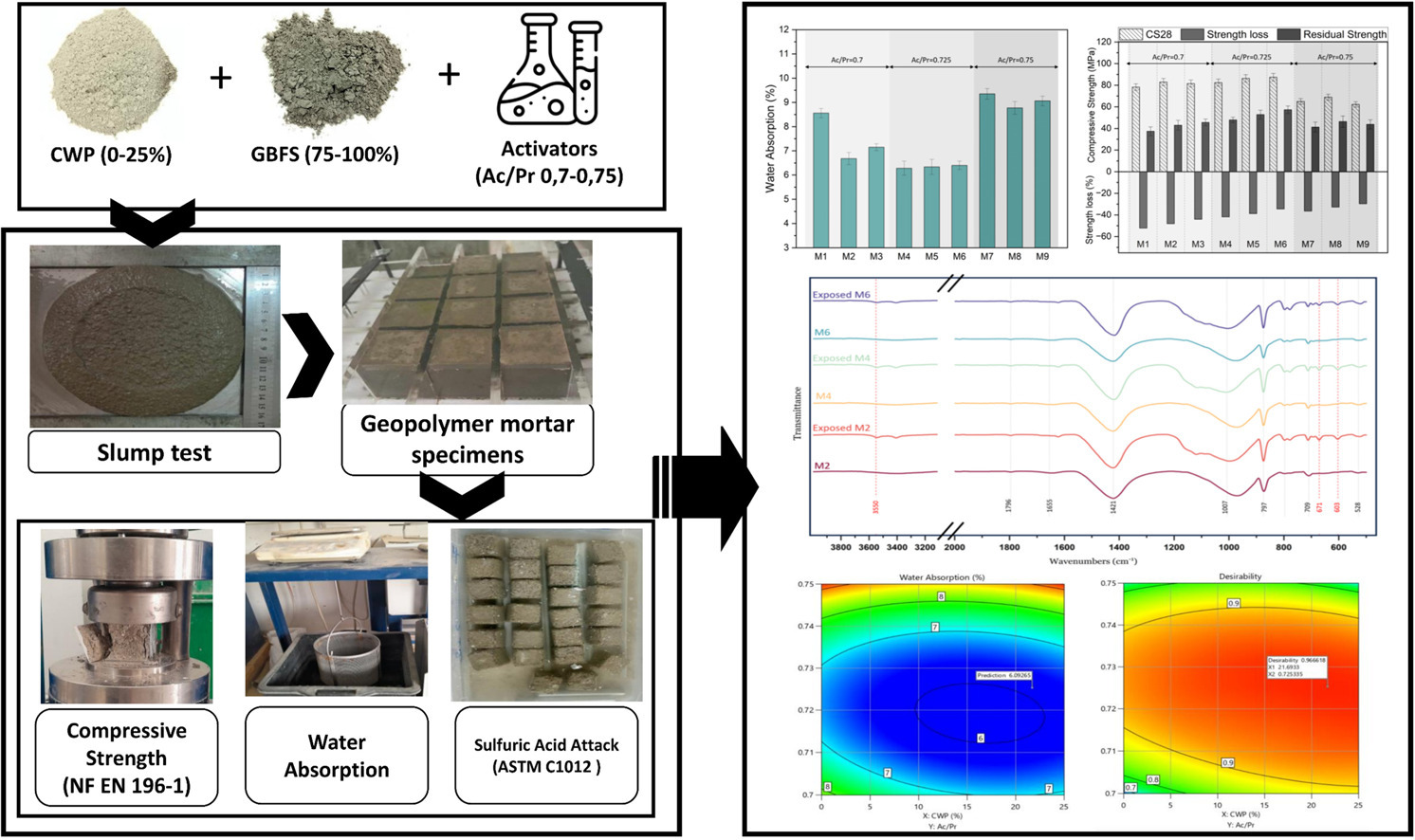
Our study systematically investigated the effects of CWP content and activator-to-precursor (Ac/Pr) ratio on the properties of geopolymer mortars. Key findings include:
Enhanced Workability and Strength:
- Increasing CWP content improved workability, with spread values rising from 135 mm to 173.5 mm.
- The optimal mix (21.69% CWP, Ac/Pr = 0.725) achieved a compressive strength of 86.34 MPa at 28 days, surpassing traditional mixes.
Superior Durability:
- Geopolymers with higher CWP content showed exceptional resistance to sulfuric acid, reducing strength loss to just 35.53% after 60 days of exposure.
- Microstructural analysis revealed that CWP promotes the formation of a stable aluminosilicate network, mitigating acid-induced degradation.
Sustainable Innovation:
- By repurposing ceramic waste, our approach aligns with circular economy principles, reducing landfill waste and lowering the carbon footprint of construction materials.
- The study highlights the potential of CWP-rich geopolymers for applications in wastewater treatment and industrial flooring, where chemical resistance is critical.
This research underscores the transformative potential of waste-derived materials in creating durable, eco-friendly construction solutions. For a deeper dive into our methods and results, check out the full paper here.
Join the conversation: How can we further optimize waste-based materials for sustainable construction? Share your thoughts below!

I am a researcher in civil engineering with a focus on sustainable construction materials and the circular economy. My work explores the use of recycled and industrial by-products in the development of eco-friendly concretes.
I’ve published several peer-reviewed articles on green construction innovations, including mix optimization, durability improvement, and low-carbon alternatives to traditional concrete. I'm passionate about bridging academic research with real-world applications in sustainable infrastructure.
Follow the Topic
What are SDG Topics?
An introduction to Sustainable Development Goals (SDGs) Topics and their role in highlighting sustainable development research.
Continue reading announcement
Please sign in or register for FREE
If you are a registered user on Research Communities by Springer Nature, please sign in