World Breastfeeding Week 2026
Published in Healthcare & Nursing, General & Internal Medicine, and Public Health

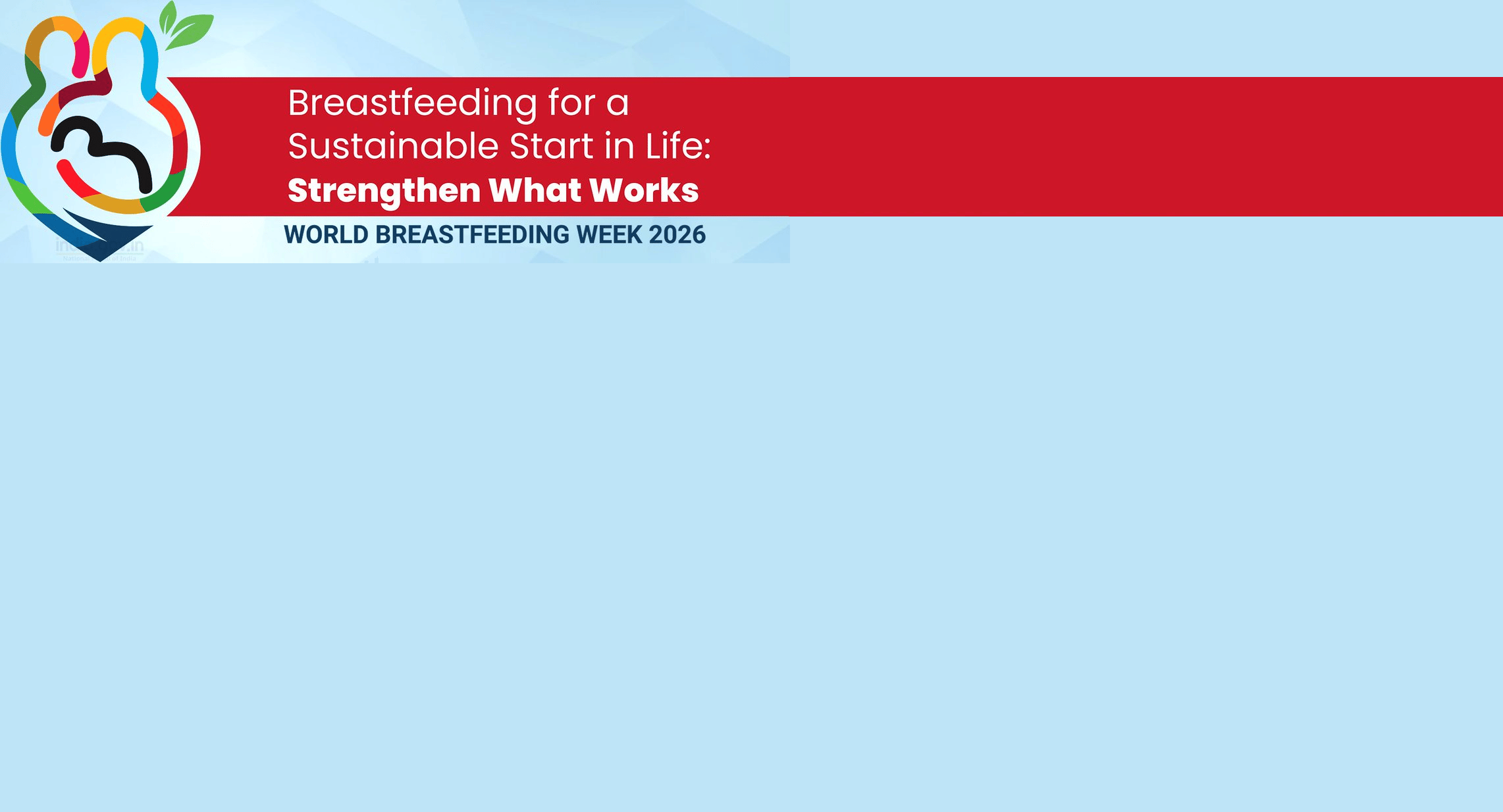
World Breastfeeding Week, celebrated annually from 1–7 August, highlights the vital role of breastfeeding in improving the health and well-being of mothers and infants. Breastfeeding provides optimal nutrition, strengthens infant immunity, supports maternal health, and contributes to reducing the burden of disease throughout life. Yet many families continue to face barriers to breastfeeding, including limited access to skilled support, inequitable policies, and the persistent influence of breast milk substitute marketing.
Advancing breastfeeding is therefore not only a public health priority but also an important contributor to achieving the United Nations Sustainable Development Goals, particularly SDG 3: Good Health and Well-being. To mark World Breastfeeding Week 2026, we have curated a selection of Springer Nature collections and research highlights showcasing recent advances in breastfeeding research, maternal and infant health, donor human milk, fertility, cancer prevention and public health policy.
Strengthen what works, starting today
A message from the Editors-in-Chief of International Breastfeeding Journal, Dr Cecília Tomori and Dr Sonia Hernández Cordero
This year, the World Breastfeeding Week theme is: “Breastfeeding for a Sustainable Start in Life: Strengthen What Works”. The theme reminds us that an interconnected chain of protection, promotion and support needs to be strengthened to enable mothers and children to exercise their right to breastfeeding. The support chain must include and simultaneously function across health systems, workplaces, communities and families. Importantly, it must hold fast not only in stable settings but also during humanitarian emergencies, climate-related displacements, armed conflict and other socioeconomic crises. Breastfeeding becomes even more critical for adequate nutrition, food security, and poverty reduction in these circumstances.
For more than three decades, World Breastfeeding Week has been marked every year during the first week of August. It is a joint initiative of the World Health Organization, the United Nations Children’s Fund (UNICEF) and the World Alliance for Breastfeeding Action (WABA) to promote, protect and support breastfeeding worldwide. Since 2016 it has been linked to the Sustainable Development Goals, given its bearing on maternal and child health.
Rather than adding new, fragmented interventions, this year's call is to consolidate and strengthen evidence-based strategies. As Editors-in-Chief, we are pleased to amplify this call and look forward to strengthening what works via comprehensive, evidence-based, and systems-thinking research.
Highlights from across Springer Nature
Research highlights
Suboptimal breastfeeding contributes substantially to infant morbidity and mortality, yet the marketing of breast milk substitutes (BMS) can undermine breastfeeding practices. This nationwide cross-sectional study identified widespread violations of Bangladesh's BMS legislation across retail outlets, healthcare facilities and health professionals, highlighting the need for stronger monitoring, enforcement, professional training and public awareness to better protect breastfeeding and infant health.
This meta-analysis of 23 observational studies found that women who breastfed had a lower risk of breast cancer than women who never breastfed, with the greatest protective effect observed after more than 11 months of breastfeeding. These findings reinforce breastfeeding promotion as a practical, low-cost strategy for breast cancer prevention.
Using nationally representative US data, this study investigated breastfeeding practices among foreign-born non-Hispanic mothers. While breastfeeding initiation and duration were generally high, exclusive breastfeeding remained below recommendations, highlighting opportunities for targeted support and future interventions.
This retrospective cohort study found no evidence that breastfeeding during frozen embryo transfer adversely affected pregnancy, miscarriage or live birth outcomes. The findings provide reassuring preliminary evidence for patients considering fertility treatment while continuing to breastfeed.
This national consensus study harmonized surveillance and risk-reduction recommendations for unaffected female BRCA1/2 carriers across Israel. The resulting framework aims to standardize care, reduce variation in clinical practice, and improve equitable access to evidence-based cancer prevention strategies.
Clinical study spotlight
This registered randomized controlled trial at the University of Malaya Medical Centre will investigate whether involving partners in structured breastfeeding counselling improves exclusive breastfeeding at six months among first-time mothers. The study will also assess maternal breastfeeding self-efficacy and partners' breastfeeding attitudes while recruitment continues through 2027.
Featured collections
This collection highlights research on implementation of the International Code of Marketing of Breast-milk Substitutes, covering legislation, monitoring, advocacy and regulatory approaches that help protect and promote breastfeeding.
Infant Feeding - Scientific Reports
This collection brings together research on breastfeeding, infant nutrition, complementary feeding, and the biological, environmental and social factors that influence infant feeding practices and early-life health.
Focusing on the biology of lactation, this collection explores mammary gland development, normal breastfeeding physiology, and the mechanisms underlying lactation disorders.
Becoming Baby-friendly: What works? - International Breastfeeding Journal
This collection examines implementation of the Baby-Friendly Hospital Initiative across diverse healthcare settings, highlighting evidence-based approaches that improve breastfeeding support and outcomes.
This collection explores the expanding role of donor human milk, including milk banking, policy development, innovation, equitable access and clinical implementation.
This collection showcases research aimed at strengthening maternal confidence, healthcare support and interventions that improve breastfeeding initiation and continuation.
Strengthening what works requires sustained commitment from researchers, healthcare professionals, policymakers, advocates, and communities alike. We invite you to explore the resources highlighted here and join the global effort to protect, promote, and support breastfeeding for every mother and child.
Follow the Topic
-
International Breastfeeding Journal
This journal encompasses articles about breastfeeding, focusing on nursing, midwifery, paediatric, obstetric, family medicine, public health, immunology, physiology, sociology and many other topics.
-
Scientific Reports
An open access journal publishing original research from across all areas of the natural sciences, psychology, medicine and engineering.
-
ISRCTN: The UK’s Clinical Study Registry
A primary clinical trial registry recognised by WHO and ICMJE that accepts studies involving human subjects or populations with outcome measures assessing effects on human health and well-being, including studies in healthcare, social care, education, workplace safety and economic development.
-
Journal of Health, Population and Nutrition
This journal brings together research on all aspects of issues related to population, nutrition, and health. The journal publishes articles across a broad range of topics including global health, maternal and child health, nutrition, common illnesses, and determinants of population health.
-
Israel Journal of Health Policy Research
This journal seeks to disseminate information about the achievements and dilemmas of Israeli health care, to facilitate dialogue between experts from Israel and elsewhere, and to enhance the extent to which Israel and other countries can learn from one another's health systems.
-
Journal of Assisted Reproduction and Genetics
This journal publishes cellular, molecular, genetic, and epigenetic discoveries advancing our understanding of the biology and underlying mechanisms from gametogenesis to offspring health.
-
Egyptian Pediatric Association Gazette
Egyptian Pediatric Association Gazette is an international journal focusing on current and emerging developments in pediatrics and pediatric surgery.
-
Journal of Mammary Gland Biology and Neoplasia
Journal of Mammary Gland Biology and Neoplasia is the leading journal in the field of mammary gland biology that provides researchers within and outside the field with an integrated source of information pertaining to the development, function, and pathology of the mammary gland.
-
BMC Pregnancy & Childbirth
BMC Pregnancy and Childbirth is an open access, peer-reviewed journal that considers articles on all aspects of pregnancy and childbirth. It welcomes submissions on the biomedical aspects of pregnancy, breastfeeding, labor, maternal health trends and sociological aspects of pregnancy and childbirth.









Related Collections
With Collections, you can get published faster and increase your visibility.
Phytochemicals and health
Publishing Model: Open Access
Deadline: Oct 28, 2026
Detecting and treating ectopic pregnancies
Ectopic pregnancies affect approximately 1 in 50 pregnancies and can lead to severe complications, including maternal morbidity and mortality. The early detection and appropriate management of ectopic pregnancies are crucial to improving outcomes for affected individuals. Recent advances in minimally invasive surgical techniques, such as laparoscopy, have enhanced the management of ectopic pregnancies, facilitate quicker recovery, and reduced hospital stays. Ongoing investigations into the genetic and molecular underpinnings of ectopic pregnancies may yield groundbreaking insights, while the incorporation of artificial intelligence in diagnostic imaging could revolutionize early detection, enabling healthcare providers to make informed decisions more rapidly. Continued research is vital for refining these approaches and developing new strategies for early detection and individualized treatment, ultimately aiming to prevent life-threatening complications and preserve future fertility.
The Collection invites researchers and clinicians in fields including obstetrics, maternal-fetal medicine, gynecology, and reproductive endocrinology to contribute research that explores topics including, but not limited to, novel therapeutic interventions that not only improve fertility but also optimize obstetric outcomes in cases of ectopic pregnancies, advances in both surgical and non-surgical management of ectopic pregnancies, and the impact of ectopic pregnancy treatment on future pregnancies.
This Collection supports and amplifies research related to SDG 3: Good Health & Well-Being.
All manuscripts submitted to this journal, including those submitted to collections and special issues, are assessed in line with our editorial policies and the journal’s peer review process. Reviewers and editors are required to declare competing interests and can be excluded from the peer review process if a competing interest exists.
Publishing Model: Open Access
Deadline: Jan 29, 2027