18 Years Later: Returning to a Project I Supervised as Site Manager
Published in Civil Engineering
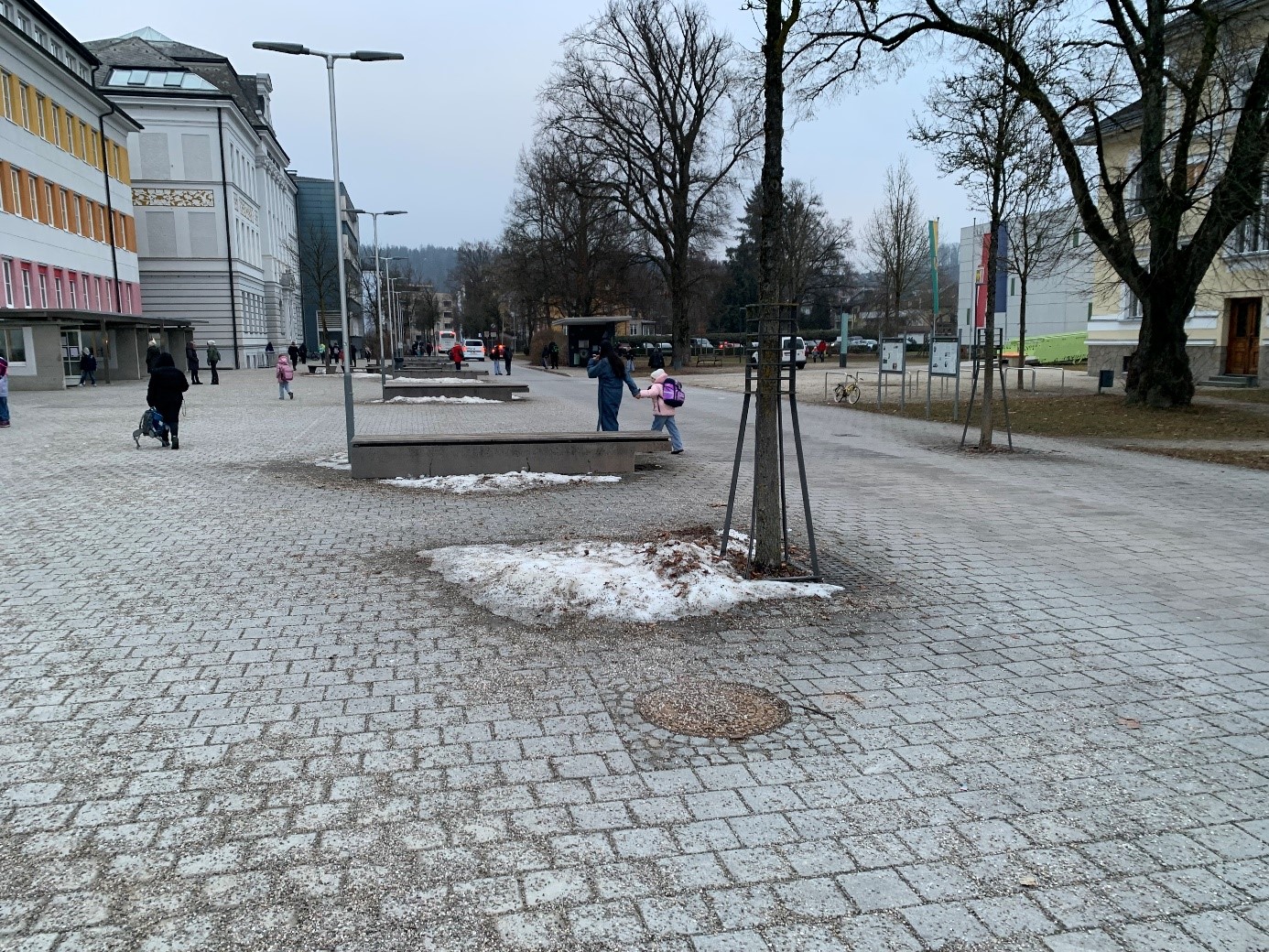
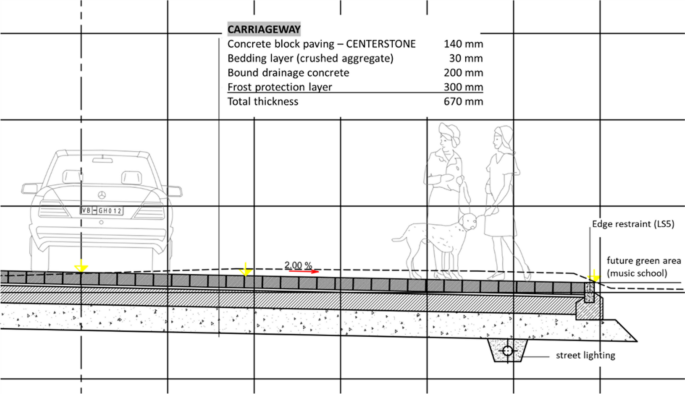

A distinctive feature of the pavement was its 200 mm drainage concrete base course, mechanically placed using an asphalt paver. This method was chosen to achieve uniform layer thickness and continuous placement.
In 2026, the pavement was systematically reassessed through visual inspection and quantitative measurements. Six representative transverse profiles were examined using a 4 m straightedge and wedge gauge.
The measured rut depths ranged from 3 to 10 mm, with an overall mean of 7.1 mm. The maximum value remained below the 15 mm Austrian intervention threshold considered in the paper.
The visual assessment was equally encouraging: no visible settlement, no structural cracking, stable edge restraints, and more than 95% of the joints still fully filled.
Notably, no maintenance or repair work, including re-jointing, had been carried out during the entire 18-year service period.
These observations highlight an important engineering lesson: durable pavement performance depends not only on structural design, but also on how the system is actually constructed — including uniform base placement, appropriate compaction and curing, stable edge restraint, and durable jointing.
This is, however, a single case study under specific project conditions. The findings should therefore not be generalized without further validation, as explicitly acknowledged in the paper.
Beyond the paper: the field evidence
An important part of this study is the documentation behind the published results.
The complete photographic documentation of the straightedge measurements is available as Electronic Supplementary Material, allowing readers to examine the field measurements underlying the reported data.
Complete Photographic Documentation of Straightedge Measurements – Electronic Supplementary Material
The full article is also publicly accessible as a free view-only version through the Springer Nature Content Sharing Initiative:
Free full-text access via Springer Nature SharedIt
Published article on Springer Nature Link
From engineering practice to research
What makes this study particularly meaningful to me is the continuity between the original project and the research.
I was involved in its construction in 2008 and had the opportunity to return 18 years later to evaluate the outcome systematically.
That connection between engineering decisions made during construction and evidence observed many years later is, for me, one of the most valuable aspects of practice-oriented research.
What began as a construction project in 2008 became a scientific case study in 2026.

Dr Kerim Hrapović is an Independent Researcher based in Austria, Chartered Civil Engineer, Austrian Master Builder (Baumeister), sworn and court-certified expert for road construction, pavement engineering and asphalt technology, researcher and author specialising in road engineering, pavement structures, asphalt technology and transport infrastructure. With more than 30 years of professional experience in civil engineering, he combines practical engineering expertise with scientific research, forensic analysis and academic teaching.
Since 2012, he has served as a court-appointed expert for road construction, pavement engineering and asphalt technology in Austria and has extensive experience in technical consulting, site management, infrastructure planning, and the preparation of expert opinions and technical reports. He has also lectured in sustainable civil engineering and transport infrastructure engineering at the Technical University of Applied Sciences Ingolstadt, Germany.
His research focuses on pavement design, asphalt structures, road safety, roundabouts, accident analysis and the influence of road and environmental factors on traffic safety. His current research investigates curve accidents and road safety on state roads in Austria, based on the analysis of more than 3,300 accidents and over four million RoadSTAR measurement datasets.
Dr Hrapović is the author of numerous scientific papers, specialist books and professional teaching materials, including major reference works on pavement structures in German-speaking countries and the design and construction of roundabouts. His publications are recognised for combining scientific depth with practical applicability and are intended for use by universities, researchers, consulting engineers, infrastructure authorities and practitioners worldwide as long-term technical references.
As an invited speaker, Dr Hrapović delivers lectures, professional seminars and international conference presentations on pavement engineering, asphalt technology, roundabout design and transport infrastructure, sharing both scientific knowledge and practical engineering expertise.
He is a member of several professional and scientific organisations, including FEANI – the European Federation of National Engineering Associations (Brussels, Belgium), FGSV – the German Road and Transportation Research Association (Cologne, Germany), ÖIAV – the Austrian Association of Engineers and Architects (Austria), the Association of Court Experts (Austria), the Chamber of Architects and Chartered Engineering Consultants (Austria), and GESTRATA – the Austrian Society for Asphalt Technology (Austria). He also holds the professional title of European Engineer (EUR ING).
His work integrates engineering practice, scientific research and expert knowledge, with a strong emphasis on durable pavement systems, transport safety and sustainable infrastructure development. All current research activities, scientific publications and academic contributions are conducted in his capacity as an Independent Researcher based in Austria.
Follow the Topic
-
Innovative Infrastructure Solutions
This is a peer-reviewed international journal. It aims to present innovative studies serving the general disciplines of geotechnical engineering and sustainable civil infrastructures, in addition to non-geotechnical fields.