A Brief History of Parasitology
Published in Microbiology and Zoology & Veterinary Science






The history of parasitology is long and fascinating, and unfortunately, too big to tackle in a single blog post. Nevertheless, this week in BugBitten we’ll take a look at a few snapshots from the history of the field and of parasitism as a whole.
It’s unknown when exactly parasitism may have evolved, but the earliest fossil record we have of it dates from 512 million years ago, during the Cambrian period. Researchers at the Northwest University in Xi’an discovered the fossils, showing worm-like animals covering brachiopods, in a quarry in Yunnan. The scientists speculated that if these were parasites, the brachiopods without the tubes would be healthier than the ones which hosted them, and an analysis found the former were indeed larger than the latter, suggesting it was a host-parasite relationship.
Over millennia, as animals evolved, parasites kept pace. For example, mosquitos are hypothesized to have evolved during the Jurassic or Cretaceous periods, living alongside dinosaurs. (Though, sadly, given the half-life of DNA, it’s unlikely we could pull Dino-DNA from a preserved mosquito, a la Jurassic Park.) And fleas, or rather pests quite similar to them, also parasitized dinosaurs. However, as their hosts were far larger back then, those fleas were also much bigger. In fact, they are speculated to have grown up to 10 times bigger than the fleas we know today (thank goodness we don’t have to deal with those!).
Skipping ahead to human history, we have records of parasites almost as soon as humans began writing. For example, per Wikipedia, “roundworms, the Guinea worm, threadworms and tapeworms are mentioned in Egyptian papyrus records from 3000 BC”. And parasites have also been found at archaeological sites in Iran. Those interested in learning more about this can look up the subfield of “archaeoparasitology.”
The study of parasitology as we think of it, though, didn’t begin to form until after the Renaissance. Francesco Redi, an Italian physician and biologist living in the 17th century, was “the first to recognize and correctly describe details of about 180 parasites, including Fasciola hepatica and Ascaris lumbricoides. He also distinguished earthworms from helminths (like tapeworms, flukes, and roundworms).” He published his findings in two treatises, Experiments on the Generation of Insects and Observations on Living Animals, that are in Living Animals, and has come to be known as "father of modern parasitology"
Around the same time, renowned microbiologist Antonie van Leeuwenhoek observed using a microscope the parasitic microorganism Giardia lamblia. And in 1687, two Italian biologists, Giovanni Cosimo Bonomo and Diacinto Cestoni, linked scabies to parasitic mites.
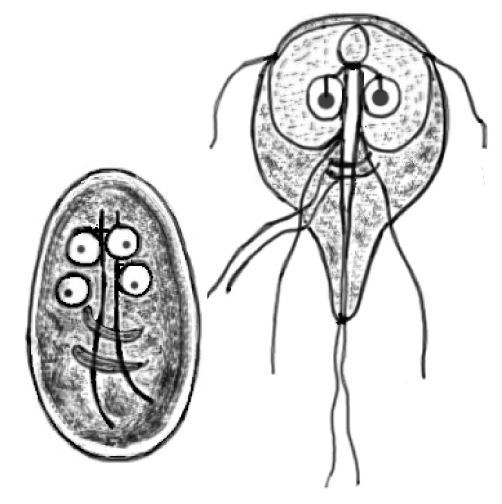
As microscopes and technology improved, the study of parasites developed, and the accuracy of scientists’ observations increased. Notable examples include James Paget in 1835 describing Trichinella spiralis and James McConnell in 1875 observing a liver fluke found in humans. And according to Merriam Webster, the term “Parasitology” was first used in 1870.
One significant breakthrough was the discovery that malaria is caused by Plasmodium parasites. In 1880, a French physician working in Algeria, Charles Louis Alphonse Laveran, spotted organisms in the red blood cells of malaria patients and hypothesized that the disease was caused by these parasites. For this and other protist related discoveries, Laveran was awarded the 1907 Nobel Prize in Physiology or Medicine .
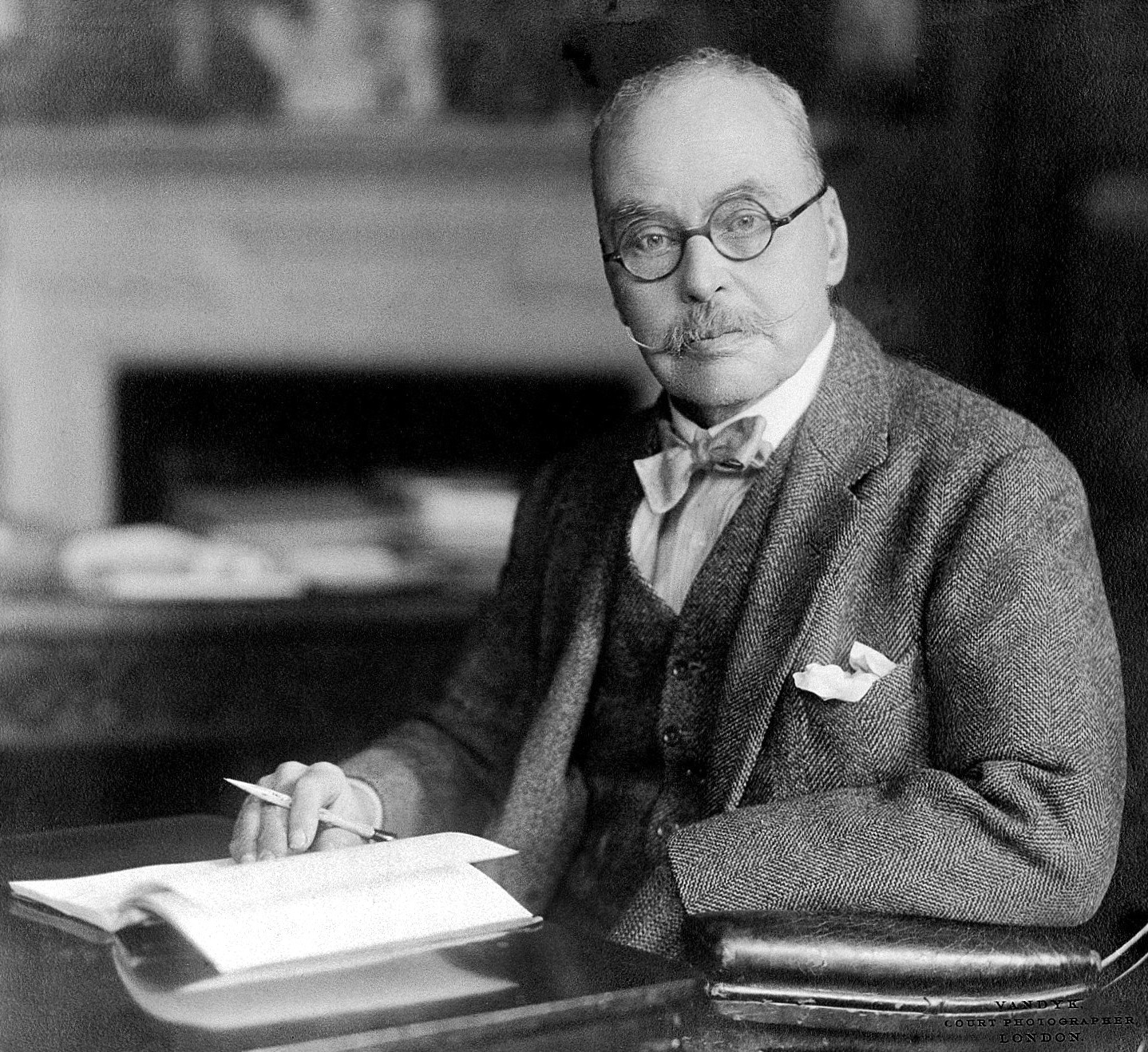
Not long after this, Ronald Ross built on these discoveries and began studying malaria, though in birds instead of people (“He had no success with malarial patients because they were always immediately given medication”). Through his studies, he was able to establish mosquitoes as the vector of the Plasmodium parasite, and that it resided in the salivary glands of the insect, which transmitted the disease during feedings. Around the same time, Giovanni Battista Grassi, an Italian doctor, confirmed the life cycle of Plasmodium in anopheline mosquitoes. Controversially, when the Nobel committee came to discuss these recent advances in 1902, only Ross won. This came after Ross embarked on a defamatory campaign against Grassi, and while the Nobel committee had initially planned to share the prize between the two, Ross ultimately came out at the sole laureate.
Parasitology has continued to develop over the years. In the 21st century, this is no less true.
Odile Bain was a renowned parasitologist who studied roundworms and other helminths. Over the course of her career, she published over 360 articles and won numerous prizes for her work. She passed away in 2012, but in 2014 a prize named after her, Odile Bain Memorial Prize was established. It aims to highlight young researchers who have contributed to the fields of medical and/or veterinary parasitology. Winners have hailed from all over the world, including from Brazil, Australia, and the Middle East.
And just one year later, in 2015, parasitologists again won the Nobel Prize in Physiology and Medicine. Per the Nobel Prize’s press relate, they awarded one half of the prize to “William C. Campbell and Satoshi Ōmura ‘for their discoveries concerning a novel therapy against infections caused by roundworm parasites’, and the other half to Tu Youyou ‘for her discoveries concerning a novel therapy against Malaria’.” Interestingly, Tu Youyou utilized recipes for ancient Chinese medicines in her research, allowing her to discover the chemical artemisinin, which is now incorporated into standard malaria treatments all over the world.
And though not a parasitologist himself, former US President Jimmy Carter also deserves a mention for his work on eradicating the Guinea Worm. Though he didn’t live to see the parasite wiped out, he nearly got there: per NPR, “When Carter got involved in Guinea worm eradication in 1986 there were 3.6 million cases. Now, nearly four decades later, that number has plummeted. Between January and early December 2024, there were just 11 human cases of Guinea worm reported worldwide.”
Parasitology has come a long way in just the past century; in a hundred years, who knows what advances will be made, what vaccines developed, and what parasites eradicated? It’s important we keep looking forward, without losing sight of the past.
Cover image: Image by Michal Jarmoluk from Pixabay

Follow the Topic
-
Parasites & Vectors
This journal publishes articles on the biology of parasites, parasitic diseases, intermediate hosts, vectors and vector-borne pathogens.
-
BugBitten
A blog for the parasitology and vector biology community.

Related Collections
With Collections, you can get published faster and increase your visibility.
Credelio Quattro
This collection was created to facilitate access to manuscripts published in Parasites & Vectors focusing on Credelio Quattro™ (lotilaner, moxidectin, praziquantel, and pyrantel chewable tablets).
Articles published in the collection have already gone through the systematic peer review process of the journal.
Publishing Model: Open Access
Deadline: Ongoing
Translational leishmaniasis
This collection focuses on leishmaniasis as a central model while also encompassing related parasites that share comparable biological traits, pathogenic mechanisms, and clinical relevance. The aim is to create a translational bridge between basic research and practical applications, highlighting insights that can be extended across the spectrum of kinetoplastids and other closely linked parasites.
Topics of interest include:
• Analytical and omics-based advances for parasite detection, monitoring, and characterization.
• Comparative biology of Leishmania and related parasites, with emphasis on shared mechanisms of infection and survival.
• Host-pathogen interactions and immune responses.
• Epidemiology and transmission dynamics, including drawing parallels between leishmaniasis and other parasitic infections.
• Translational strategies in drug discovery, vaccine development, and therapeutic interventions applicable to leishmaniasis and related parasitic diseases.
By linking leishmaniasis with other parasitic diseases of similar characteristics, this collection seeks to foster integrative approaches, stimulate cross-disciplinary dialogue, and accelerate the translation of knowledge into innovative diagnostic, preventive, and therapeutic solutions.
Publishing Model: Open Access
Deadline: Sep 01, 2026
Please sign in or register for FREE
If you are a registered user on Research Communities by Springer Nature, please sign in
This is so interesting!!