A Once-in-a-Decade Opportunity: Biological & Physical Sciences Decadal Survey
Published in Physics
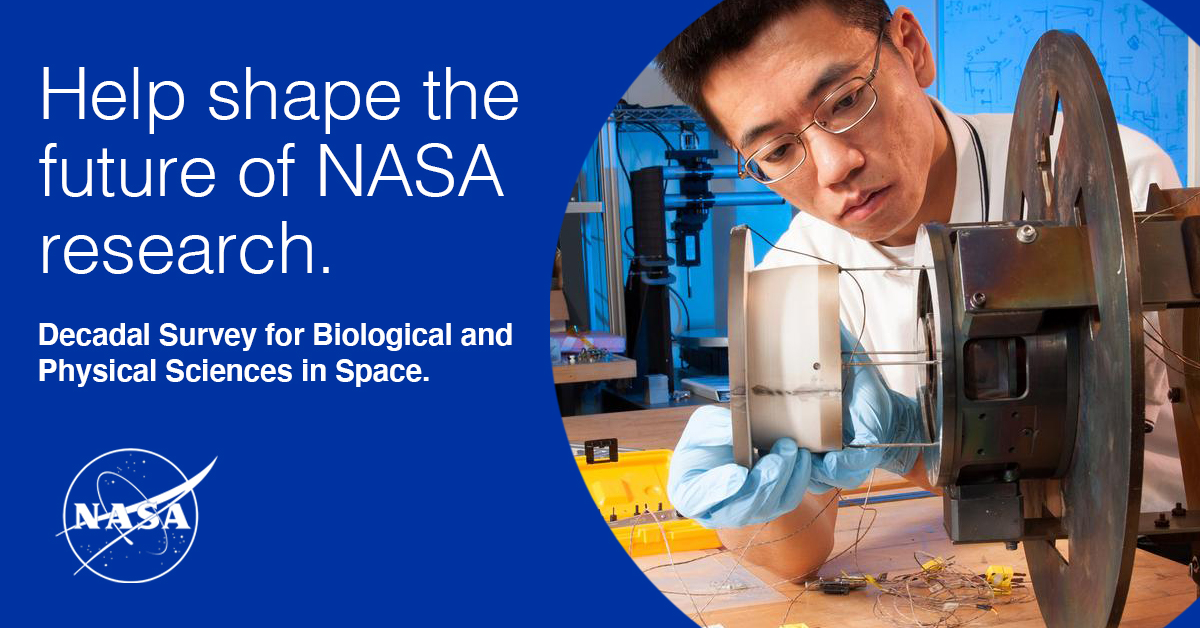
Explore the Research

 NASA
NASA
Page Not Found - NASA
NASA explores the unknown in air and space, innovates for the benefit of humanity, and inspires the world through discovery.
How would you leverage different space environments to further study biological and physical systems? The Decadal Survey offers a unique opportunity for the scientific community at large to contribute ideas that could help shape the direction of NASA research and funding. The National Academies of Science, Engineering and Medicine is expected to announce the official call for whitepapers in 2020. Learn more: https://go.nasa.gov/2UbjGTO.

Follow the Topic
-
npj Microgravity
This journal aims to provide a thorough understanding of the scientific impact and future of spaceflight research.
Related Collections
With Collections, you can get published faster and increase your visibility.
Ecological Foundations of Bioregenerative Life Support Systems for Deep Space Human Exploration
Publishing Model: Open Access
Deadline: Dec 31, 2026
Surgical Readiness for Long Duration Microgravity Exposure
Publishing Model: Open Access
Deadline: May 17, 2027