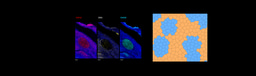
Active Liquid Crystal Physics Governs Self- Organization of Mammalian Oocyte Spindles
Published in Physics



Speakers
- Prof Colm Kelleher — Syracuse University
Abstract
Spindles are the sub-cellular structures responsible for organizing and segregating chromosomes during cell division. They are composed of microtubules and molecular motors, as well as several other accessory species and complexes. So-called "active matter" theories offer a physical framework for modeling the collective behaviors of self-organized, force-generating ensembles like the spindle, but quantitative applications to living systems remain rare. I will show that a specific class of active matter model -- active liquid crystal theory -- quantitatively predicts steady-state orientation, and that using this theory to interpret polarization microscopy data allows non-invasive measurement of the spindle's collective properties, including elasticity and microtubule transport. Deviations from the theory reveal new biology: chromosomes embedded in the microtubule network act like inclusions and deform the surrounding material, generating micron-scale repulsive forces that produce locally ordered chromosome configurations. Finally, I will discuss current open problems in spindle biophysics, in particular whether active matter theories can capture dynamic behaviors, for example spindle formation (assembly) and chromosome segregation (anaphase).
Looking for more in the field?
Explore more events from Biological Physics Seminars and Springer Nature's Physics.

Research Seminars by Springer Nature - giving you access to the latest research talks, direct from authors and editors.
Follow the Topic

Related Collections
With Collections, you can get published faster and increase your visibility.
06. Section - Physiology
Publishing Model: Hybrid
Deadline: Ongoing
10. Section - Other (General Biological Physics)
Publishing Model: Hybrid
Deadline: Ongoing