Agricultural Products and By-Products in Achieving the UN Sustainable Development Goals
Published in Sustainability
Citation: Kioumarsi, H., Alidoust, M., El Hajje ,M & Ezekiel Mirashi, J. (2026). Agricultural Products and By-Products in Achieving the UN Sustainable Development Goals. Research Communities by Springer Nature. https://go.nature.com/4kb54iC
Introduction
Agriculture is one of the most important sectors of the world economy and has a significant influence on human well-being, environmental integrity, and sustainable development. It has a direct bearing on issues such as food security, employment opportunities, and economic stability. Apart from the main crops and livestock, the untapped potential of agricultural by-products has significant value for supporting and accelerating the achievement of the United Nations Sustainable Development Goals (SDGs).
The 2030 Agenda for Sustainable Development has emphasized the importance of a holistic and transformative change across economic, social, and environmental domains for sustainable development. The SDGs have explicitly incorporated the importance of agriculture for sustainable development in SDG 2 (Zero Hunger), SDG 12 (Responsible Consumption and Production), SDG 13 (Climate Action), and SDG 15 (Life on Land), and indirectly for SDG 1 (No Poverty), SDG 7 (Clean and Affordable Energy), and SDG 8 (Decent Work and Economic Growth). Kioumarsi et al. (2025, 2026) stressed the need to adopt a multidimensional and holistic perspective on sustainable agriculture. This is necessary for achieving long-term sustainability, viability, and equity in the environment. This is achieved through the efficient management of resources, the focus on agricultural products and by-products, climate-smart agriculture, innovation, and policy frameworks that are inclusive and promote productivity with minimal environmental degradation.
Agricultural Products
Agricultural products play a very important role in the fight against hunger, improving nutrition, and ensuring food security. These products help provide macronutrients and micronutrients that play a crucial role in promoting human health. Improved productivity of these products helps meet the needs of a growing population. Agricultural products help improve nutrition beyond just calories. For instance, fruits and vegetables help improve nutrition. This aspect of agricultural products helps achieve SDG 3, which is focused on ensuring good health and well-being. This is because good nutrition helps reduce diseases that result from poor nutrition.
Agriculture has been recognized as an important area for employment creation and foreign exchange earnings for many low- and middle-income economies. The sustained production activities in the agricultural sector contribute significantly towards economic growth in the country. The agricultural value chains become stronger with the growth of the agricultural sector. The value chains provide scope for entrepreneurship development. Small farmers, whose primary occupation is agriculture, benefit the most from the sustained production activities in the agricultural sector. The connection between food production and value-added activities like processing and marketing helps agricultural activities become central to economic development.
A considerable amount of biomass produced from agricultural production activities and other value-added activities like processing is discarded as waste. In the conventional sense, it has been perceived that agricultural waste like stalks, seeds, peels, and husks has little economic value and has been disposed of improperly. Recent studies have recognized the potential for converting agricultural waste into valuable resources for achieving some of the Sustainable Development Goals (SDGs).
Turning Agricultural Waste into Value
These by-products may contain bioactive compounds such as dietary fibers, polyphenols, and proteins, which may be utilized for different applications in the food, pharmaceutical, packaging, and cosmetic industries. The use of these by-products for the production of value-added products is referred to as valorization. Valorization has been recognized as an important tool for waste management and the mitigation of negative environmental impacts. Valorization strategies for food by-products have been recognized as important for the achievement of Sustainable Development Goals 12 on consumption and production and climate action, as outlined in SDG 13. For instance, agro-industrial residues containing antioxidants such as citrus peels and olive pomace may be utilized for the production of valuable products for the development of nutraceuticals and natural products. In addition, the use of agricultural residues for energy production may be utilized for the achievement of SDG 7 on clean and affordable energy.
Soil Health and Ecosystem Services
Agricultural by-products can also have a role in land stewardship. For instance, crop residues or composted wastes can add nutrients to the soil, thus enhancing soil fertility. The use of crop by-products in enhancing soil fertility has been found to have the potential to improve soil structure, water retention capacity, and biodiversity of the soil, thus enhancing ground-level ecosystem services, including biodiversity conservation—a key aspect of SDG 15 (Life on Land).
A field study was conducted to investigate the role of integrating wastes of aromatic plants in wheat cultivation. The results of the study revealed that the wastes have the potential to improve wheat cultivation in terms of yield parameters and resilience to environmental stress.
Transformative Practices and Technologies
Smart agriculture entails the utilization of digital technologies in improving efficiency in the utilization of resources, increasing agricultural productivity, and reducing environmental impacts. Experts propose that, through digital innovation, smart agriculture not only increases efficiency in the utilization of resources but also helps in the achievement of the Sustainable Development Goals (SDGs) by strengthening adaptive capacity and building resilience against the impacts of climate change. Smart agriculture also facilitates the efficient management of agricultural by-products, thereby optimizing the timing and precision of incorporating agricultural residues into soils or redirecting them to energy generation and/or material processing facilities.
Agroecology, which incorporates elements of ecology in agriculture, shows significant correspondence with a number of the SDGs. Agroecology encourages the conservation of biodiversity, minimizes the utilization of chemical products, and strengthens community resilience. Researchers from the United Nations University propose that agroecological practices can facilitate the achievement of a number of the SDGs, which focus on poverty reduction, food security, and sustainable land management, by revitalizing local food systems and prioritizing ecological balance.
Organic and diversified farming systems have also been shown to perform better than conventional farming systems in terms of environmental and social sustainability, indicating their potential as sustainable alternatives to achieve the SDGs.
Challenges and Strategic Needs
Despite the tremendous opportunities offered by agricultural products and their by-products in the attainment of the SDGs, there are key challenges that need to be addressed. These challenges include the technological challenges, which revolve mainly around the limited access of smallholder farmers to value addition technology and markets; the policy/infrastructure challenges, which revolve mainly around the limitations in the formulation of incentives for waste valorization and the transition to the circular bio-based economy; and the knowledge/capacity challenges, especially in the developing countries of the world, where the dissemination of best practices in the use of by-products, soil management, and smart agriculture is wanting. The economic viability challenges also come to the forefront in this regard.
Conclusion
Agricultural products are still at the heart of the global fight against hunger and the pursuit of sustainable development. When coupled with the innovative use of agricultural by-products, the impacts are felt well beyond the agriculture domain, including the advancement of sustainable production practices, climate resilience, economic opportunities, and the maintenance of healthy ecosystems. Although scientific evidence points to the critical role that agriculture plays in the achievement of the Sustainable Development Goals (SDGs), the achievement of the SDGs will ultimately rely on fundamental transformations in the agricultural and food domain. In this respect, the role of agricultural products and by-products cannot be overstated, owing to their critical role in the sustenance of human lives.
References
Ahmad, T., Esposito, F., & Cirillo, T. (2024). Valorization of agro‑food by‑products: Advancing sustainability and Sustainable Development Goals 2030 through functional compounds recovery. Food Bioscience, 62, 105194. https://doi.org/10.1016/j.fbio.2024.105194
Barroso-Barroso, C., Vega-Muñoz, A., Maradiaga-López, J., Salazar-Sepúlveda, G., & Carabantes-Silva, R. (2026). Smart Farming and the SDGs: Emerging Research Patterns and Sustainability Implications. Agriculture, 16(1), 81. https://doi.org/10.3390/agriculture16010081
Bhardwaj, A. K., Thakur, B., Tripathi, S. K., Turabayev, M. E., Aljulaih, A. A., Kharlamova, T. S., & Kulinich, S. A. (2025). Recent advances in valorizing agricultural waste: A sustainable approach. Waste and Biomass Valorization. https://doi.org/10.1007/s12649‑025‑03419‑5
FAO. (2026). The state of food and agriculture 2026. Food and Agriculture Organization of the United Nations. https://www.fao.org
Kioumarsi, H., Naseri Harsini, R., Gizem Özbey, B., Rafiei, B., Alidoust Pahmedani, M., Shariman Yahaya, Z., & Rosen, M. A. (2026). Wildlife, biodiversity, and the United Nations sustainable development goals: Synergizing conservation and development for a sustainable future. European Journal of Sustainable Development Research, 10(2), em0367. https://doi.org/10.29333/ejosdr/17816
Rosen, A. R., Kioumarsi, H., & Gholipour Fereidouni, H. (2025). Climate action and net-zero emissions. European Journal of Sustainable Development Research, 9(4), em0334. https://doi.org/10.29333/ejosdr/16864
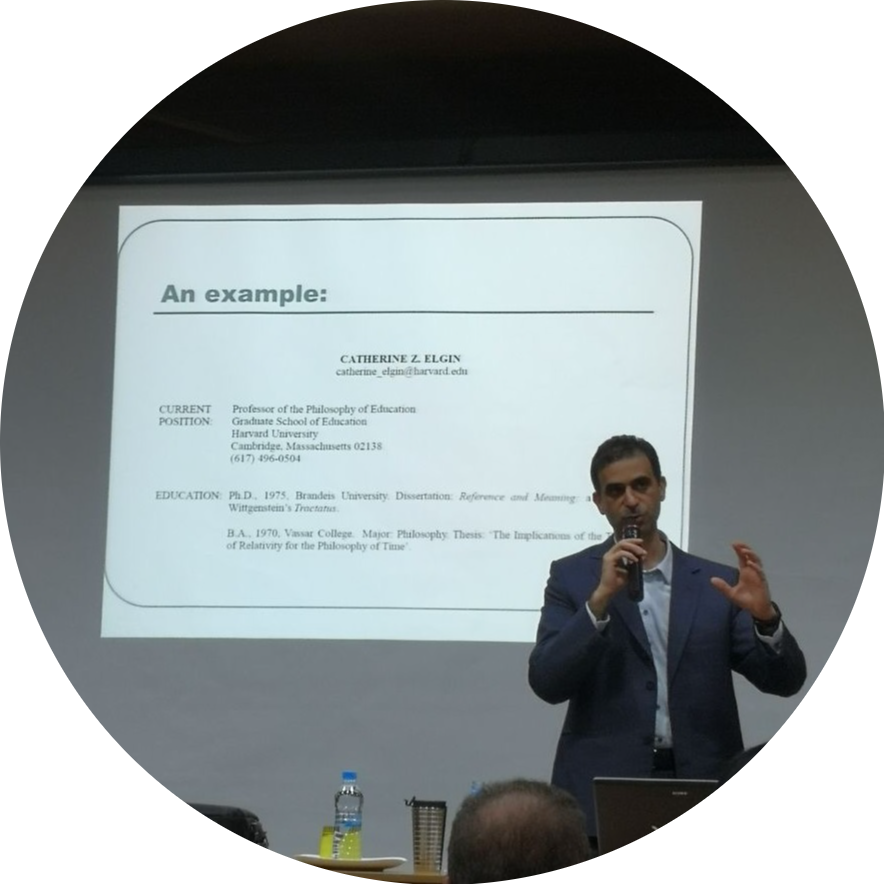
Hamed Kioumarsi, PhD, is an award-winning scientist and author with more than 200 scientific papers and 10 books. His international work spans agriculture, biological sciences, climate change, sustainability, and education, with a strong focus on scientific excellence and international collaboration.
He collaborates with leading Springer Nature–affiliated journals, including Environment, Development and Sustainability, Hereditas, Nutrition Journal, and Biological Procedures Online, among others. He serves as Associate Editor of Environment, Development and Sustainability (Q1) and Associate Editor of Hereditas (Q2), as well as holding editorial roles with several leading Scopus-indexed journals.
He is also Editor-in-Chief of the Indonesian Journal of Biotropical Research and Nature Technology (JBRNT) and Editor-in-Chief of the Brazilian journal NexusSDGs, and has served as Co-Editor-in-Chief of Pandawa Publishing House, Indonesia.
Follow the Topic
What are SDG Topics?
An introduction to Sustainable Development Goals (SDGs) Topics and their role in highlighting sustainable development research.
Continue reading announcement