AI Is Not Enough: Rethinking the Foundations of Drug Discovery in Oncology
Published in Biomedical Research
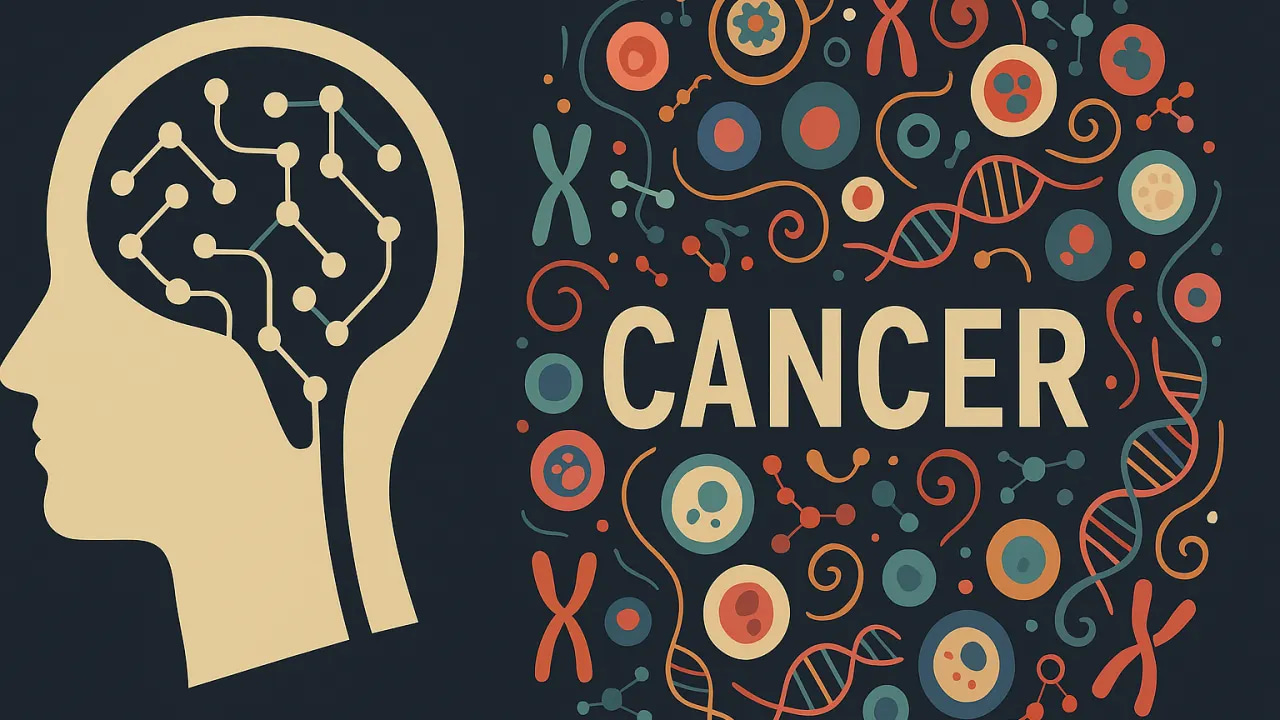
Most people think AI will solve cancer drug discovery. What if we’re pointing it at the wrong problem?
The Illusion of Intelligence in an Unfair Game
In oncology, complexity isn’t a bug, it’s the operating system.
Tumors don’t play by the rules. They mutate, adapt, self-rewire, and evolve under therapeutic pressure. They exploit microenvironments, reroute signaling pathways, and shed the very targets we train algorithms to detect.
They are living systems with evolutionary cunning, and that cunning is not static. It morphs. It responds. It learns. It escapes.
Against that backdrop, we’ve deployed artificial intelligence with increasing ambition, hoping it will accelerate the search for therapies that biology itself seems determined to outrun.
We’ve trained models on massive datasets. We’ve built platforms that promise faster identification of targets, better screening, more rational design. And yet, despite exponential growth in data, compute power, and modeling techniques, the success rate for oncology drug discovery remains stubbornly low. The valleys between target identification, preclinical validation, and clinical translation are still deep, and unforgiving.
The question isn’t whether AI is powerful. It’s whether we’re using it in ways that respect the ground truth of cancer biology.
Because intelligence without biological literacy doesn’t produce insight, it produces false confidence.
The Failure Isn’t Technical. It’s Architectural
The dominant AI mindset in oncology treats biology as a data problem to be solved through pattern recognition: find the signal, optimize the hit, reduce the noise.
But biology, especially cancer biology, isn’t noise. It’s context.
Context is not an accessory to discovery; it’s the very medium through which meaning emerges. Cancer doesn’t simply exist in the genome. It exists in networks, environments, timing, pressures, and history. It exists because of relationships, not just features.
And when we flatten that context into fixed datasets and static features, we lose the very dynamics that define cancer: spatial heterogeneity, temporal evolution, emergent resistance, and microenvironmental dependence.
We train models to be accurate, but within bounded domains. We validate them on partitions of data, not on full biological systems. And we conflate statistical confidence with translational consequence.
As a result, we end up with beautifully trained models that:
- Generalize poorly beyond their training set
- Misinterpret causal signals as noise
- Miss the adaptive behaviors that define treatment escape
- Prioritize high-confidence targets that don’t survive translational pressure
We’ve mistaken model accuracy for translational relevance. But cancer doesn’t care about your confusion matrix.
AI isn’t failing. We’re failing it by forcing it into architectures that are biologically naïve.
Because when your foundations are mismatched with your reality, no amount of optimization at the top will save the system.
Oncology Magnifies What AI Still Doesn’t Understand
Cancer exposes three fundamental limits in how AI is applied today:
1. Static modeling of dynamic systems
Most models are trained on frozen snapshots of tumor biology. But cancer doesn’t stand still. Treatment exerts pressure. Resistance emerges. Lineages evolve. AI can’t capture that unless we build models that account for time, feedback, and change.
Disease progression isn’t linear. Therapy changes the tumor. The tumor changes the microenvironment. The microenvironment feeds back into gene expression. And the very architecture of vulnerability reconfigures in response. This is not noise, this is the system. And we need models built to learn in the language of time, not just in the language of static data.
We need models that learn in motion, not just from annotated archives. Longitudinal single-cell data. Dynamic graph structures. Feedback-aware modeling. Without these, AI will continue to optimize around yesterday’s biology.
2. Missing context
Gene expression without spatial context. Genomic data without microenvironment cues. Targets discovered in bulk data that disappear in single-cell analysis. AI that doesn’t ingest these layers isn’t underpowered, it’s ungrounded.
You can’t model immune evasion if you don’t see the immune system. You can’t model tumor progression if you ignore the ecosystem it exploits. AI needs not just more data, it needs structured insight into biological relationships.
Cancer biology is not additive. It is conditional. The same mutation behaves differently depending on cell lineage, microenvironment, inflammatory state, and co-mutational landscape. Any model that ignores that conditionality will learn the wrong lessons.
3. Assuming correlation = consequence
The most significant genes in a dataset aren’t always the drivers of disease. They may be markers, passengers, or adaptive responses. Without mechanistic framing, AI can confuse consequence for cause, and lead discovery teams astray.
In oncology, the price of that confusion is measured in years lost and trials failed. A statistically robust signal is meaningless if it doesn’t carry biological consequence. And only models with architectural respect for mechanism and causality can draw that distinction.
Causal inference. Perturbational logic. Intervention-aware modeling. These are not “extras”, they are survival mechanisms for any AI system deployed in biology.
What We Need Instead: Structured Intelligence for Translational Reality
We don’t need more AI hype in oncology. We need better architectures, ones that:
- Integrate omics data with spatial, temporal, and treatment-specific dimensions
- Model tumors as evolving ecosystems, not static entities
- Detect not just what is present, but why it matters in context
- Bridge systems biology with causal inference, not just predictive scoring
- Are validated not just by retrospective performance, but by prospective insight and real-world impact
The next phase in AI-driven oncology will not be led by better algorithms alone. It will be led by teams who understand that designing around biology is the prerequisite for discovery that matters.
This isn’t about replacing AI. It’s about designing it to serve the shape of biology, not just the structure of data.
Because even the most sophisticated engine fails when you build it on the wrong chassis.
The Real Question Isn’t: Can AI Learn Fast Enough?
It’s: Can we teach it the right questions to ask?
Because oncology isn’t waiting. And biology doesn’t care if your model fits.
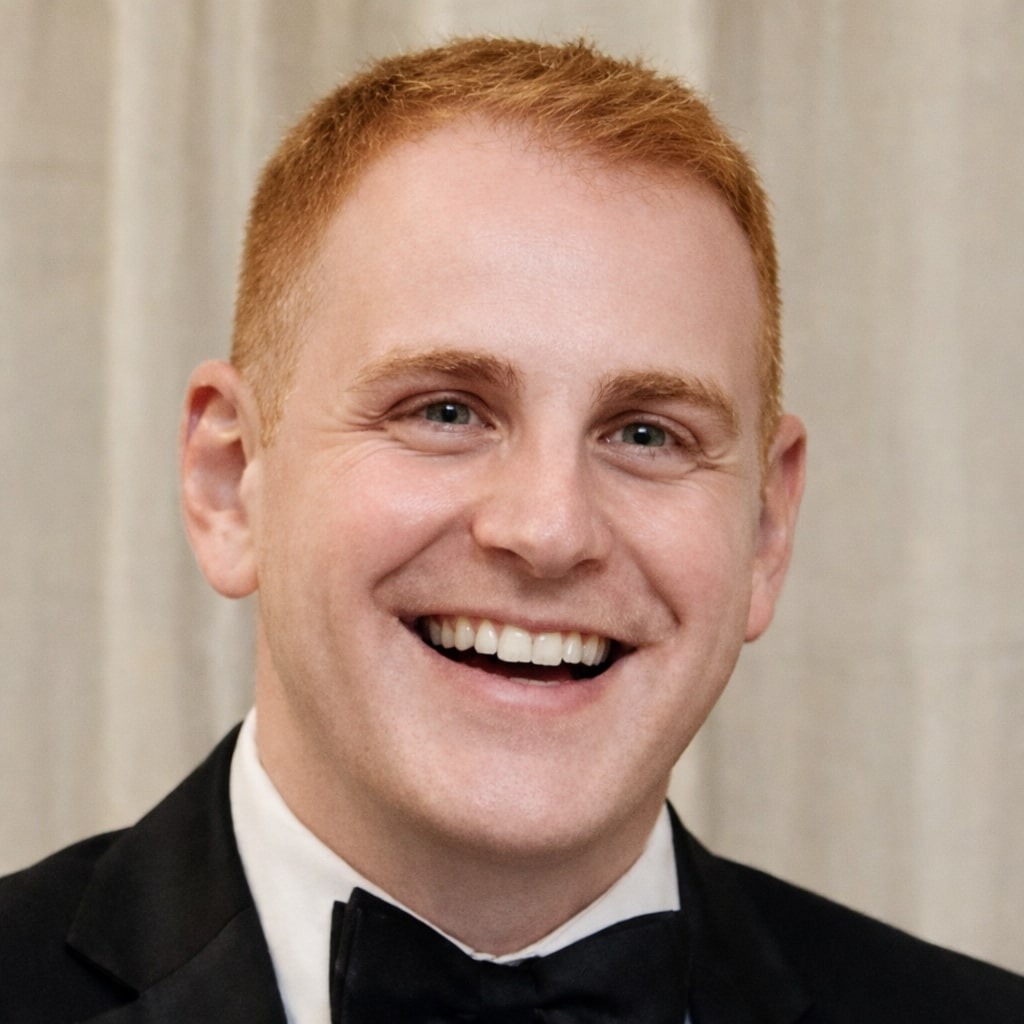
I am a physician-scientist, biotech founder, and former pharmaceutical executive working at the intersection of disease biology, computational science, drug development, and translational medicine.
My career has spanned clinical medicine, pharmaceutical R&D and medical leadership, biomarker and therapeutic discovery, and biotechnology entrepreneurship. A recurring question across these experiences has shaped much of my current work: how can we understand disease biology deeply enough to make better decisions about what to measure, what to target, and how to intervene?
I co-founded Bioada, where our research applies computational and multi-omics approaches to biomarker and therapeutic discovery across oncology, neurodegenerative disease, and other complex disorders. This work has increasingly led me beyond individual biomarkers and targets toward understanding the biological states, transitions, interactions, and mechanisms that organize disease.
My recent work is focused on Biological Intelligence: developing approaches for representing and reasoning about complex biology in ways that can inform scientific discovery, therapeutic development, asset strategy, and venture creation.
My current interests include disease architecture, biological reasoning systems, multi-omics and single-cell analysis, biomarker discovery, therapeutic target identification, drug resistance and response, and the use of AI to move from biological prediction toward biological understanding.
I am particularly interested in connecting with researchers and innovators exploring new ways to understand complex disease biology and translate that understanding into better diagnostics, therapeutics, and scientific decisions.