Ancient dental calculus offers new perspectives in evolutionary medicine
Published in Microbiology



Ancient dental calculus is an exciting material with which to study microbial and host-microbiome evolution. Dental calculus forms when dental plaque calcifies during a person’s lifetime. Once calcified, it becomes rock-hard and can preserve for thousands or even tens of thousands of years along with a person’s skeletal remains. Because tooth brushing and flossing are common today, calculus (also called tooth tartar) is seen much less frequently than it was in the past, which makes comparisons of archaeological and modern dental calculus challenging. Instead, scientists typically compare the biofilm community of ancient dental calculus to that of modern dental plaque - however, we have noticed some stark differences.
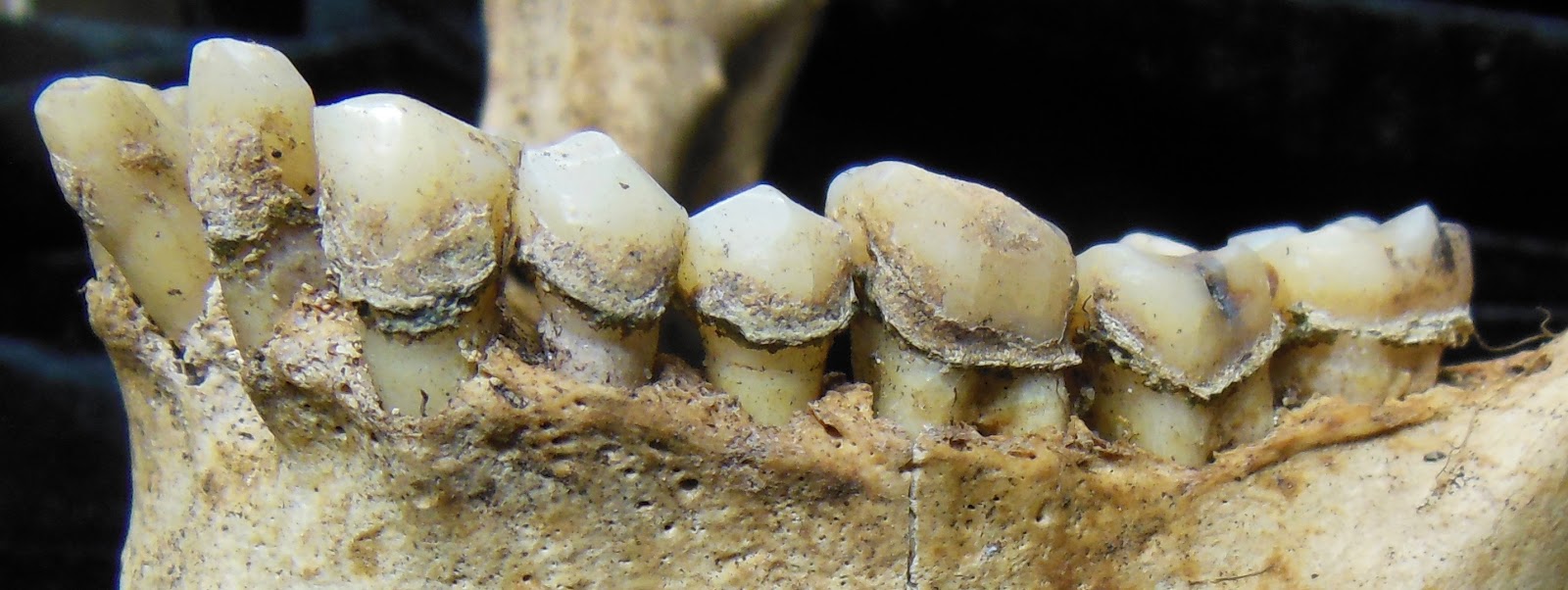
Ancient dental calculus used in this study on teeth prior to sampling.
For one thing, the bacterial communities of ancient dental calculus appear to be much more “pathogenic” than those of modern dental plaque. Species that are strongly associated with oral diseases such as gum disease (Porphyromonas gingivalis, Treponema denticola, Tannerella forsythia) are uncommon in plaque from modern, healthy teeth, but they are prevalent and highly abundant in ancient dental calculus, even from healthy teeth. This curious inconsistency led us to ask why ancient people seem to have carried presumed pathogens without more cases of oral disease, and if there was perhaps something we were missing in our comparative datasets. We decided to investigate this question and published the results in our study“Microbial differences between dental plaque and historic dental calculus are related to oral biofilm maturation stage”.
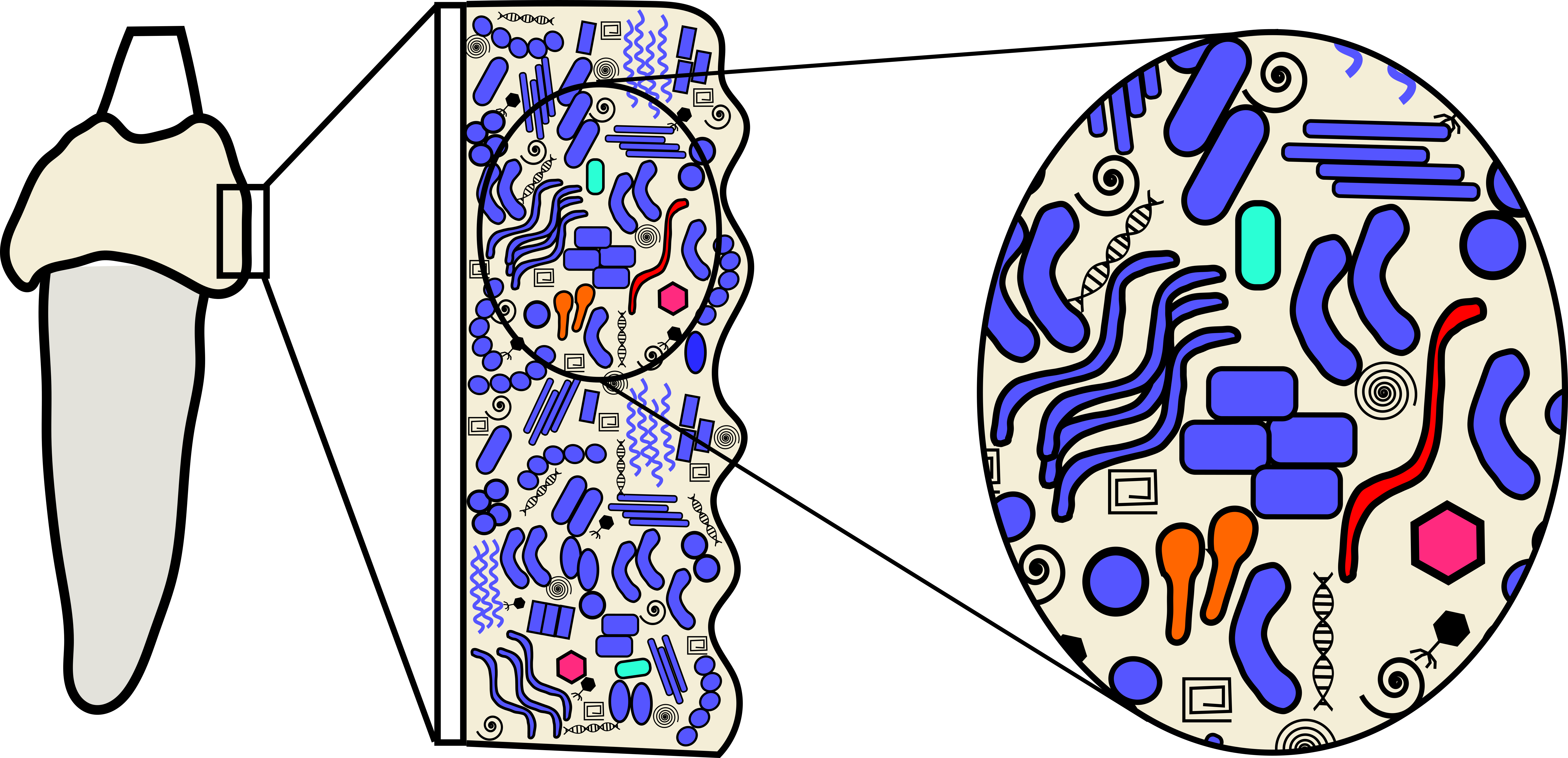
Dental plaque biofilm contains multitudes of microbes including bacteria, archaea, and viruses, as well as DNA, proteins, and metabolites from the microbes and the host.
To understand why bacterial communities of dental calculus and dental plaque differ, we first turned to the extensive studies of oral biofilm formation. Developmental stages of dental plaque are characterized by changes in the presence and abundance of species, with young biofilms and mature biofilms having distinct species differences. We found that the ancient dental calculus microbial communities resemble mature plaque biofilms, which take days or weeks to develop and are therefore not common in people who brush their teeth regularly. This mature biofilm is what calcifies into calculus, so we compared community profiles of ancient and modern calculus and modern dental plaque. We confirmed that ancient and modern dental calculus have microbial profiles much more similar to each other than to dental plaque. So the curious differences we see are in fact a biologically normal phenomenon. Without this basic knowledge, we could easily draw erroneous conclusions about bacterial pathogens and host susceptibility to disease in ancient populations.
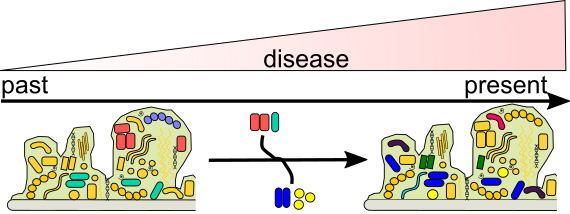
Changes in the microbial biofilm community over time and how this relates to changes in disease prevalence needs to be carefully teased apart.
However, we didn’t stop there. Dental calculus preserves DNA, proteins, and metabolites from the biofilm and host, so we explored the potential to use several levels of biological activity in one substrate to study microbiome-host evolution. We extracted a broad range of bacterial proteins, as well as an array of host proteins mostly related to the immune response. Using metabolite data that we published earlier, we looked for correlations between the protein and metabolite profiles. Bacterial virulence factor proteins were usually detected in samples where the species that produce those virulence factors were highly abundant, indicating that further exploration of DNA-based species profiles and proteomics may reveal relationships between species presence and protein expression. Additionally, there seems to be good preservation of bacterial membranes, with high correlations between bacterial membrane lipids and membrane-associated proteins, suggesting bacterial cells remain relatively complete and partially intact. Future dental calculus studies could use this characteristic to conduct cell-based analyses.
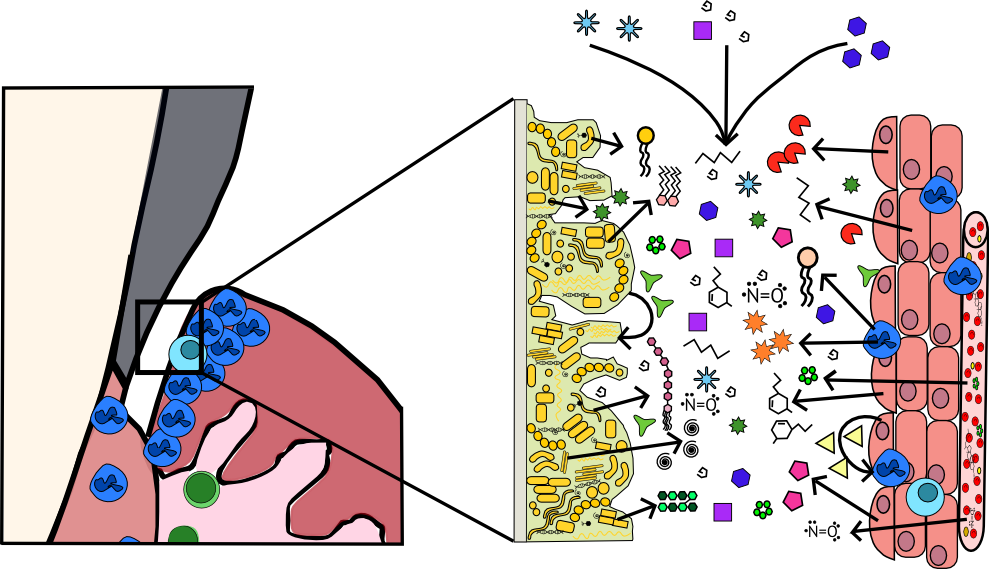
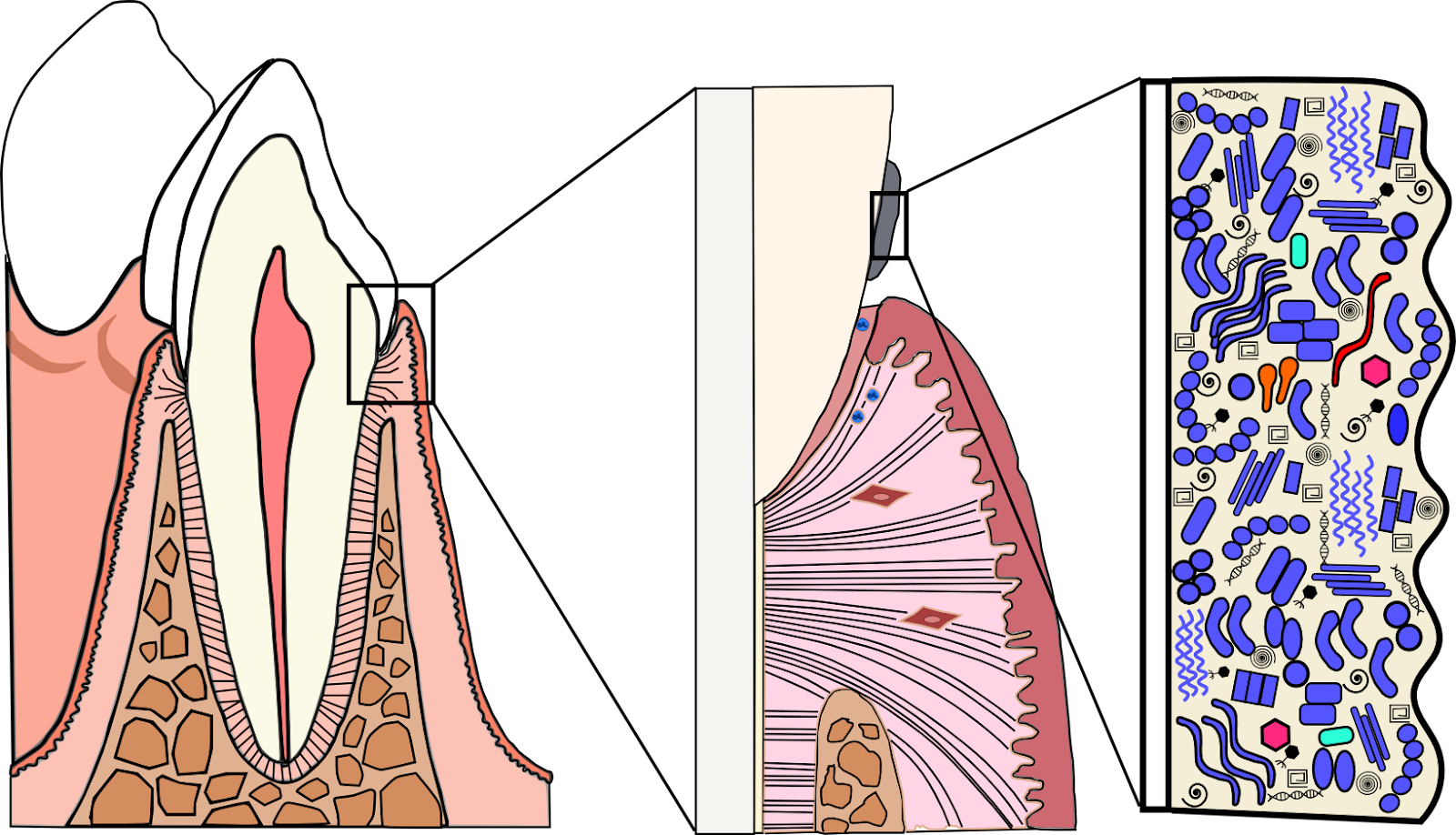
Dental plaque can trap metabolites from biofilm microbes, saliva, and host tissues, and preserve them in dental calculus.
Our study thus not only made an important basic insight for dental calculus research – that dental calculus and dental plaque are not comparable – but also showed that dental calculus can be used to investigate microbiome-host evolution over time.

Follow the Topic
-
Microbiome
This journal hopes to integrate researchers with common scientific objectives across a broad cross-section of sub-disciplines within microbial ecology. It covers studies of microbiomes colonizing humans, animals, plants or the environment, both built and natural or manipulated, as in agriculture.

Related Collections
With Collections, you can get published faster and increase your visibility.
Oncobiome
This collection of papers delves into the burgeoning field of oncobiome research, exploring the intricate relationship between cancer and the microbiome. The oncobiome encompasses the diverse microbial communities residing in and on the human body, which influence cancer development, progression, and treatment responses. By examining these interactions, our aim is to unravel the complex mechanisms through which the microbiome impacts oncogenesis and therapeutic outcomes.
This compilation highlights cutting-edge research, offering insights into potential diagnostic markers and novel therapeutic strategies, thereby advancing our understanding of cancer biology and paving the way for innovative, microbiome-targeted cancer treatments.
This is a cross-journal collection between:
Experimental Hematology and Oncology
Articles will undergo the standard peer-review process of the journal to which they are submitted and are subject to either the BMC editorial policies or those of BJC Reports. Articles will be added to the Collection as they are published. The Editors have no competing interests with the submissions which they handle through the peer review process. The peer review of any submissions for which the Editors have competing interests is handled by another Editorial Board Member who has no competing interests.
Publishing Model: Open Access
Deadline: Ongoing
The Apple Microbiome
Microbiome and Environmental Microbiome are calling for submissions to our Collection on the Apple Microbiome.
With world apple production estimated at 84 million tons, the microbiome of the apple has significant implications for agriculture, food security, and human health. Understanding the complex interactions between apple plants and their associated microbial communities can lead to improved crop management strategies, enhanced fruit quality and longevity, and sustainable agricultural practices. Recent advances have highlighted the role of specific bacteria and fungi in promoting plant health and resilience against specific pathogens. Moreover, detailed profiling of these microbial communities, revealing their diversity and functional potential facilitate exciting future developments, such as the identification of beneficial microbial consortia for biocontrol and the formulation of tailored probiotic treatments for both plants and humans. By advancing our collective understanding in this area, we can work towards a more sustainable and resilient agricultural system.
Topics of interest include but are not limited to:
-Microbial diversity and function associated with apples
-Effects of soil health and rhizosphere interactions on apple production
-Impact of climate change on the apple microbiome
-Role of the apple microbiome in fruit quality
-Microbiome-driven strategies for disease resistance
This collection is open for submissions from all authors on the condition that the manuscript falls within both the scope of the collection and the journal it is submitted to.
All submissions in this collection undergo the relevant journal’s standard peer review process. Similarly, all manuscripts authored by a Guest Editor(s) will be handled by the Editor-in-Chief of the relevant journal. As an open access publication, participating journals levy an article processing fee (Microbiome, Environmental Microbiome). We recognize that many key stakeholders may not have access to such resources and are committed to supporting participation in this issue wherever resources are a barrier. For more information about what support may be available, please visit OA funding and support, or email OAfundingpolicy@springernature.com or the Editor-in-Chief of the journal where the article is being submitted.
Publishing Model: Open Access
Deadline: Sep 30, 2026