Are We Preparing Learners for Climate Action? Reflections from Our Systematic Review
Published in Sustainability and Education

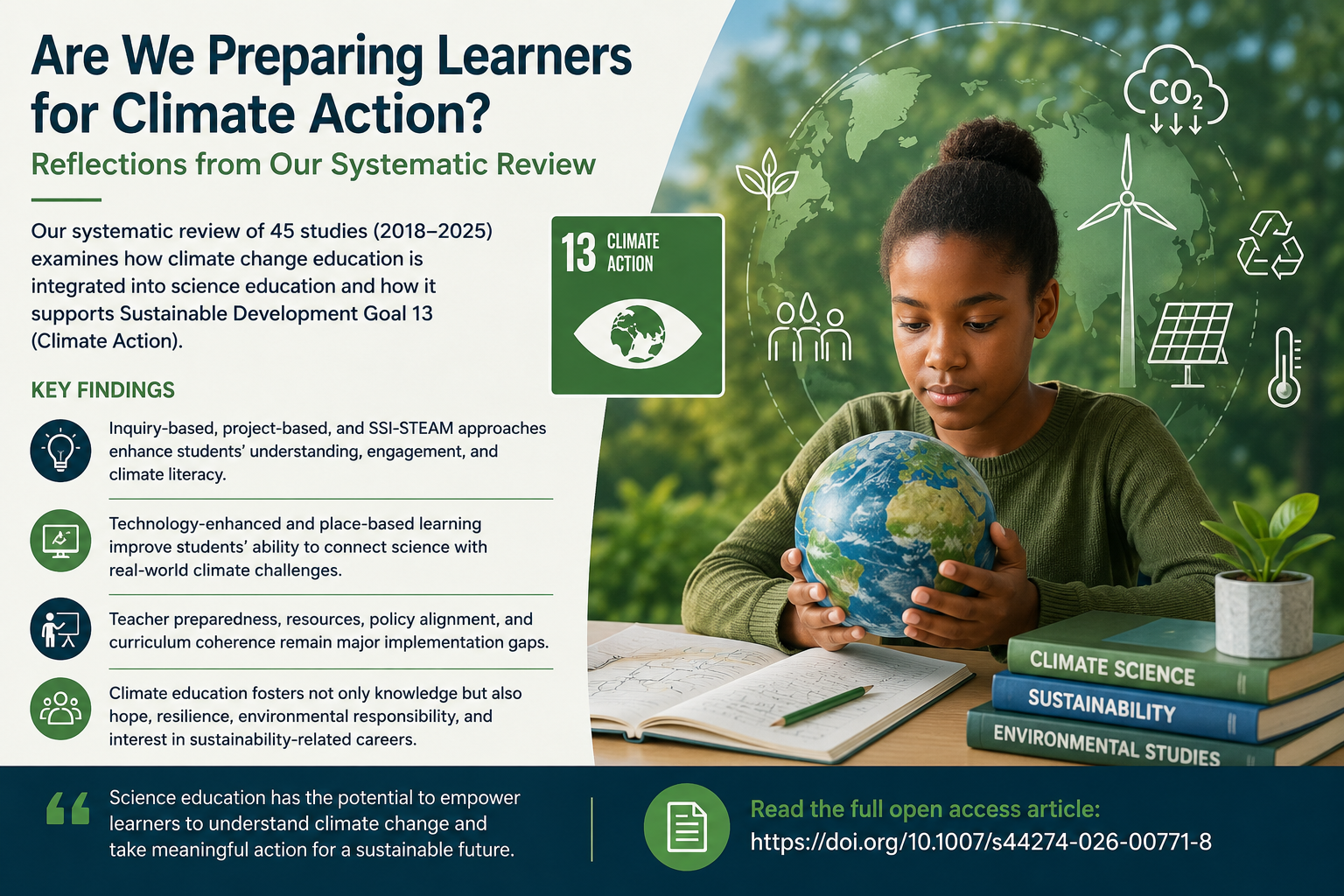

As science educators and researchers, we are often confronted with an important question: Can science education do more than teach climate science—can it inspire meaningful climate action?
This question motivated our systematic review, recently published in Discover Environment. We sought to examine how climate change education (CCE) is being integrated into science education and what evidence exists regarding its contribution to achieving Sustainable Development Goal 13 (Climate Action).
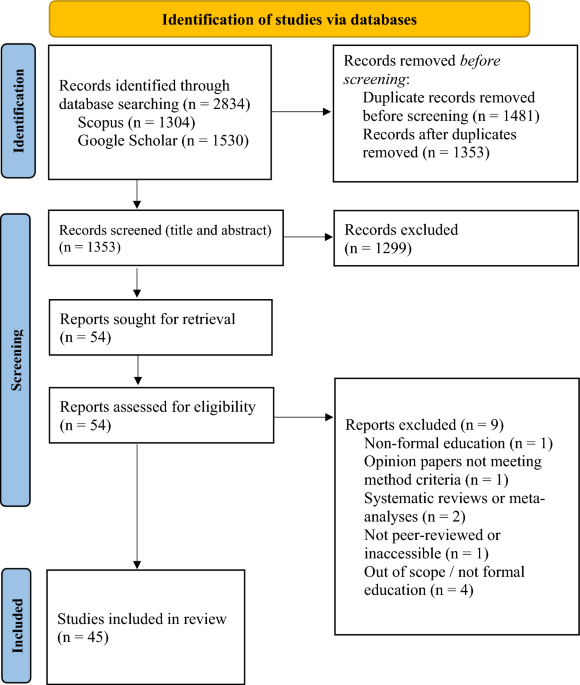
To answer this question, we systematically reviewed 45 empirical and conceptual studies published between 2018 and 2025. The studies spanned secondary and higher education contexts and explored curriculum integration, instructional practices, teacher preparedness, student outcomes, and sustainability-related competencies.
One of the most encouraging findings was the effectiveness of learner-centred pedagogies. Inquiry-based learning, project-based learning, and socio-scientific issues integrated with STEM (SSI-STEAM) consistently enhanced students' climate literacy, conceptual understanding, critical thinking, and engagement. These approaches moved climate change beyond abstract scientific concepts and connected learning to real-world environmental challenges.
We also found growing evidence supporting technology-enhanced climate education. Augmented reality, simulations, virtual learning environments, and place-based learning experiences helped students visualise complex climate systems and better understand local climate impacts. Such approaches reduced the psychological distance often associated with climate change and encouraged a stronger sense of environmental responsibility.
However, the review also revealed significant implementation challenges.
Across many educational systems, climate change education remains inconsistently integrated into science curricula. Climate-related topics are frequently treated as cross-cutting themes rather than core, assessable components of science education. Consequently, the depth and quality of students' learning experiences often depend on institutional priorities and individual teacher initiative.
Teacher preparedness emerged as another critical concern. Many educators reported limited confidence, insufficient professional development opportunities, and inadequate resources for teaching climate-related content. Curriculum overload, policy gaps, and institutional constraints further complicated implementation efforts.
Perhaps one of the most thought-provoking findings was the importance of the emotional dimension of climate education. Several studies highlighted the need to balance scientific understanding with hope, agency, and resilience. While climate change can generate anxiety and feelings of helplessness among learners, effective educational approaches can empower students to view themselves as part of the solution rather than passive observers of a global crisis.
The review also suggests that structured exposure to climate and sustainability education may influence students' future orientations toward sustainability-related careers and environmentally responsible behaviours. Although more longitudinal research is needed, the evidence points to the transformative potential of science education in shaping climate-conscious citizens and professionals.
Our findings reinforce the idea that science education has a vital role to play in addressing climate change. However, realising this potential requires more coherent curriculum frameworks, stronger policy alignment, sustained teacher professional development, and continued research into the long-term impacts of climate education.
As climate challenges become increasingly visible across the globe, the question remains highly relevant:
Are we adequately preparing learners not only to understand climate change, but also to respond to it?
We hope this review contributes to ongoing discussions among educators, researchers, policymakers, and practitioners working to strengthen climate literacy and advance climate action through education.
Article DOI: https://doi.org/10.1007/s44274-026-00771-8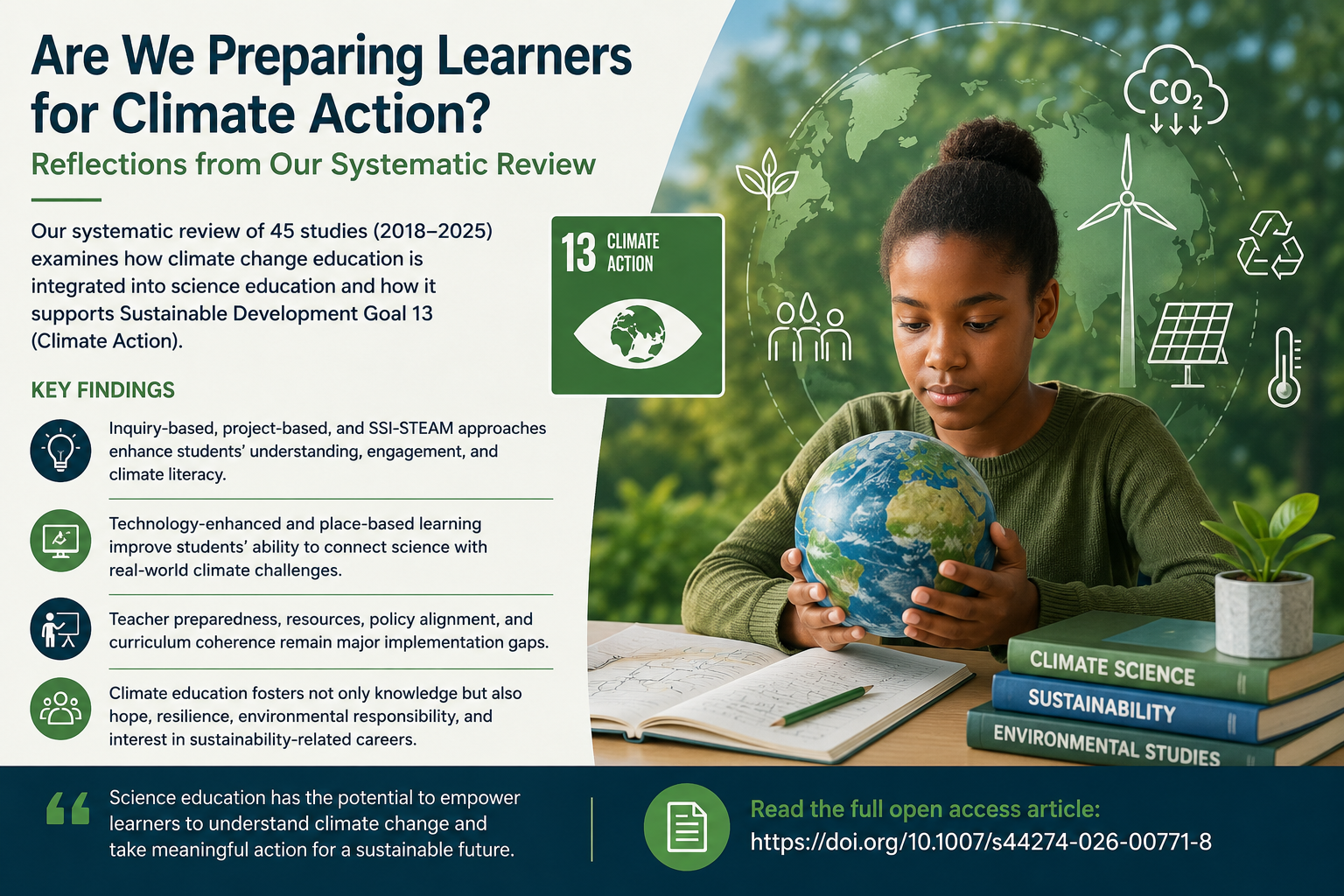
Follow the Topic
-
Research in Science Education
-
Discover Education
An international, peer-reviewed open access journal that publishes original work in all areas of education, serving the community as a broad-scope journal for academic trends and future developments in the field.
-
Discover Sustainability
A multi-disciplinary, open access, community-focussed journal publishing results from across all fields relevant to sustainability research whilst supporting policy developments that address all 17 of the United Nations Sustainable Development Goals (SDGs).
-
Discover Environment
This is a transdisciplinary, open-access journal that provides a leading platform for the rapid dissemination of knowledge and advances covering the research and innovation that is taking place across the environmental sector.




Related Collections
With Collections, you can get published faster and increase your visibility.
Argumentation and the problem of misinformation in science education
While argumentation has long been a focus of science education research, the broad societal landscape is being reshaped by digital technologies and the diverse ways in which individuals engage with (mis)information in both public and educational spaces. The pressing issue has become particularly visible and urgent as various online platforms including social media emerge as dynamic public arenas for the exchange of information and opinions.
This collection explores the intersections of scientific literacy with the argumentation and other reasoning skills necessary to navigate information in the classroom, public debates or online. The articles examine how people navigate scientific information in a range of settings, and the role of traditional and digital interventions in enhancing access to scientific knowledge while critically examining the risks posed by misinformation and information overload. They also explore how learning opportunities can be created for collaborative and dialogic argumentation for students and adults. A recurring theme is the need for critical reasoning skills to identify credible sources and construct evidence-based arguments, particularly in environments rife with conflicting claims and lacking conclusive evidence.
The collection provides a nuanced understanding of how critical engagement with misinformation and promotion of evidence-based reasoning are evolving across diverse educational contexts. It also serves as a timely contribution to ongoing discussions about preparing learners and teachers to engage thoughtfully and responsibly with science in a rapidly changing world.
We invite future contributions that broaden the themes represented in the collection, for example, by exploring the integration of emerging digital tools and platforms, and the different political, cultural and scientific contexts where misinformation may originate and spread. Further research on justice and equity-oriented perspectives are also invited to contribute to the understanding of how scientific literacy and argumentation skills can be enhanced in the age of misinformation. Methodologically, we welcome a range of approaches, from systematic reviews and experimental interventions to conversation analysis and ethnography.
Publishing Model: Hybrid
Deadline: Dec 31, 2026
Multimodal literacies and representations for learning
In science education, students engage in reading, writing, drawing and representing across multiple modes for a range of reasons, in a range of contexts. Whilst these activities can be seen as having primarily a communication purpose, this Topical Collection focuses on their connection to learning. This connection has been well established in the literature, where the argument is made that these activities are not simply expressions of learning, but are core to the learning process.
This Topical Collection gathers a variety of themes around language and literacy in science that represent an increasing recognition of the critical role of language in framing cognition and/or emotion, and learning, and a widening perspective on the multimodal nature of languages including visual, material and embodied representational modes.
The collection recognises the distinction, but close relationship between representing as part of the process of sense making by individuals’ and/or collectives, and communication processes involving collaborative and public production of language forms (e.g. explaining, interpreting, demonstrating, reporting etc.). There is a similarly close connection between science disciplinary literacies and languages for learning science.
This topical collection consists of papers focused on the presentation, assessment, teaching and theorising of students’ material and embodied representation, communication or literacies in science across all educational levels. Articles in this collection include: semiotic analyses of language and learning; the role of teachers in supporting multimodal literacies; teacher professional learning for literacy support; typologies of language use or language structures; visual literacy; translanguaging and trans-semiotizing; language, power and equity; textbook analyses; literacy-focused assessment.
The topical collection will remain open for the addition of further articles focusing on science-specific language and literacies. All theoretical perspectives are welcome, including social semiotics, systemic functional linguistics, as well as cognitive model-based approaches and perspective on emotive-cognitive interplay. We encourage interested readers to follow the cited references and more recent research to explore the area and help to develop this field further.
Publishing Model: Hybrid
Deadline: Dec 31, 2026

Please sign in or register for FREE
If you are a registered user on Research Communities by Springer Nature, please sign in