Behind the Paper: Building One Vision, Not Just Another Model
Published in Cancer
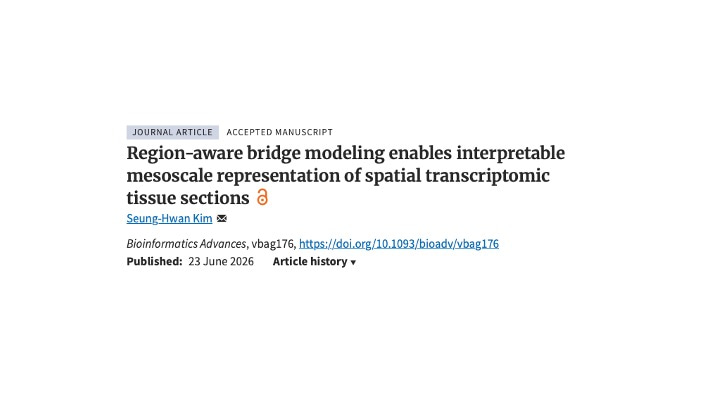
Explore the Research
vbag176?utm_campaign=related_content&utm_source=HEALTH&utm_medium=communities
If someone looked only at my recent publications, they might conclude that I frequently change research directions.
One paper introduces a region-aware representation for spatial transcriptomics. Another develops Bayesian Ornstein–Uhlenbeck (OU) models for stochastic evolution. More recent work explores branching processes, ecological contexts, therapy-aware dynamics, and probabilistic prediction in pediatric leukemia.
On the surface, these appear to be separate projects.
They never were.
For many years, I have tried to answer one central scientific question:
Can we build mathematical models that make cancer evolution both interpretable and predictable?
That question has guided nearly every project I have undertaken.
Along the way, I often faced the temptation familiar to many researchers. New technologies emerge constantly. Artificial intelligence evolves rapidly. Every year brings new computational methods, new datasets, and new buzzwords. It is easy to pursue whatever is newest.
Recently, I found myself reflecting on an idea often associated with Steve Jobs: "technology alone is not enough. Truly meaningful innovation comes from a cohesive vision that brings technologies together toward a common purpose."
That perspective resonates strongly with my own scientific journey.
Machine learning, Bayesian inference, stochastic differential equations, spatial transcriptomics, and single-cell sequencing are powerful technologies. Yet none of them, by themselves, answer the biological questions that motivate my research.
The vision must come first.
Only then do the methods become meaningful.
Looking back, I now see each project as one piece of a much larger scientific puzzle.
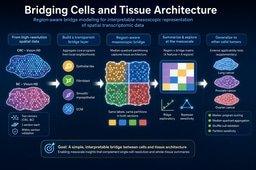
Our region-aware bridge modeling framework was developed to create interpretable representations of tissue architecture.
Our ecological-context models sought to characterize the tumor microenvironment in a probabilistic and clinically meaningful way.
Our OU models described stabilizing evolutionary forces.
Branching processes captured diversification.
Therapy-aware extensions incorporated the evolutionary pressures introduced by treatment.
Each model addressed a different aspect of cancer biology, yet all were motivated by the same long-term objective: understanding how tumors evolve over time and eventually predicting where they are going.
This paper represents one step along that path.
Scientific publications often emphasize novelty, but I have come to appreciate something equally important: continuity. Progress does not always come from abandoning one idea in favor of another. Sometimes it comes from returning to the same fundamental question, again and again, with better data, better mathematics, and a deeper biological understanding.
As artificial intelligence continues to transform biomedical research, increasingly sophisticated algorithms will undoubtedly emerge. But I believe one principle will remain unchanged.
Technology should serve scientific vision—not replace it.
I hope this paper contributes not only a new computational framework, but also one small step toward a larger goal: making cancer evolution more interpretable, more predictable, and ultimately more useful for precision medicine.
Every paper answers a question. A research program pursues one vision.
Associate Professor (Fisher College) | Computational Cancer Biologist | Visiting Scholar (Research Affiliation, Pediatric Oncology, Dana-Farber Cancer Institute) | AI + Mechanistic Modeling | Multi-Omics + Clinical Data
Please sign in or register for FREE
If you are a registered user on Research Communities by Springer Nature, please sign in