Beyond Cellular Resolution: Why We Needed a Region-Aware Bridge for Spatial Transcriptomics
Published in Cancer
Explore the Research
vbag176?utm_campaign=related_content&utm_source=HEALTH&utm_medium=communities
Spatial transcriptomics has transformed our ability to study tissues while preserving their spatial organization. As someone working at the intersection of computational biology, machine learning, and cancer evolution, I have been fascinated not only by individual cells but by how collections of neighboring cells collectively shape biological behavior.
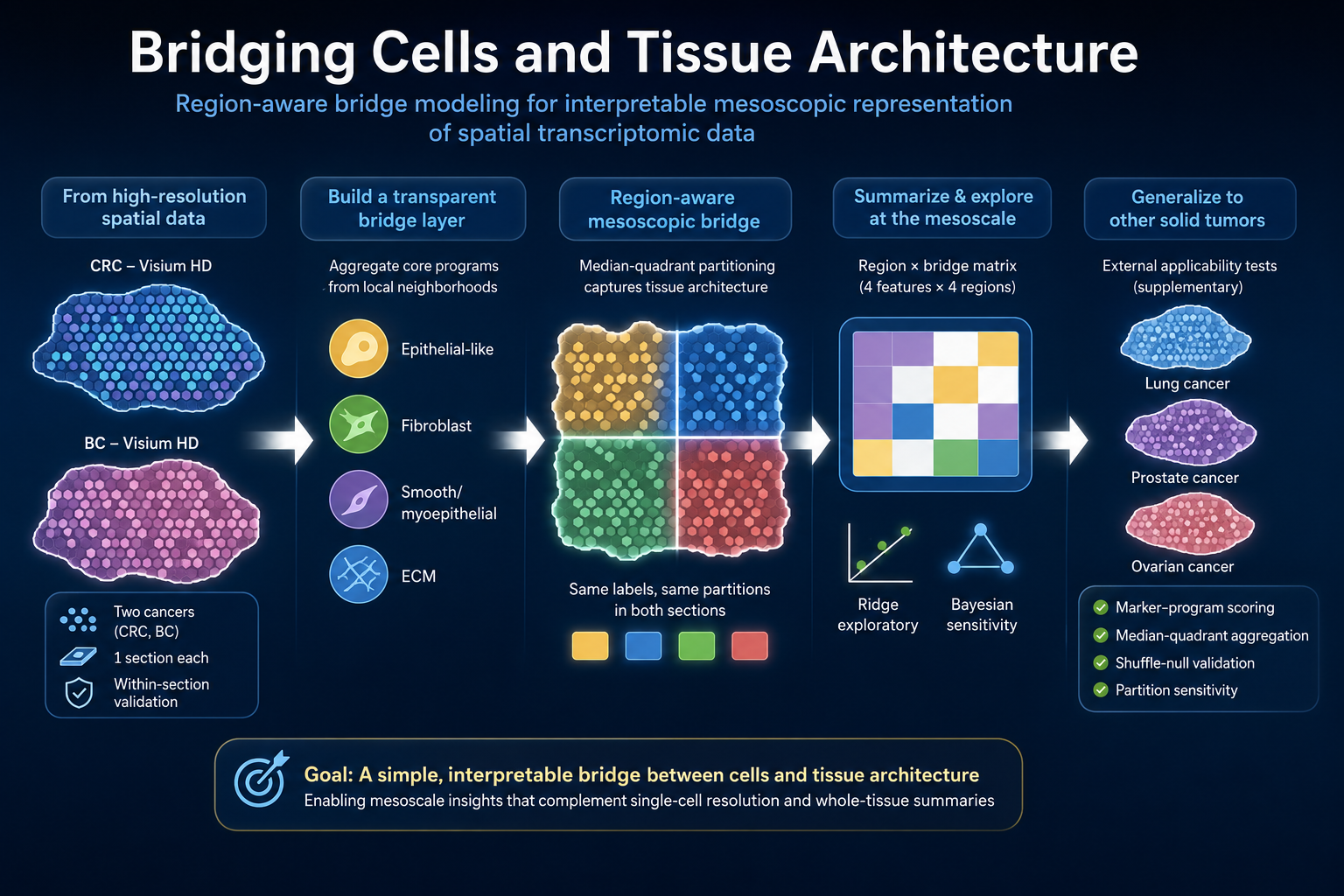
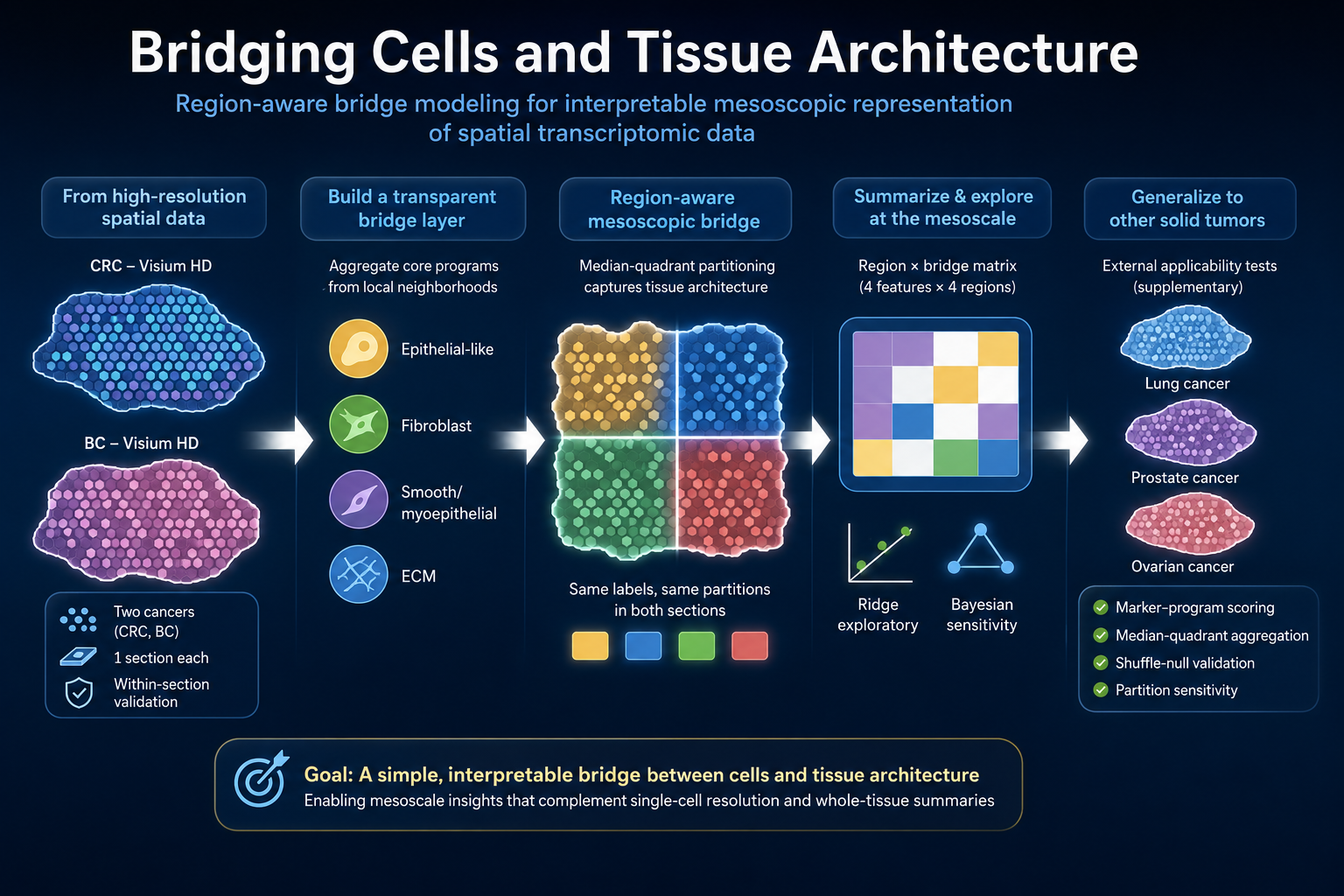
While existing approaches often emphasize cellular or spot-level resolution, I repeatedly encountered a practical challenge: many biologically meaningful processes emerge at an intermediate scale. Local tissue neighborhoods frequently exhibit coordinated transcriptional programs that are difficult to capture using either individual spots or global tissue summaries alone.
This observation led to a simple but persistent question:
Can we build an interpretable representation that bridges microscopic spatial measurements and macroscopic tissue organization?
That question became the foundation of this work.
Our solution was a region-aware bridge modeling framework that aggregates neighboring spatial transcriptomic information into biologically interpretable mesoscale representations while preserving important spatial relationships. Rather than replacing high-resolution analyses, the framework complements them by revealing organizational patterns that may otherwise remain hidden.
One of the most rewarding aspects of this project was realizing that the method generalized across different tissue sections and remained computationally efficient. Throughout development, we continually balanced statistical rigor with interpretability because we wanted the resulting representations to be useful not only for computational scientists but also for experimental and clinical researchers.
Although this publication focuses on spatial transcriptomics, the broader vision extends much further. My research aims to develop interpretable probabilistic models that connect spatial organization, tumor ecology, and evolutionary dynamics. In that sense, region-aware bridge modeling represents one component of a larger effort to understand cancer as a dynamic biological system operating across multiple spatial and temporal scales.
I hope this work encourages researchers to think not only about individual cells but also about the tissue architectures that emerge from their collective interactions.
Science often advances by building bridges between existing ideas. In this project, our goal was quite literally to build one.
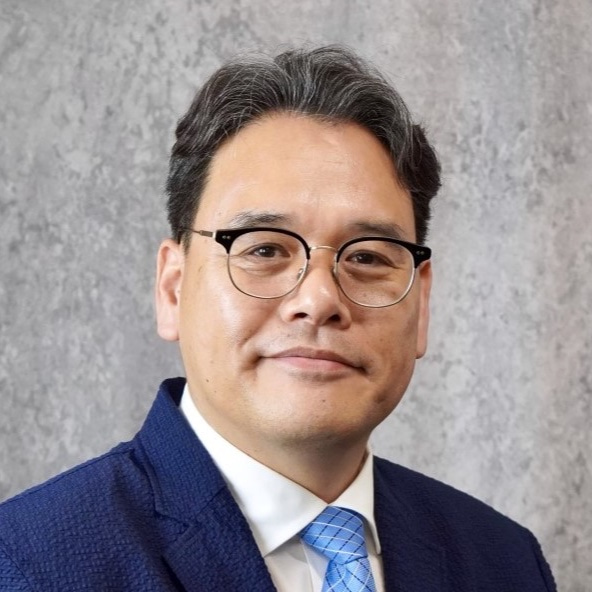
Associate Professor (Fisher College) | Computational Cancer Biologist | Visiting Scholar (Research Affiliation, Pediatric Oncology, Dana-Farber Cancer Institute) | AI + Mechanistic Modeling | Multi-Omics + Clinical Data
