Beyond the Numbers: Physical Activity and Sleep in Chilean Youth
Published in Neuroscience and Public Health

Sleep problems among children and adolescents are becoming an increasingly important public health concern worldwide. At the same time, physical inactivity has emerged as another major challenge affecting young populations. As researchers working in public health and physical activity, we became interested in understanding how these two issues might be connected within the Chilean context.
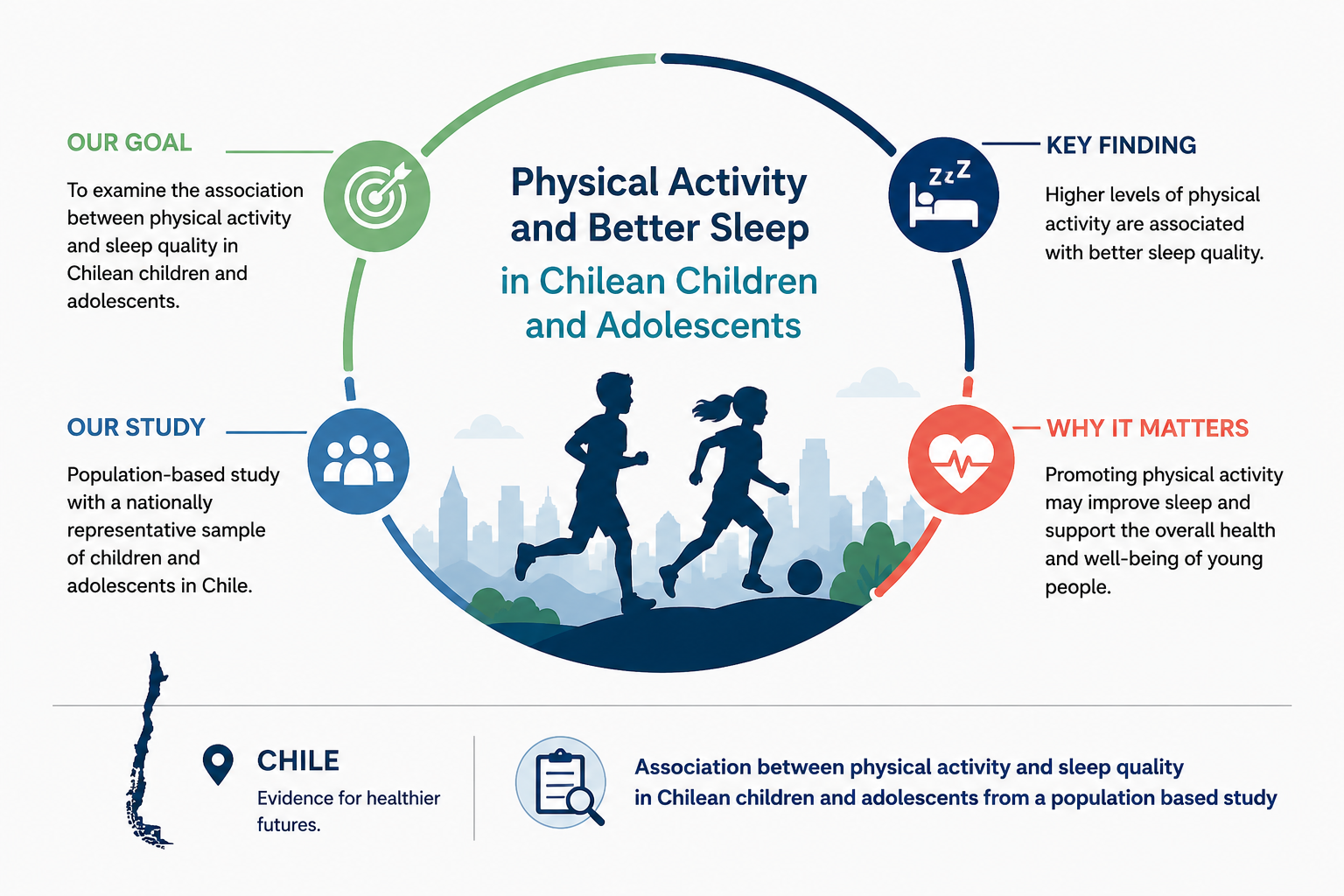
Our study, “Association between physical activity and sleep quality in Chilean children and adolescents from a population-based study”, was born from a simple but important question: are physically active young people sleeping better?
Chile has experienced important lifestyle changes over recent decades. Increased screen time, sedentary behavior, academic pressure, and reduced opportunities for outdoor play and sports participation have changed the daily routines of children and adolescents. These behavioral changes may directly influence sleep quality, emotional well-being, cognitive performance, and long-term health.
While many international studies have explored the relationship between physical activity and sleep, evidence from Latin America — particularly from nationally representative Chilean samples — remains limited. This gap motivated us to conduct this research.
One of the most interesting aspects of the study was working with population-based data, which allowed us to observe behavioral patterns at a broader national level. Unlike studies focused only on athletes or small school samples, our research aimed to provide a wider perspective on how physical activity habits relate to sleep quality in everyday Chilean youth populations.
Throughout the research process, we encountered several challenges. Sleep quality is a multidimensional concept influenced by biological, psychological, social, and environmental factors. Similarly, physical activity behaviors vary considerably depending on age, sex, school context, family support, access to recreational spaces, and socioeconomic conditions.
Another challenge involved interpreting the findings carefully. In public health research, associations do not necessarily imply causation. However, identifying meaningful relationships can help generate important hypotheses and support preventive strategies aimed at improving children’s health and well-being.
Our findings reinforce the growing body of evidence suggesting that physically active lifestyles may be associated with better sleep outcomes among young populations. Although the mechanisms involved are complex, physical activity may contribute to improved sleep regulation through physiological, psychological, and behavioral pathways.
Beyond the scientific findings, this study also highlights the importance of promoting healthy lifestyles early in life. Encouraging movement, reducing sedentary behaviors, creating opportunities for sports participation, and improving health education may positively influence not only physical health but also sleep, mental health, academic performance, and quality of life.
As researchers, we also believe it is important to communicate science in accessible ways. Scientific publications often remain restricted to academic audiences, but the implications of these findings extend far beyond universities and research centers. Parents, teachers, coaches, healthcare professionals, and policymakers all play important roles in supporting healthier environments for children and adolescents.
This project also reflects the collaborative nature of research. Behind every published article there are countless hours of data analysis, literature review, discussions among coauthors, revisions, and critical reflections. Sharing these experiences through the Research Communities platform allows us to connect with researchers from different disciplines and countries who share similar interests and challenges.
Looking ahead, we hope future studies can further explore the longitudinal and causal relationships between physical activity, sedentary behavior, sleep quality, and mental health in Latin American youth populations. There is still much to learn about how lifestyle behaviors interact during childhood and adolescence.
Ultimately, this study serves as a reminder that movement and sleep are deeply connected components of health. Understanding these relationships may help us design better public health interventions and contribute to healthier futures for younger generations.
We are excited to share our work with the Research Communities and look forward to engaging with researchers, practitioners, and readers interested in physical activity, sleep, and youth health.