Biomedical research, when methods count more than results
Published in General & Internal Medicine and Public Health
Explore the Research
Just a moment...
Verifying you are human. This may take a few seconds.
Just as an example, let's imagine to stand in front of a crossroad from which two streets branch off: one is characterized by a rigorous methodology, relying on bibliographic sources unanimously accredited by the global scientific community; the other one, instead, is diffusely permeated by self-reference.
The first one is mirrored in monumental biomedical bibliography archives and collections like PubMed, run by the prestigious National Institutes of Health (NIH) in Bethesda, while the second one is reflected in the web, thus potentially reaching everyone, whether gifted or not with a "basic" scientific background.
Within such a challenging and insidious context, a major risk appears to be represented by the concrete possibility that "results" of doubtful or even null scientific value are prioritized by the general public over those generated by studies employing a methodology based upon reliable scientific grounds. This may lead, in turn, to undermine public trust in the scientific community, thereby giving rise to aberrant and extremely deleterious "no vax" - if not even "conspiracy" - theories as eloquently witnessed by the COVID-19 pandemic.
Errare humanum est perseverare autem diabolicum and, no less important, Historia magistra vitae!
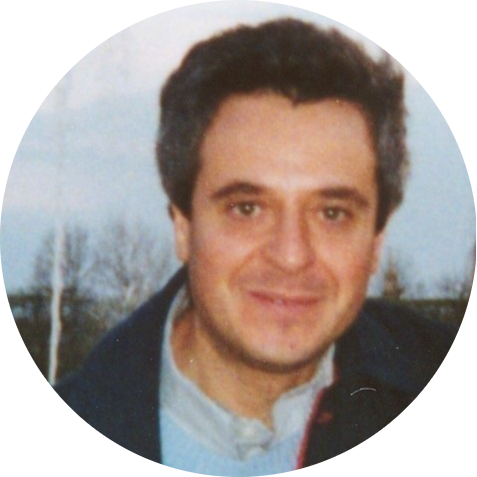
Born in Turin, Italy, on July. 04. 1958. Married on July. 12. 1987 with Letizia Curini, MD and father of two children, Cecilia (25-years-old) and Benedetta (24-years-old). Degree in Veterinary Medicine, cum laude, Bologna University, Faculty of Veterinary Medicine, December. 20. 1982. "Post-graduate Fellow", Bologna University, Faculty of Veterinary Medicine, Institute of General Pathology and Veterinary Pathological Anatomy, 1982-1985. State Veterinary Officer, Italian Ministry of Health, General Directorate of Veterinary Services, Rome, Italy, 1985-1987. "Assistant Veterinarian", Istituto Zooprofilattico Sperimentale (IZS) delle Regioni Lazio e Toscana, Rome, Italy, 1987-1993. "Chief Veterinary Pathologist", IZS delle Regioni Lazio e Toscana, Rome, Italy, 1993-January. 31. 2002. "Associate Professor", teaching "General Pathology and Veterinary Pathophysiology" (Academic Years 2001-2002, 2002-2003, 2003-2004, 2004-2005, 2005-2006, 2006-2007, 2007-2008, 2008-2009, 2009-2010, 2010-2011, 2011-2012, 2012-2013, 2013-2014, 2014-2015, 2015-2016, 2016-2017, 2017-2018, 2018-2019 and 2019-2020), as well as "Necropsy Techniques and Post-Mortem Diagnostic Pathology" (Academic Years 2001-2002 and 2002-2003), "Immunology" (Academic Year 2002-2003), "Cell Pathophysiology" (Academic Years 2003-2004, 2018-2019 and 2019-2020), University of Teramo, Faculty of Veterinary Medicine. Recipient of a unanimously positive/favourable evaluation, on behalf of the Examining/Evaluating Commission (composed by 5 distinguished Full Professors active in the concerned Disciplines, with one of them being a highly qualified foreign Member, namely Prof. Lluis Ferrer, from the Veterinary Faculty of the Universitat Autònoma de Barcelona, Barcelona, Spain), within "Abilitazione Scientifica Nazionale" (ASN) for "Full Professorship in Veterinary Pathology" (SSD 07/H2, VET/03) (ASN-2012; January. 09. 2014). Since January 05, 2021 officially retired from the position of Associate Professor of General Pathology and Veterinary Pathophysiology at the Veterinary Medical Faculty of the University of Teramo. Recipient of a unanimously positive/favourable evaluation, on behalf of the Examining/Evaluating Commission (composed by 5 distinguished Full Professors active in the concerned Disciplines), within "Abilitazione Scientifica Nazionale" (ASN) for "Full Professorship in Animal Infectious and Parasitic Diseases" (SSD 07/H3, VET/05) (ASN-2016-2018; March. 27. 2018). "Visiting Professor" and "Fulbright Scholar", in charge also of a research grant in "Comparative Oncology" from the Italian National Research Council (CNR), Department of Veterinary Clinical Sciences, College of Veterinary Medicine, Iowa State University, Ames, Iowa, USA, October 1987-January 1988. "Visiting Scientist", Department of Agriculture and Rural Development for Northern Ireland (current denomination: Agri-Food and Biosciences Institute for Northern Ireland), Veterinary Sciences Division, Stormont, Belfast, Northern Ireland (UK), 4-14. December. 1991 (first visit) and 14-18. April. 2008 (second visit), carrying out research activity on the pathology and pathogenesis of infectious disease conditions affecting free-living sea mammals (cetaceans, in particular), with special emphasis on Morbillivirus infections. "Diplomate", European College of Veterinary Pathologists (Dipl., ECVP), 1995-to date. Member of the "Fondazione Cetacea" Scientific Commission, Riccione, Italy, 1997-to date. Member of the "Consulting and Operative Animal TSE Unit for Latium and Tuscany Regions", 1997-2002. Member of the "Italian TSE National Surveillance Group", 1998-2002. Member of the "Technical and Scientific Committee for the Regional Plan of Genetic Selection for Resistance to Transmissible Spongiform Encephalopathies" (Abruzzo Region, Department of Health and Welfare), January 2003-to date. "International Training Expert", EU Phare Project 2003 on "TSE Control in Poland - Part 2", Training Course on "Control and Diagnostic Methods of Transmissible Spongiform Encephalopathies (TSE)", Warsaw (Poland), 3-7. April. 2006. Italian Delegate, Scientific Committee, 59th, 60th and 64th "International Whaling Commission" (IWC) Annual Conferences. Member/Component of the "ACCOBAMS Task Force for Special Cetacean Mortality and Stranding Events", 2008-to date; Scientific Expert, Group on "Cetacean Emerging and Recurring Diseases" (CERD), "Scientific Committee", "International Whaling Commission" (IWC), 2007-to date. Member/Component of the "EFSA Expert Database" (European Food Safety Authority, EFSA), June 2010-to date. External Scientific Member/Component of the "Body/Committee for Animal Welfare" of the Italian National Institute of Health (since 2015). Member/Component of the "National Experts' Committee of the Italian Marine Mammal Stranding Network" (following the official, joint nomination achieved on behalf of the Italian Ministry for the Environment and by the Italian Ministry for Health) (since 2016). Member/Component of the Working Group on the "Reduction of the list of specified risk materials from small ruminants, sheep and goat", Italian National Health Council (Sections III & IV); official invitation made by the President of the Italian National Health Council, as well as by the two Presidents of Sections III & IV of the Council itself, January 2017-. Member/Component of the "Histology Study Committee" within the "Italian Association of Veterinary Laboratory Diagnosticians" (S.I.Di.L.V.), September 2017-. Enrolled into the "Italian National Registry" of the "Experts" ("Scientific Discipline Experts"), handled/held by the "Italian National Agency for the Evaluation of University and Scientific Research" (ANVUR), February 2019-. Member of several International and National Scientific Societies, as well as of the Scientific Committee of the "Italian Association of Veterinary Pathology" (AIPVet) and of the Scientific Committee of the "Italian Society for Preventive Veterinary Medicine" (SIMeVP) (2007-2010). Member/Component of 3 (three) distinct PhD Thesis International Examining Boards/Committees, University of Las Palmas de Gran Canaria, Faculty of Veterinary Medicine, Las Palmas, Gran Canaria, Canary Islands, Spain; International and National (PRIN) Research Project evaluator, as highlighted - among others - by the peer review evaluation activities conducted on a number of transnational research projects submitted within the second call (2011) in the framework of the "EMIDA (Emerging and Major Infectious Diseases of Animals) ERA-Net" (European Union, EU) network, as well as on a number of international research proposals presented both in the context of the "7th Framework Programme (FP7; 2007-2013) for Scientific Research of the European Union" (EU "People" Programme/Action) and in the framework of the "EXPRO Tender", under the umbrella of the "Czech Science Foundation". External Scientific Member of the "Organism for Animal Welfare", Italian National Institute of Health, November 2014-to date. Member/Component of the Scientific Research Board/Committee of the University of Teramo (as Delegate/Representative of the Veterinary Medical Faculty), June 2013-to date. Member/Component of the "Examining and Certifying Board for Professional Licensing/Qualification as a Veterinarian" (University of Teramo, Faculty of Veterinary Medicine, Years 2007 and 2019, June and November Sessions). "Scientific Editor" (for "Veterinary Pathology") and Member of the Editorial Board of the international Journal "Research in Veterinary Science", September 2010-to date; Member of the Editorial Board of the international Journal "Journal of Biological Regulators and Homeostatic Agents", March 2015-to date; Member of the Editorial Board of the international Journal "Pathogens", November 2019-to date; Member of the Editorial Board of the scientific Journal "Tabaccologia", March 2020-to date; Member of the Editorial Board of the scientific Journal "Ittiopatologia", 2007-to date; past-Member of the Editorial Board of the scientific Journal "Aggiornamenti di Medicina e Chirurgia". Scientific coordinator of a number of research projects concerning both animal TSEs and cetaceans' pathology, all financially supported by the Italian Ministry of Health, by the Italian Ministry for Education, University and Research (MIUR) and by the Italian Ministry for the Environment. Author or coauthor of over 500 scientific publications, 190 of which published in international peer-reviewed Journals (see "ad hoc" publications' list). Main research interests concern infectious disease conditions in animals and man, with particular emphasis on TSE pathogenesis (more specifically, on sheep and goat scrapie pathogenesis) and on sea mammals' pathology (more in detail, on free-living cetaceans' pathology).