Call for Entries: 2026 BMC Ecology and Evolution & BMC Zoology Image Competition
Published in Ecology & Evolution and Zoology & Veterinary Science
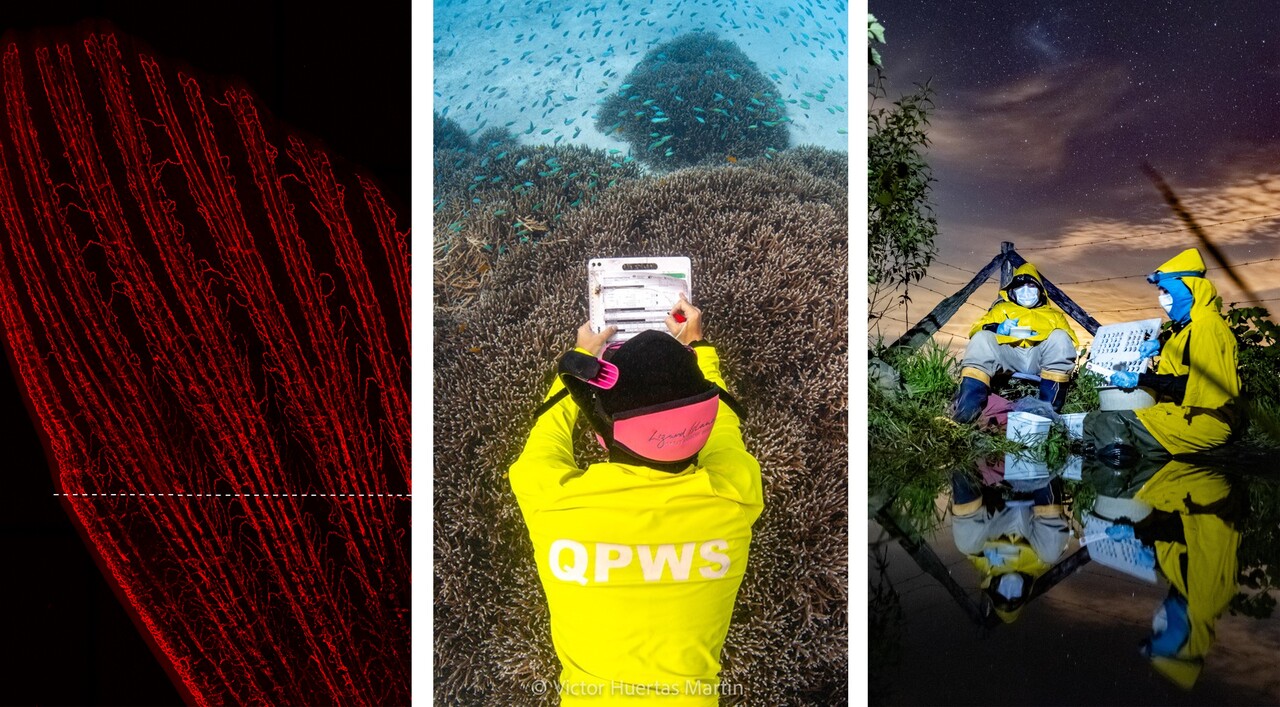
The annual image competition hosted jointly by BMC Ecology and Evolution and BMC Zoology is now open for submissions! Each year, we are delighted to receive a spectacular collection of images from researchers worldwide that celebrate the power of scientific storytelling through imagery.
Don’t miss your chance to showcase your research, win prizes (up to €500), and see your work featured in an editorial published by BMC Ecology and Evolution.
Anyone affiliated with a research institution and working in ecology, evolutionary biology, palaeontology, or zoology is eligible to enter.
For more information and how to enter visit: https://link.springer.com/journal/12862/updates/27851542
The entry deadline is June the 20th, 2026, with the winners being announced on August the 21st.

Follow the Topic
-
BMC Ecology and Evolution

An open access, peer-reviewed journal interested in all aspects of ecological and evolutionary biology.
-
BMC Zoology

This is an open access, peer-reviewed journal that considers articles on zoology, including comparative physiology, mechanistic and functional studies, morphology, life history, animal behavior, signaling and communication, cognition, parasitism, systematics, biogeography and conservation.
Related Collections
With Collections, you can get published faster and increase your visibility.
Ancient DNA and ancient proteins
In recent years, significant advancements in DNA extraction, sequencing technologies, mass spectrometry-based methods, computing power, and analytical techniques have transformed the study of ancient DNA and proteins. These developments have greatly expanded palaeontological and evolutionary research possibilities, offering a clearer window into the past. Additionally, this knowledge can assist researchers in predicting future ecological changes.
We welcome submissions on topics including, but not limited to:
• Paleoecology and ecosystem reconstructions: Insights from paleogenomic and paleoproteomic data to study past biodiversity, ecosystem dynamics, and species-environment interactions
• Extinct species and megafauna: Spatial and temporal distribution of extinct taxa, including Pleistocene megafauna, and their responses to environmental change
• Adaptation, domestication, and admixture: Genetic and protein-based evidence to uncover evolutionary processes in ancient populations
• Conservation and extinction: Lessons from ancient genomes and proteins to understand extinction dynamics and inform modern conservation efforts
• Ancient plants and microbial communities: Novel approaches to reconstruct past vegetation, microbial evolution, and marine ecosystems
• Theoretical advances: Rates of evolutionary change, population history, phylogeny, and species response to climate change and anthropogenic impacts
• Technical challenges and innovations: Addressing PCR biases that favor model or contaminate DNA, Preventing DNA degradation and improving DNA recovery, tackling incomplete reference databases, computational methods to improve sequence identification, taxonomic assignment, and noise filtering in highly fragmented datasets and developing frameworks for verifying and integrating data from multiple reference sources
Publishing Model: Open Access
Deadline: May 27, 2026
Bioacoustics and soundscape ecology
BMC Ecology and Evolution welcomes submissions to its new Collection on Bioacoustics and soundscape ecology. By studying how animals use sound and how noise impacts them, you can learn a lot about the well-being of an ecosystem and the animals living there. In support of the United Nations Sustainable Development Goals (SDGs) 13: Climate action, 14: Life below water and 15: Life on land, the Collection will consider research on:
The use of sound for communication
The evolution of acoustic signals
The use of bioacoustics for taxonomy and systematics
The use of sound for biodiversity monitoring
The impacts of noise on animal development, behavior, sound production and reception
The effect of anthropogenic noise on the physiology, behavior and ecology of animals
Innovative technologies and methods to collect and analyze acoustic data to study animals and the health of ecosystems
Reviews and commentary articles are welcome following consultation with the Editor
(Jennifer.harman@springernature.com).
Publishing Model: Open Access
Deadline: May 27, 2026



Please sign in or register for FREE
If you are a registered user on Research Communities by Springer Nature, please sign in