Call for papers and Q&A: Precision agriculture and smart farming
Published in Sustainability and Agricultural & Food Science


Collection Overview
Scientific Reports has launched a Guest-Edited Collection on Precision agriculture and smart farming.
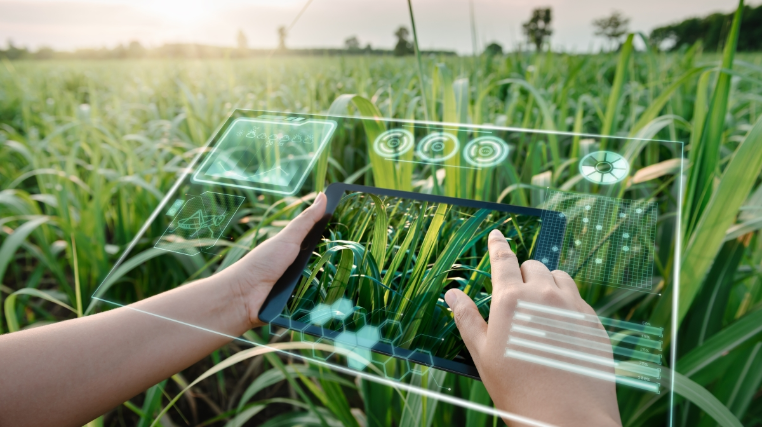
The adoption of precision agriculture and smart farming is transforming traditional farming methods. Precision agriculture uses technology to monitor field conditions and guide crop decisions. Smart farming builds on this with IoT, AI, and robotics for autonomous, data-driven farming. These innovations boost efficiency, productivity, and sustainability, making them vital for food security and environmental resilience.
This will be a Collection of original research papers and will be open for submissions from all authors – on the condition that the manuscripts fall within the scope of the Collection and of Scientific Reports more generally. We are welcoming submissions until 1st September 2026.
This Collection also supports and amplifies research related to SDG 2: Zero Hunger.
Q&A with Guest Editors
1. Why do you feel this topic is relevant and important to the field or wider world?
"Precision agriculture and smart farming are reshaping global food systems at a time when food security, climate change, and resource constraints are critical challenges. Integrating sensors, GPS, AI, IoT, and robotics into agriculture enables real-time monitoring, targeted interventions, and efficient use of inputs. These innovations not only enhance productivity but also promote sustainability and environmental resilience. As the world works toward SDG 2: Zero Hunger, advancements in these technologies are essential for feeding a growing population responsibly." - Dr. Utpal Barman
"This topic is relevant and important because it addresses a current gap in the field and offers potential solutions to real-world challenges, making it significant both academically and practically." - Dr. Tasneem Ahmed
2. Why are you excited about this Collection?
"This Collection brings together cutting-edge research that has the potential to transform agricultural practices at scale. I am excited because it highlights interdisciplinary innovations—spanning engineering, computer science, agronomy, and environmental science—that collectively drive the next generation of farming. It provides a platform for showcasing impactful technological solutions that can support farmers, policymakers, and researchers worldwide." - Dr. Utpal Barman
"I am excited about this Collection as it offers a comprehensive platform for cutting-edge research, encourages interdisciplinary collaboration, and showcases emerging trends that are shaping the future direction of the discipline." - Dr. Tasneem Ahmed
3. What do you think the impact of this Collection could be for the field?
"The Collection can serve as a catalyst for accelerating the adoption of data-driven and autonomous farming technologies. By gathering high-quality research in precision agriculture and smart farming, it can guide future technological development, influence agricultural policy, and inspire collaborative work across sectors. Its focus on improving efficiency, sustainability, and resilience can significantly advance the field and contribute to global food-system transformation." - Dr. Utpal Barman
"I believe this Collection could make a lasting impact by addressing critical challenges, introducing transformative ideas, and fostering interdisciplinary collaboration that pushes the boundaries of the field." - Dr. Tasneem Ahmed
4. In your view, why should a researcher submit to this Collection in particular?
"Researchers should submit to this Collection because it provides a dedicated platform within Scientific Reports to amplify impactful work at the intersection of agriculture and emerging technologies. Contributions will reach a broad, multidisciplinary audience and align directly with the urgent global agenda of achieving Zero Hunger. Publishing in this Collection allows researchers to showcase innovations that can directly improve farming practices, influence real-world applications, and contribute to sustainable agricultural development." - Dr. Utpal Barman
"This Collection is an ideal venue for submission because it targets a timely and relevant topic, attracts high-caliber contributions, and benefits from dedicated editorial attention, which can enhance the reach and influence of accepted papers." - Dr. Tasneem Ahmed
Why submit to a Collection?
Collections like this one help promote high-quality science. They are led by Guest Editors, who are experts in their fields, and In-House Editors and are supported by a dedicated team of Commissioning Editors and Managing Editors at Springer Nature. Collection manuscripts typically see higher citations, downloads, and Altmetric scores, and provide a one-stop-shop on a cutting-edge topic of interest.
Who is involved?
Guest Editors:
- Tasneem Ahmed, Integral University Lucknow, India
- Utpal Barman, Assam Skill University, India
- Rajandeep Singh, Guru Nanak Dev University, India
- Peeyush Soni, Indian Institute of Technology Kharagpur, India
Internal Team:
- In-House Editor: Sagar Yadav, Scientific Reports, India
- Commissioning Editor: Ksenija Lindermane, Fully OA Brands, Springer Nature, UK
- Managing Editor: Anthony Heron, Fully OA Brands, Springer Nature, UK
How can I submit my paper?
Visit the Collection Page to find out more about this Collection and how to submit your article.
Follow the Topic
-
Scientific Reports

An open access journal publishing original research from across all areas of the natural sciences, psychology, medicine and engineering.
-
A Collection of original research articles on advance in precision agriculture and smart farming like sensors, GPS, AI, and robotics to improve farming.
Related Collections
With Collections, you can get published faster and increase your visibility.
Obesity
Publishing Model: Hybrid
Deadline: Apr 24, 2026
Reproductive Health
Publishing Model: Hybrid
Deadline: Mar 30, 2026


Please sign in or register for FREE
If you are a registered user on Research Communities by Springer Nature, please sign in