Call for papers: Cartilage Biology Collection
Published in Anatomy & Physiology

Explore the Research

 Nature
Cartilage biology
This Collection welcomes original research that advances our understanding of cartilage function, pathology, and regeneration.
Collection Overview
Scientific Reports has launched a Guest-Edited Collection on Cartilage Biology.
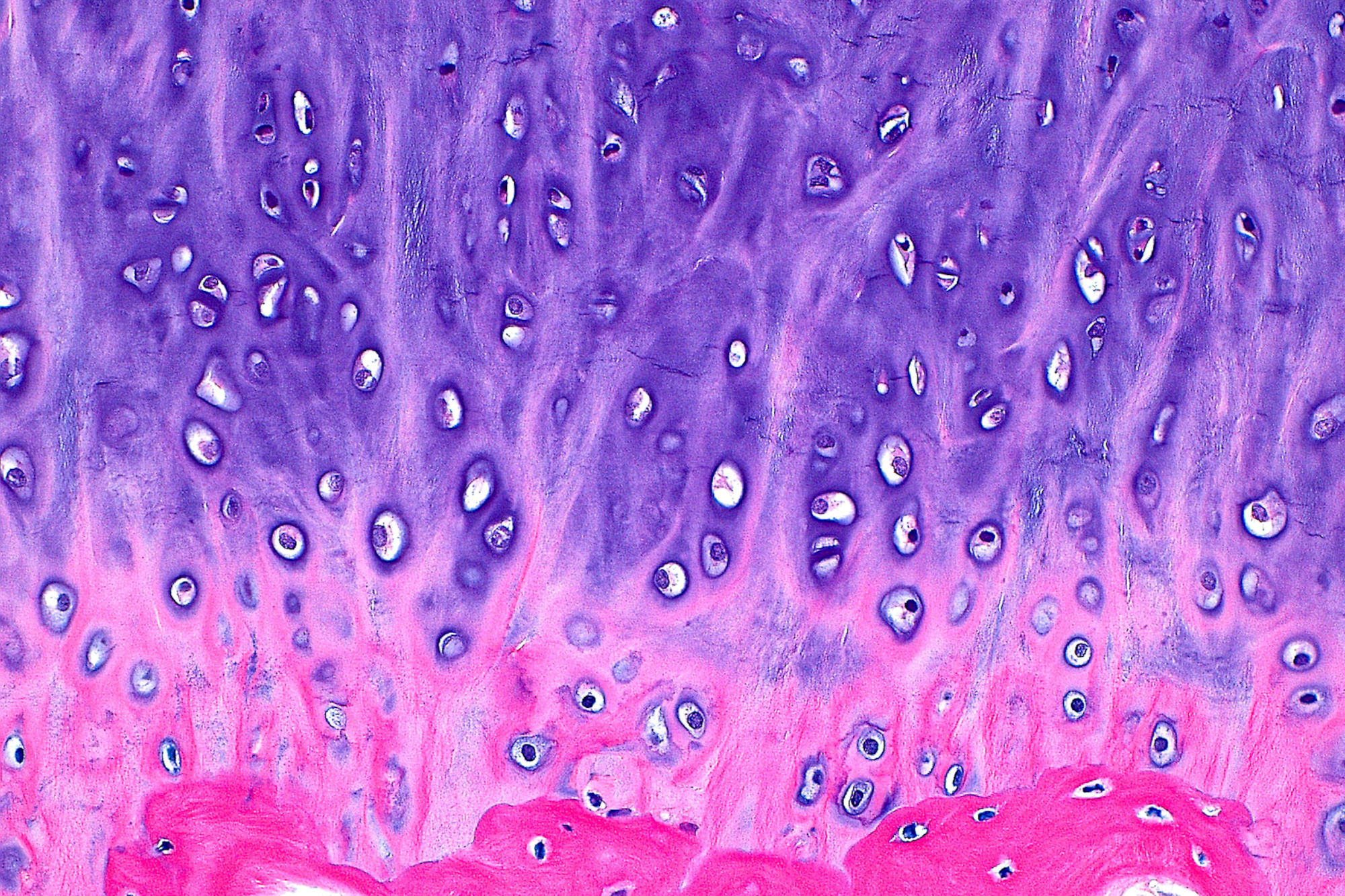
As a specialised connective tissue comprised of chondrocytes, cartilage plays a vital role in movement and structural integrity with cartilage-related pathologies due to damage and degeneration often resulting in significant impairments in quality of life. However, its limited regenerative potential means that cartilage diseases represent as significant challenges in the clinic with patients often experiencing pain and reduced range of motion.
This will be a Collection of original research papers and will be open for submissions from all authors – on the condition that the manuscripts fall within the scope of the Collection and of Scientific Reports more generally. We are welcoming submissions until 5th November 2026.
Why is this Collection important?
"Cartilage is often perceived as silent, smooth, inert, almost passive. In reality, it is a masterclass in controlled endurance. For decades, it absorbs force, distributes load, and preserves motion with remarkable precision. Yet the system operates close to a threshold: small perturbations in matrix organization or cellular signaling can initiate a cascade that is difficult to reverse. That fragile equilibrium is what makes cartilage biology so compelling and so clinically urgent. I am excited about this Collection because it embraces a broad, mechanistic perspective spanning physiology to pathomechanistic divergences and their intricate interconnections. Researchers should contribute not simply to disseminate data, but to refine the narrative of resilience and redefine preservation in joint biology."
- Dr. Marina Danalache, Guest Editor
Why submit to a collection?
Collections like this one help promote high-quality science. They are led by Guest Editors, who are experts in their fields, and In-House Editors and are supported by a dedicated team of Commissioning Editors and Managing Editors at Springer Nature. Collection manuscripts typically see higher citations, downloads, and Altmetric scores and provide a one-stop-shop on a cutting-edge topic of interest.
Who is involved?
Guest Editors:
- Catherine Baugé, Unversité de Caen Normandie, UR7451, France
- Marina Danalache, University Hospital of Tübingen, Germany
- Kentaro Endo, Institute of Science Tokyo, Japan
- Andreas Martin Seitz, Ulm University Medical Centre, Germany
Internal Team:
- In-House Editor: Shelby Bollen, Scientific Reports, UK
- Commissioning Editor: Sophie Gray, Fully OA Brands, Springer Nature, UK
- Managing Editor: Libby Symons, Fully OA Brands, Springer Nature, UK
How can I submit my paper?
Visit the Collection page for more information on the Collection, and how to submit your article.
Follow the Topic
-
Scientific Reports
An open access journal publishing original research from across all areas of the natural sciences, psychology, medicine and engineering.

Related Collections
With Collections, you can get published faster and increase your visibility.
Cancer Prevention and Control
Publishing Model: Hybrid
Deadline: Feb 19, 2027
Healthy Aging
Publishing Model: Open Access
Deadline: Dec 31, 2026