Call for papers: Distributed Optical Fiber Sensing Technologies
Distributed Optical Fiber Sensing Technologies is open for submissions, with a submission deadline of 06 August 2027. This Collection aims to showcase the latest advances in engineering and application of distributed optical fiber sensing technologies.
Published in Physics and Sustainability


Explore the Research
 Nature
Distributed Optical Fiber Sensing Technologies
This Collection aims to showcase the latest advances in engineering and application of distributed optical fiber sensing technologies.
What is this collection about?
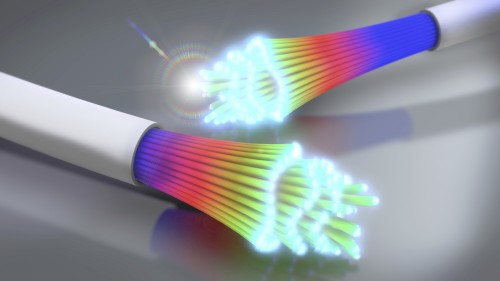
Distributed optical fiber sensing (DOFS) systems are transforming our ability to observe and understand the physical world. By converting standard optical fibers into continuous sensing elements, these technologies enable measurements of strain, temperature, vibration, acoustic signals, and other environmental parameters across large distances and at high spatial resolution.
This Collection invites research on enabling technologies, system architectures, data analytics, and practical applications. Topics of interest include, but are not limited to:
- Rayleigh-based schemes such as Distributed Acoustic Sensing (DAS)/ Phase-Sensitive Optical Time Domain Reflectometry (Φ-OTDR), Optical Frequency Domain Reflectometry (OFDR)
- Brillouin-based sensing including Brillouin Optical Time Domain Analysis (BOTDA)/Brillouin Optical Time Domain Reflectometry (BOTDR)/Brillouin Optical Correlation Domain Analysis (BOCDA)
- Raman-scattering-based Distributed Temperature Sensing (DTS)
- Multimodal and hybrid sensing systems (Rayleigh-Brillouin-Raman)
- Distributed Sensing in enhanced fibers including multicore, high-scatter, ultraweak gratings
- Advanced computing machine learning and AI for next-generation distributed sensing systems; Quantitative imaging and digital-twin integration, the use of big data storage and cloud computing systems for distributed sensing
- New-principle sensing/measurement methods, including fiber-dependent and fiber-independent approaches; New-principle sensing/measurement data processing methods
- Applications: next-generation sensing instrumentation; structural health, safety and security monitoring in civil, aerospace, and marine infrastructures; energy applications, including power grids, pipelines, carbon capture and storage, and geothermal systems; geophysical and seismic monitoring; environmental and climate observations; Smart cities, transportation networks, and industrial process monitoring; underwater and ocean sensing applications
The Collection welcomes original primary research, Reviews, Perspectives, and Comments.
Why is this collection important?
This Collection supports and amplifies research related to SDG 9: Industry, Innovation and Infrastructure, highlighting advances that contribute to the development of next-generation sensing technologies and their practical engineering applications.
Why submit to a collection?
Collections like this one help promote high-quality science. They are led by Guest Editors and In-House Editors who are experts in their fields and supported by a dedicated team of Commissioning Editors and Managing Editors at Springer Nature. Collection manuscripts typically see higher citations, downloads, and Altmetric scores, and provide a one-stop-shop on a cutting-edge topic of interest.
Who is involved?
Yonas Seifu Muanenda, PhD, Scuola Superiore Sant'Anna, Italy
Dr Yonas Seifu Muanenda is an assistant professor of Electronic Engineering at the Institute of Mechanical Intelligence of the Scuola Superiore Sant'Anna (SSSA) in Pisa, Italy. Dr Muanenda has a multidisciplinary academic and professional background combining electrical and communication engineering, computing, and optical fiber sensing. After having earned BSc in Electrical Engineering and working in the telecom industry, he earned the joint international master’s in computer science and networking focused on photonic technologies from the SSSA and University of Pisa, graduating with 110/110 sum cum laude in 2012. He then joined the PhD in Emerging Digital Technologies (Photonic Technologies Curriculum) at the SSSA, earned his doctoral degree with 100/100 sum cum laude in 2016. His experimental and field research contributions pivot on performance enhancement and signal processing for realtime measurements with Distributed Acoustic Sensing, and his research contributions have been published in high-impact factor journals and relevant international conferences. His international research collaboration pool includes teams in Wuhan University of Technology in Wuhan, China and the Federal Institute of Material Research and Testing in Berlin, Germany. Since 2019, Dr Muanenda has also been participating in and coordinating the Erasmus+ cooperation between Universities in Latin America, Asia and Africa with the SSSA, having already made 5 staff missions for teaching and training in the area of fiber optic systems for sensing and communication.
Xiao Zhang, PhD, Beijing Institute of Technology, China
Dr Xiao Zhang is currently an Associate Professor in the School of Medical Science and Engineering at Beijing Institute of Technology (BIT). He earned his PhD in optics from Beijing University of Technology in 2013. During his doctoral studies, he was a visiting doctoral student at the University of Washington under the China Scholarship Council (CSC) program. Following his doctoral studies, he conducted postdoctoral research at Tsinghua University, where he was recognized as a Tsinghua University Outstanding Postdoctoral Fellow. He joined BIT in 2017. Dr Zhang’s research focuses on fiber-optic sensing and imaging, high-speed swept lasers, all-optical signal processing, and computational sensing. He has extensive experience in fiber-optic interferometry, coherent detection, swept-frequency techniques and compressed sensing.
How can I submit my paper?
Follow the Topic
SDG 9: Industry & Innovation
Research Communities > Community > Sustainability > UN Sustainable Development Goals (SDG) > SDG 9: Industry & Innovation
Photonics and Optical Engineering
Technology and Engineering > Biological and Physical Engineering > Photonics and Optical Engineering
-
Communications Engineering
A selective open access journal from Nature Portfolio publishing high-quality research, reviews and commentary in all areas of engineering.