Call for papers: In Vitro Systems
Published in Bioengineering & Biotechnology and Cell & Molecular Biology

What is this collection about?
In vitro systems have become indispensable tools for modelling human biology, enabling mechanistic investigation of development, physiology, and disease in experimentally tractable settings. Advances in stem cell biology, tissue engineering, biomaterials, and microfluidics have driven the development of increasingly sophisticated platforms, ranging from 2D cell cultures and 3D spheroids to organoids, organ-on-a-chip technologies, and multi-organ microphysiological systems.
These models can capture key features of tissue architecture, cellular interactions, and physiological function while offering opportunities to improve drug discovery, toxicity testing, and translational research. As human cell-based models continue to evolve, they are increasingly being used as new approach methodologies (NAMs) to complement or replace traditional animal models and to provide insights into human-specific biology. The Editors at Communications Biology now invite submissions that advance the development, validation, and application of in vitro systems across biological and biomedical research.
Topics of interest include, but are not limited to:
· 2D and 3D human cell culture systems
· Spheroids, organoids, and other self-organising tissue models
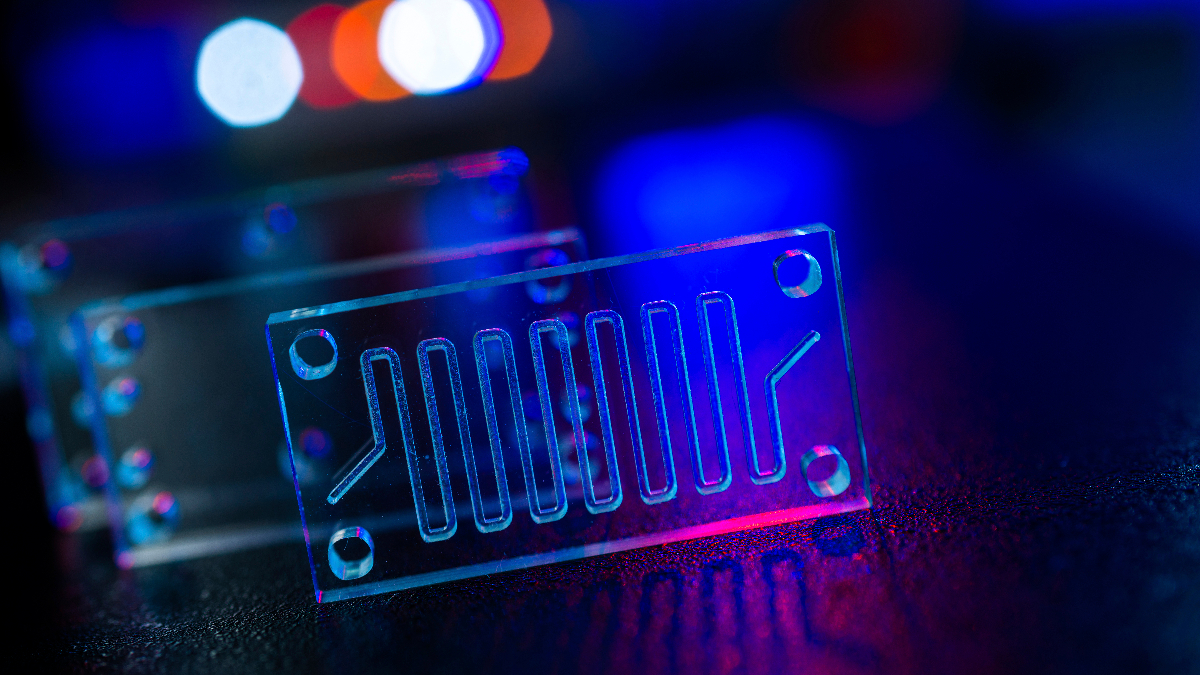
· Organ-on-a-chip and organ-chip technologies
· Microfluidic platforms and microphysiological systems (MPS)
· Multi-organ and human-on-a-chip models
· Tissue-specific systems, including lung-, liver-, heart-, and gut-on-a-chip models
· Applications in drug discovery, drug development, and toxicology
· Validation, benchmarking, and standardisation of NAMs
· Integration of advanced imaging, omics, and computational methods with in vitro systems
Why submit to a collection?
Collections like this one help promote high-quality science. They are led by In-House Editors who are experts in their fields and supported by a dedicated team of Commissioning Editors and Managing Editors at Springer Nature. Collection manuscripts typically see higher citations, downloads, and Altmetric scores, and provide a one-stop-shop on a cutting-edge topic of interest.
This Collection welcomes submissions from all authors – and not by invitation only – on the condition that the manuscripts fall within the scope of the Collection and of Communications Biology more generally. See our editorial process page for more details. All manuscripts published in the collection are hosted on a dedicated nature portfolio portal, giving articles high visibility beyond the journal they are published in.
Who is involved?
Communications Biology is edited by both in-house professional editors and Editorial Board Members.
Guest Editors for Communications Biology
Dhiraj Bhatia, PhD, Indian Institute of Technology Gandhinagar, India
Dr. Dhiraj Bhatia obtained his PhD from National Center for Biological Sciences-TIFR in Bangalore, India, in DNA nanotechnology. Post PhD he went to Curie Institute in Paris to join the team of Ludger Johannes initially as a Curie fellow and later as an HFSP long-term fellow where he learnt the cellular and biological applications of DNA nanodevices.
Xiaowu (Shirley) Tang, PhD, University of Waterloo, Ontario, Canada
Dr. Xiaowu (Shirley) Tang is a Full Professor in the Department of Chemistry at the University of Waterloo, Canada. She earned her Ph.D. from the Massachusetts Institute of Technology and pursued postdoctoral research at Stanford University. Additionally, she has three years of industry experience in Silicon Valley, California, USA.
Our editors work closely together to ensure the quality of our published papers and consistency in author experience.
How can I submit my paper?
Visit the Collection page to find out more about this collection and submit your article.
Follow the Topic
-
Communications Biology
An open access journal from Nature Portfolio publishing high-quality research, reviews and commentary in all areas of the biological sciences, representing significant advances and bringing new biological insight to a specialized area of research.

Related Collections
With Collections, you can get published faster and increase your visibility.
Healthy Aging
Publishing Model: Open Access
Deadline: Dec 31, 2026
DNA repair and human disease
Publishing Model: Hybrid
Deadline: Oct 31, 2026