Call for papers: Network resilience in transportation systems
Published in Sustainability and Civil Engineering

What is this collection about?
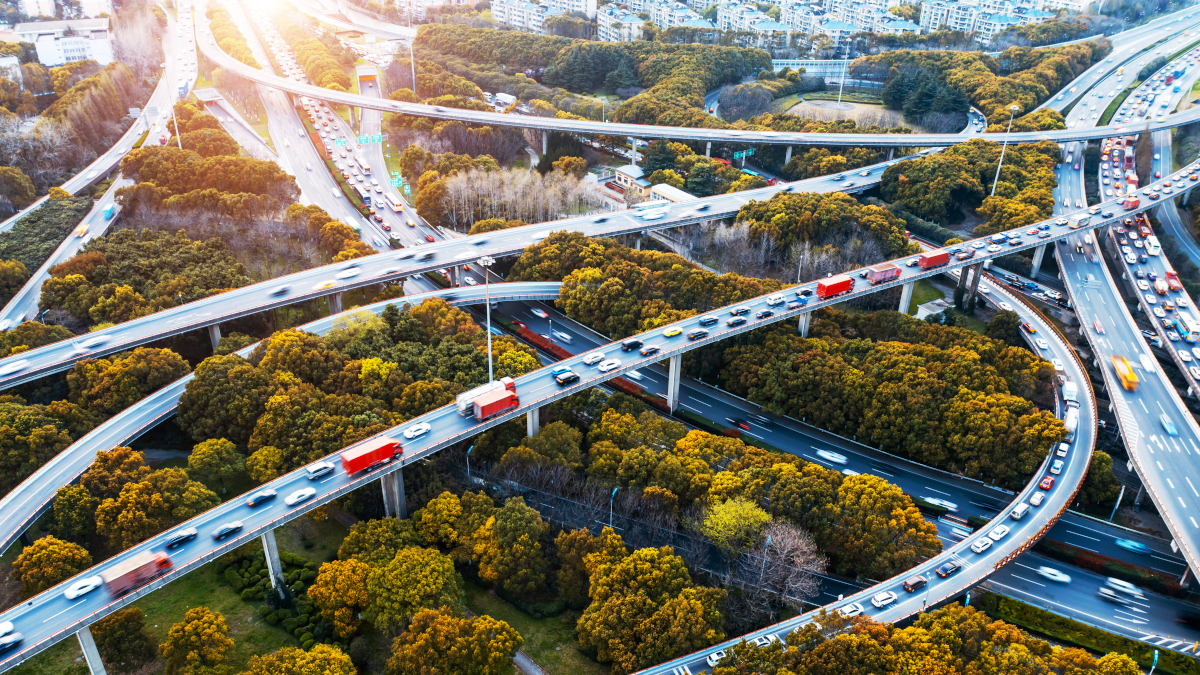
Transportation networks support urban mobility, freight logistics, and global supply chains, yet they face growing disruptions from natural hazards, cyber-physical attacks, demand shocks, supply-chain disruptions, and infrastructure aging.
This Collection brings together research communities at the intersection of risk and resilience engineering, transportation engineering, network science, and supply-chain management. We welcome high-quality contributions spanning conceptual advances, methodological developments, practical studies, and case-study applications, with a strong emphasis on engineering approaches and translational value.
Specifically, this Collection showcases:
- Research scope: Terrestrial transportation network resilience; marine and maritime transportation network resilience; air transportation network resilience
- Design and tools: Agent-based modelling; optimization and control; stochastic modelling; digital twins; machine learning for anomaly detection and adaptive response; resilience-by-design; digital or data-driven approaches for infrastructure resilience; smart sensing and early warning of transportation network failure risks
- Network science and resilient design: Modelling and optimization for transportation and logistics network resilience; resilience of interconnected infrastructure systems; infrastructure layout optimization; redundancy design and reinforcement design; resilience of autonomous vehicle and transportation networks
- Recovery and restoration under disruptions: Post-disaster rapid recovery scheduling of transportation infrastructure; short-term response and long-term reconstruction for damaged transport systems; cascading failures and interdependence across modes
- Applications and case studies: Real-world deployment; multimodal urban mobility; freight and logistics supply chains; ports, airports, and rail networks; emergency evacuation and disaster response
In addition to original primary research, this Collection also encourages narrative reviews and perspective pieces to map the field and identify open challenges.
Why is this collection important?
By bringing together research across engineering, network science, risk analysis, and supply-chain management, this Collection aims to advance understanding of how transportation systems can better withstand, adapt to, and recover from disruptions. This Collection supports and amplifies research related to SDG 9: Build resilient infrastructure, promote inclusive and sustainable industrialization and foster innovation.
Why submit to a collection?
Collections like this one help promote high-quality science. They are led by Guest Editors and In-House Editors who are experts in their fields and supported by a dedicated team of Commissioning Editors and Managing Editors at Springer Nature. Collection manuscripts typically see higher citations, downloads, and Altmetric scores, and provide a one-stop-shop on a cutting-edge topic of interest.
Who is involved?
Zhijie (Sasha) Dong, PhD, Southeast University, China
Dr Zhijie Dong, also known as Sasha Dong, is a Junior Chair Professor in the School of Transportation at Southeast University, China. She is a recipient of the China National Young Talent Program and a Senior Member of IEEE and IISE. Her research develops and applies machine learning, optimization, and data-driven decision-making methods to improve the efficiency, resilience, and sustainability of transportation, logistics, and supply chain systems. Dr Dong has received international academic honors from NSF, INFORMS, and IISE, and has held leadership roles including Chair of the Freight Transportation Section of the INFORMS Transportation Science and Logistics Society and Chair of the Logistics and Supply Chain Division of IISE.
Carmine Galasso, PhD, University College London, United Kingdom
Dr Carmine Galasso is a Professor of Catastrophe Risk Engineering in the Department of Civil, Environmental & Geomatic Engineering at University College London (UCL) and Vice Dean for Research in the Faculty of Engineering Sciences. His research develops and applies probabilistic and statistical methods and computational tools for catastrophe risk engineering and disaster risk reduction. He founded and co-leads the DE|RISC Lab: Disaster Engineering for ResIlient SoCieties Laboratory at UCL, working at the intersection of civil engineering, natural hazard science, and social sciences to support multi-hazard, risk and resilience-informed decision making for buildings, building portfolios, and critical infrastructure exposed to multiple natural hazards and climate change. Carmine’s work is funded by major public and international bodies (e.g., UK Research and Innovation, the European Commission, the World Bank) and by the insurance and reinsurance industry.
Communications Engineering is edited by both in-house professional editors and Editorial Board Members.
How can I submit my paper?
Visit the Collection page to find out more about this collection and submit your article.
Follow the Topic
-
Communications Engineering
A selective open access journal from Nature Portfolio publishing high-quality research, reviews and commentary in all areas of engineering.

Related Collections
With Collections, you can get published faster and increase your visibility.
Generative AI for mechanical engineering design and optimization
Publishing Model: Open Access
Deadline: Dec 31, 2026
Industry Showcase 2026: Solutions for Sustainability
Publishing Model: Open Access
Deadline: Oct 28, 2026