Call for papers: AI Data Centers and the Power-Computing-Carbon Nexus
Published in Electrical & Electronic Engineering and Sustainability

What is this collection about?
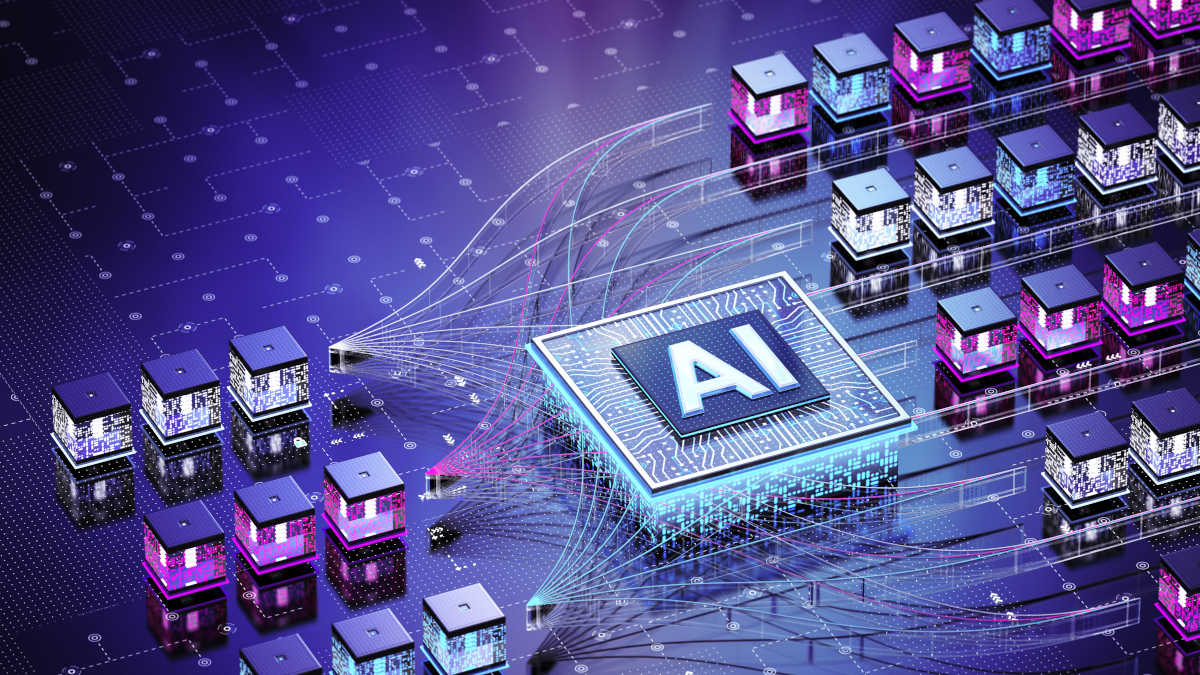
AI Data Centers are the foundational physical infrastructure of the modern digital economy. Serving as the critical convergence point where energy, chips, and computing systems interact, they are essentially heavy-industry facilities that manufacture intelligence in real-time. As AI models scale, these facilities are consuming energy at an exponential rate.
This Collection focuses on establishing a deep Power-Computing-Carbon (PCC) synergy, exploring how AI data centers can operate as responsive grid assets that absorb renewable energy, minimize carbon footprints, and enhance power system resilience while maintaining computational quality of service and data security.
Topics of interest include, but are not limited to:
- Digital Twin Modeling and Multi-Physics Interaction Mechanisms in AI Data Centers
- Spatio-Temporal Co-Planning and Integrated Design of AI Data Centers and Energy Networks
- Synergistic SGLST Operation and Thermodynamic Efficiency Limits in Data Center Microgrids
- Energy-Computation Coordinated Dispatch Across Geographically Distributed Data Centers
- Agile Interactive Response and Management of Distributed Edge Computing Resources
- Demand Response and Flexibility Reconfiguration of AI Workloads
- Game-Theoretic Trading Decisions and Optimal Control in Energy-Carbon-Compute Markets
- Resilience and Cyber-Physical Security of AI Data Centers Under Extreme Events and Grid Faults
Why is this collection important?
As AI adoption accelerates, the energy demands of data centers are growing rapidly. Research that bridges power systems and computing networks is increasingly important for improving energy efficiency, integrating renewable energy resources, reducing carbon emissions, and enhancing infrastructure resilience.
This Collection supports and amplifies research related to SDG 7: Affordable and Clean Energy and highlights solutions that enable AI data centers to respond dynamically to both computing and energy-system needs.
Why submit to a collection?
Collections like this one help promote high-quality science. They are led by Guest Editors and In-House Editors who are experts in their fields and supported by a dedicated team of Commissioning Editors and Managing Editors at Springer Nature. Collection manuscripts typically see higher citations, downloads, and Altmetric scores, and provide a one-stop-shop on a cutting-edge topic of interest.
Who is involved?
Communications Engineering is edited by both in-house professional editors and Editorial Board Members. For this Collection, Yang Gao, Yan Li and members of the Editorial Board will handle submissions to Communications Engineering.
Nature Communications is edited by in-house professional editors.
Communications Sustainability is edited by both in-house professional editors and Editorial Board Members.
Scientific Reports is managed by in-house professional editors and edited by Editorial Board Members.
Our editors work closely together to ensure the quality of our published papers and consistency in author experience.
Guest Editors for Communications Engineering
Yang Gao, PhD, Shanghai Jiao Tong University, China
Dr Yang Gao is an Assistant Professor at the School of Electrical Engineering, Shanghai Jiao Tong University. He conducted postdoctoral research for one year at KTH Royal Institute of Technology (Sweden), worked as an Assistant Research Fellow at the University of Manchester (UK), a Research Associate at the University of Bristol (UK), and a Visiting Scholar at the National University of Singapore. His research focuses on virtual power plants, microgrid clusters, integrated energy systems and digital twins.
Yan Li, PhD, The Pennsylvania State University, USA
Dr Yan Li received her Ph.D. degree from the University of Connecticut, Storrs, CT, U.S., in 2019. She also received a Ph.D. degree from Tianjin University, Tianjin, China, in 2013. Both are in electrical engineering. She is currently a Charles H. Fetter Endowed Fellow Assistant Professor at the School of Electrical Engineering and Computer Science at Pennsylvania State University, University Park, PA, U.S. Dr Li has received several prestigious awards, including the Outstanding Service Award of the IEEE Computer Society Annual Symposium on VLSI, IEEE Power and Energy Society Outstanding Engineer Award, etc. She also serves as an IEEE representative for the Quantum Economic Development Consor-tium and chairs the IEEE Power and Energy Society Quantum Task Force.
How can I submit my paper?
Visit the Collection page to find out more about this collection and submit your article.
Follow the Topic
-
Nature Communications
An open access, multidisciplinary journal dedicated to publishing high-quality research in all areas of the biological, health, physical, chemical and Earth sciences.
-
Scientific Reports
An open access journal publishing original research from across all areas of the natural sciences, psychology, medicine and engineering.
-
Communications Engineering
A selective open access journal from Nature Portfolio publishing high-quality research, reviews and commentary in all areas of engineering.
-
Communications Sustainability
An open-access journal publishing high-quality, editorially selected and peer-reviewed advances in all sustainability-related areas of science, including the natural and social sciences as well as engineering.




Related Collections
With Collections, you can get published faster and increase your visibility.
Phytochemicals and health
Publishing Model: Open Access
Deadline: Oct 28, 2026
Soil microbiomes and carbon sequestration under global change
Publishing Model: Hybrid
Deadline: Mar 18, 2027