Call for papers: Advances in atmospheric physical chemistry
Published in Chemistry and Sustainability


What is this collection about?
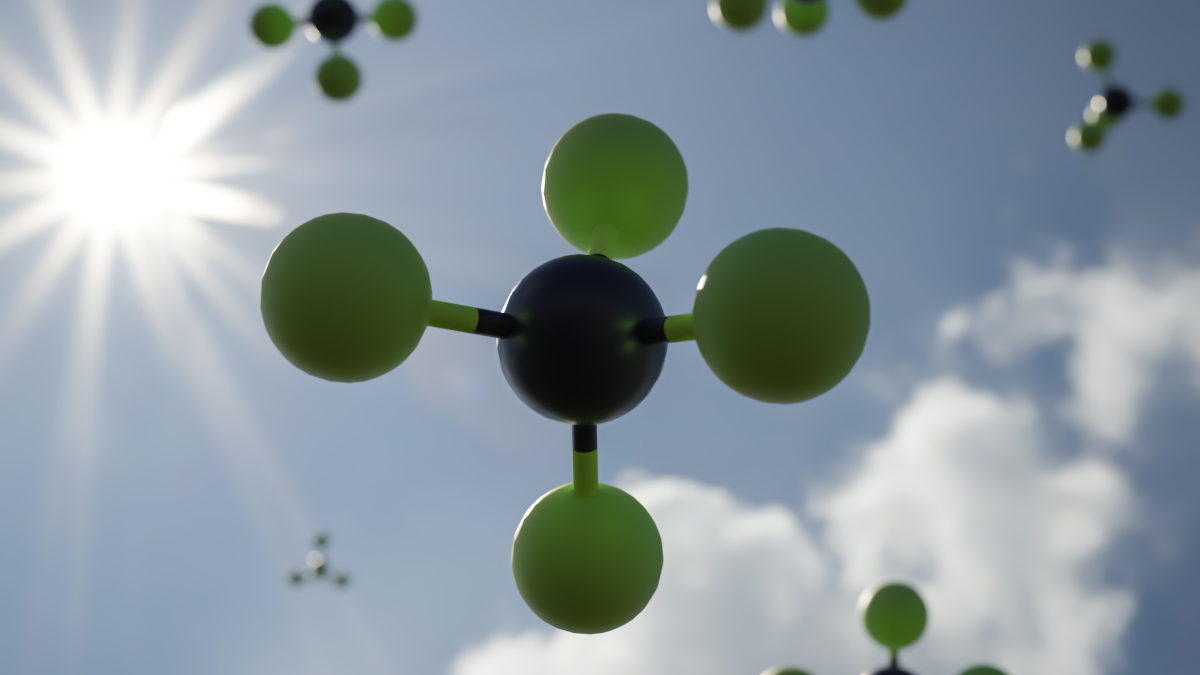
The atmosphere is a complex reactive environment in which molecular interactions, reaction kinetics and dynamics, energy transfer, and interfacial processes govern the formation, transformation, and fate of its constituents.
This Collection invites manuscripts that reveal the fundamental physicochemical mechanisms underlying atmospheric reactivity, spanning:
• Photochemical and radical reactions
• Catalysis and molecular clustering
• Aerosol and droplet chemistry
• Gas–surface and multiphase processes
• Molecular spectroscopy
• The chemistry of pollutants and greenhouse gases
The Collection highlights both experimental and theoretical studies that investigate molecular-level processes and interfacial phenomena in atmospheric systems.
Why is this collection important?
This Collection supports and amplifies research related to SDG 13: Climate Action and aims to advance mechanistic understanding of atmospheric chemistry through studies of fundamental molecular and interfacial processes.
Why submit to a collection?
Collections like this one help promote high-quality science. They are led by Guest Editors and In-House Editors who are experts in their fields and supported by a dedicated team of Commissioning Editors and Managing Editors at Springer Nature. Collection manuscripts typically see higher citations, downloads, and Altmetric scores, and provide a one-stop-shop on a cutting-edge topic of interest.
Who is involved?
Montu K. Hazra, PhD, Saha Institute of Nuclear Physics, India
Dr. Montu K. Hazra obtained his PhD from the Indian Institute of Technology Kanpur and subsequently undertook postdoctoral research at the University of California, San Diego. He is currently an Associate Professor at the Saha Institute of Nuclear Physics, India. His interdisciplinary research spans molecular spectroscopy, atmospheric chemistry, gas-phase reaction mechanisms, and chemical kinetics.
Zhe Wang, PhD, The Hong Kong University of Science and Technology, China
Prof. Zhe Wang is an Associate Professor (with Tenure) in the Division of Environment and Sustainability and Department of Chemistry at The Hong Kong University of Science and Technology (HKUST). Prof. Wang’s research focuses on photochemical air pollution, atmospheric chemistry, and gas-aerosol-cloud interactions. His work combines field measurements, laboratory experiments, and modeling approaches to investigate the chemical and physical processes that govern air quality and atmospheric composition. He has published over 120 peer-reviewed scientific papers in leading journals, with over 7000 citation. He serves as a Council Member of the Hong Kong Society of Mass Spectrometry, and a member of the IGAC China Working Group. He also serves as Associate Editor for the SCI journal of Atmospheric Environment, and Guest Associate Editor for Science Bulletin.
How can I submit my paper?
Visit the Collection page to find out more about this collection and submit your article
Follow the Topic
-
Communications Chemistry
An open access journal from Nature Portfolio publishing high-quality research, reviews and commentary in all areas of the chemical sciences.

Related Collections
With Collections, you can get published faster and increase your visibility.
Peptide drug design
Publishing Model: Hybrid
Deadline: Jan 28, 2027
Synthetic approaches to carbon nanomaterials
Publishing Model: Open Access
Deadline: Nov 30, 2026