Call for Papers: Urban Climate and Smart Cities: Geospatial Monitoring and Predictive Analytics for a Resilient Future in Discover Geoscience
Published in Earth & Environment, Sustainability, and Mathematics

📢 Call for Papers
Urban Climate and Smart Cities: Geospatial Monitoring and Predictive Analytics for a Resilient Future.
I am happy to share that my Article Collection, “Urban Climate and Smart Cities: Geospatial Monitoring and Predictive Analytics for a Resilient Future,” has been officially accepted by Discover Geoscience, a Springer Nature journal.
This Collection in Discover Geoscience invites interdisciplinary contributions that apply geospatial technology, advanced monitoring methods and predictive analytics to examine the interactions between urban climate dynamics, urban expansion, and smart city systems. The collection welcomes studies focusing on urban climate dynamics, land-use and land-cover change, urban growth monitoring and modelling, GeoAI applications, and spatial prediction of environmental risks which supports climate-resilient nation building, sustainable city development, and innovative and integrated approaches for smart urban management
Guest Editor: Dr. Swagata Ghosh, Central University of Karnataka, Kalaburagi, India
📢 Call for Papers now open
📆 Submission Deadline: 15 January 2027
💰 APC waived (no publication charges until 31 December 2026)
I warmly invite researchers, academicians, and practitioners working in related domains to contribute to this collection. For key themes & submission details, click on the collection website link https://link.springer.com/collections/eaajjgbcfg
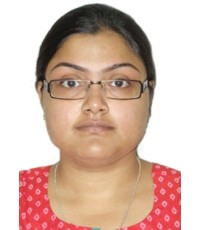
Dr. Swagata Ghosh, M.Sc., M.Tech. & Ph.D. is Assistant Professor in the Department of Geography, School of Earth Sciences, Central University of Karnataka, India since December 2022. Formerly, she worked as Assistant Professor at Amity Institute of Geoinformatics and Remote Sensing, Amity University Uttar Pradesh, India for 8 years from 2014 to 2022. Dr. Ghosh worked as a Postdoctoral Fellow at the Remote Sensing Division, Department of Civil Engineering, Indian Institute of Technology Bombay, Mumbai, India from 2013 to 2014. She received her M.Sc. in Geography from the University of Calcutta, India, and her M.Tech. and Ph.D. (with Senior Research Fellowship from CSIR (CSIR-SRF), Govt. of India) in Remote Sensing from Birla Institute of Technology Mesra, Ranchi, India. She has been working in various areas of Remote Sensing applications in Geography viz. urban growth modelling, urban hazard risk assessment with a special focus on urban heat island (UHI), air pollution modelling, modelling and simulation of climate change in urban versus rural areas to mitigate rural-urban imbalance in environmental quality, snow, and glacier studies etc. She has published research articles in highly reputed refereed international journals, book chapters, and articles in conference proceedings. She is the editorial board member of Scientific Reports, Springer Nature. She is serving as a reviewer of various international journals viz. Physical Geography, Journal of the Indian Society of Remote Sensing, International Journal of Remote Sensing, Applied Geomatics, Asia-Pacific Journal of Regional Science, Atmospheric Research, Environment, Development and Sustainability, Spatial Information Research etc. and is also a life member of Indian Society of Remote Sensing (ISRS) and Indian National Cartographic Association (INCA). Dr. Ghosh is a recipient of the Early Career Research Award (ECRA) and received funding from the Science and Engineering Research Board (SERB), Govt. of India in 2017 to execute the research project “Analysis of Urbanization and Its Impact on Climate Alteration and Environmental Pollution in Faridabad, Haryana, Sub-Region of NCR, India using Remote Sensing, GIS and In-Situ Measurement” as sole principal investigator. In this government-funded R & D project, she was engaged in project development and management, laboratory development with in-situ instruments and software, international research collaboration, and research guidance of undergraduate, postgraduate, and Ph. D. students. Two Ph.D. scholars and more than 30 B.Sc./M.Sc./M.Tech. students have completed their thesis under her guidance. Dr. Ghosh also received Erasmus+ Grant under an International grant to visit the University of Salzburg, Austria as Visiting Professor in 2022.
Follow the Topic
-
Discover Geoscience
This is a fully open access, peer-reviewed journal that supports multidisciplinary research and policy developments across the field of geoscience.

Related Collections
With Collections, you can get published faster and increase your visibility.
Environmental Pollution in Soil and Water
This Collection is dedicated to addressing the critical challenges of environmental pollution and promoting sustainable solutions for soil and water conservation. The goal is to advance scientific understanding and explore practical strategies to reduce contamination in soil and water, ensuring the protection of ecosystems for future generations. We invite papers that enhance knowledge in areas such as waste management, environmental remediation, pollutant analysis, and the development of safe soil and water amendments. Additionally, the Collection aims to highlight the use of cutting-edge technologies, including GIS modeling, artificial intelligence, and machine learning, to predict and address environmental and climatic changes. This Collection encourages contributions from researchers around the world, offering a platform for global collaboration and sharing of innovative ideas in the earth and environmental sciences. Through this Collection, we aim to provide valuable insights and solutions to environmental challenges at both national and international levels.
Keywords: Environmental Pollution; Pollution Remediation; Soil and Water Conservation; Ecotoxicology; GIS Modeling
Publishing Model: Open Access
Deadline: Sep 30, 2026
Decoding Earth's Dynamic Past and Present: Advances in Crustal Deformation, Tectonopaleoclimate, and Geohazard Assessment
This Collection aims to showcase cutting-edge interdisciplinary research in geosciences focusing on three complementary fronts: (1) contemporary deformation, tectonics and seismic hazard assessment, (2) high-resolution Holocene and late Quaternary climate and tectonic reconstruction, (3) Geophysical, geological, geotechnical investigation to understand dynamic earth process. These themes reflect the pioneering contributions and represent a confluence of Earth system dynamics spanning both short-term tectonic processes and longterm climatic and tectonic variations.
This Collection invites original research articles, reviews, new investigations, and methodological advances that address geoscientific problems across temporal and spatial scales. We especially encourage contributions that employ innovative observational datasets (GNSS, InSAR, speleothems, tree rings, remote sensing, and geophysical, geological, geotechnical) and foster transdisciplinary approaches to climate, tectonics, and natural hazards. Topics include, but are not limited to: • Crustal deformation, neotectonics, and hazard studies • Holocene and late Quaternary climate and tectonic reconstruction • Groundwater-induced land subsidence and its monitoring using geodetic tools • Geohazard assessment including landslides, earthquakes, and glacial changes • Remote sensing, GIS and AI-ML based research for geoscientific studies.
This Collection will bridge modern geospatial technology, geophysical, geological, geotechnical based monitoring of dynamic Earth processes with tectono-climatic archives that extend our understanding of present along with the long-term variability. It will not only contribute to Earth system science but also support sustainable development of society, disaster risk reduction, and environment preservation in tectonically and climatically sensitive regions.
Keywords: Crustal deformation; Neotectonics; Tectono-climate; Land subsidence; Geohazard; AI-ML for Geoscientific studies; Hydro-geodesy
Publishing Model: Open Access
Deadline: Nov 01, 2026




Please sign in or register for FREE
If you are a registered user on Research Communities by Springer Nature, please sign in