Co-orbital asteroids of terrestrial planets affected by the von Zeipel–Lidov–Kozai mechanism, Analyzing collision probability for asteroids detected on too short arcs
Published in Astronomy

Speakers
- Prof. Valerio Carruba Ph.D. — Universidade Estadual Paulista (Unesp)
- Dr Xin Liu — Nanjing University & Macau University of Science and Technology
Abstract
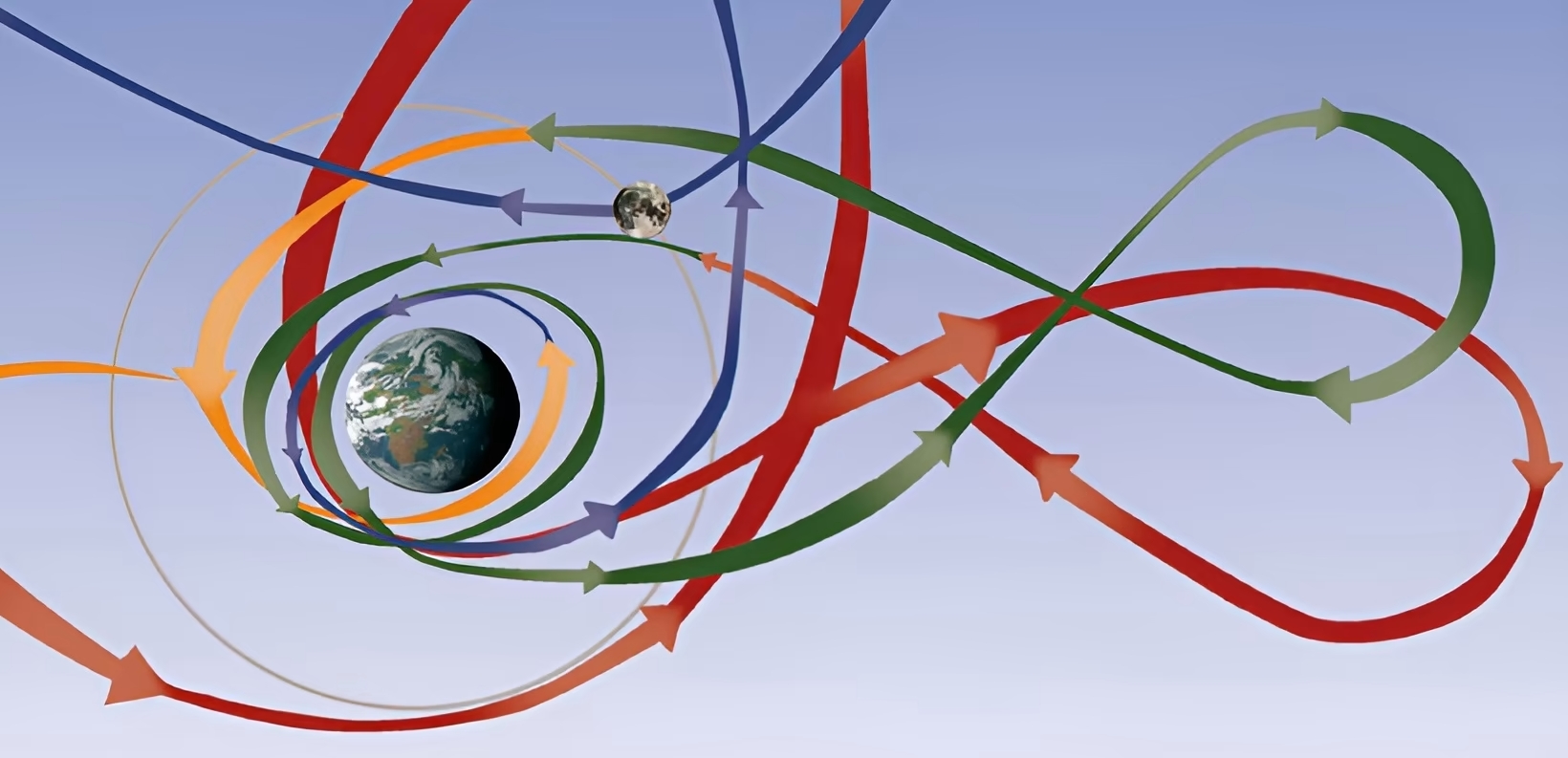
Two distinct studies are presented. The first investigated the influence of the von Zeipel–Lidov–Kozai (ZLK) mechanism on co-orbital asteroids of terrestrial planets. A survey of known Venus, Earth, and Mars co-orbitals, using orbital integrations and a clone-based statistical approach, identified ZLK states. No pure ZLK states were found for Venus co-orbitals, though 2020 TV10, a Venus co-orbital, poses a potential Earth impact risk. For Earth, 17 new ZLK librators were identified, including 2012 FC71 and 2021 VU12 librating around 0°, and 2008 WM64, 2019 NC1, 2020 DX1, and 2022 UO10 around 180°. Asteroid 2016 CA138 may librate around 270°. These ZLK states provide dynamical protection from close Earth encounters. For Mars, 2017 XG62, a quasi-satellite, is the only known co-orbital librating around 90°, a high-inclination ZLK state that insulates it from encounters with other terrestrial planets. The second study developed an improved method for analyzing collision probability for asteroids detected on too-short observational arcs (TSAs). This approach combines the admissible region method with differential algebra (DA) and automatic domain splitting (ADS) for managing orbital uncertainties. The admissible state region is systematically partitioned, with orbital parameters and close-encounter distances represented by Taylor expansions for continuous, high-precision uncertainty propagation. The method effectively identifies regions of high collision probability and handles abrupt jumps in encounter time. Tests on past impactors like 2019 MO and 2008 TC3 demonstrated accurate impact probability calculations, which converge to nearly 100% with longer observation arcs. This framework offers a systematic and transparent assessment of impact risk for TSAs, proving valuable for imminent impactors with computational times typically ranging from 10 to 60 minutes.
Looking for more in the field?
Explore more events from Celestial Mechanics and Dynamical Astronomy Seminar Series and Springer Nature's Astronomy.

Research Seminars by Springer Nature - giving you access to the latest research talks, direct from authors and editors.
Follow the Topic
-
Celestial Mechanics and Dynamical Astronomy
This is an international journal that is concerned with the broadest range of celestial mechanics and its applications, as well as with peripheral fields.

Related Collections
With Collections, you can get published faster and increase your visibility.
Dynamics of Space Debris and NEO
Publishing Model: Hybrid
Deadline: Ongoing
Multiple Planet Systems
This article collection is based on peer-reviewed contributions to the Multiple Planet Systems Conference held from 31 Aug – 4 Sept 2026 at the Sofia University "St. Kliment Ohridski", Sofia, Bulgaria.
All participants are invited to submit review articles and original research papers that address problems related to the dynamics of multi-planet systems and planets in binary stars, both on theoretical and observational aspects of these complex architectures. This is a multi-journal collection: Please select either Celestial Mechanics and Dynamical Astronomy (CM&DA) or Astrophysics and Space Science (Ap&SS) – depending on the scope of your work.
Publication under the subscription model is free of charge, open-access is offered for a fee or under the terms of Springer's institutional agreements.
Subjects relevant to CM&DA include: Detection and characterization of multiple-planet systems; Resonant and near-resonant configurations; Secular dynamics and chaos; Transit timing variations (TTVs); Three-dimensional architectures and Lidov–Kozai effects; Formation and stability of S-type and P-type planets in binaries; Numerical tools for fitting exoplanet data, dynamical analysis, and long-term stability; etc.
For Ap&SS, we expect papers within a broader astrophysical and planetary-science scope: related to planet formation and migration, protoplanetary disks, post-main-sequence evolution, stellar binaries, observational surveys, Gaia astrometry, etc.
Publishing Model: Hybrid
Deadline: May 31, 2027





Please sign in or register for FREE
If you are a registered user on Research Communities by Springer Nature, please sign in