Copper-Based Targeted Nanocatalytic Therapeutics for Non-Small Cell Lung Cancer
Published in Cancer and Materials

Copper-Based Targeted Nanocatalytic Therapeutics for Non-Small Cell Lung Cancer

Like

Share this post

Choose a social network to share with, or copy the URL to share elsewhere

This is a representation of how your post may appear on social media. The actual post will vary between social networks

Explore the Research

Springer Nature Singapore
Springer Nature Singapore Springer Nature Singapore

Copper-Based Targeted Nanocatalytic Therapeutics for Non-Small Cell Lung Cancer - Nano-Micro Letters

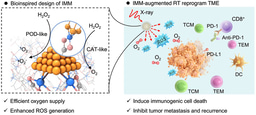
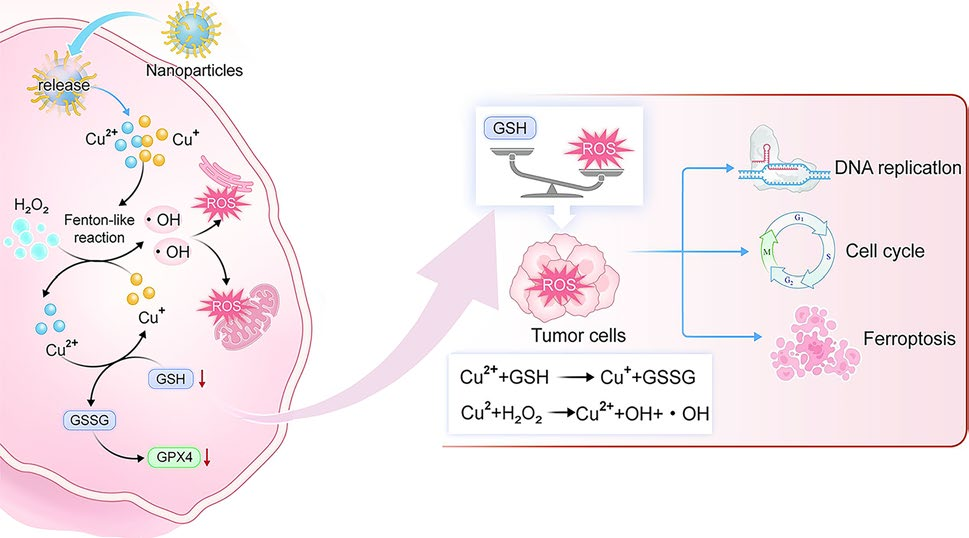
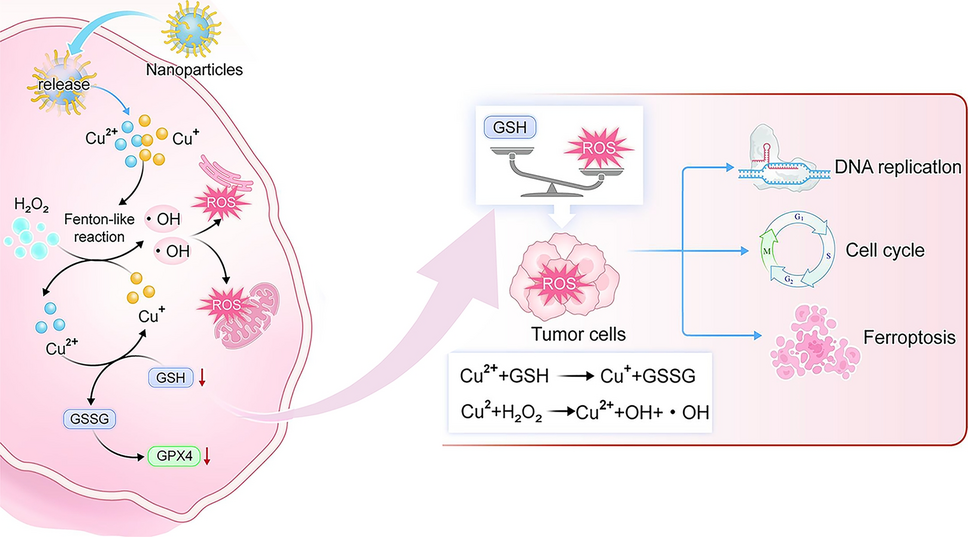
Conventional treatments for non-small cell lung cancer (NSCLC) suffer from low remission rates, high drug resistance, and severe adverse effects. To leverage the therapeutic potential of reactive oxygen species (ROS), nanocatalytic medicine utilizes nanomaterials to generate ROS specifically within tumor sites, enabling efficient and targeted cancer treatment. In this study, hyaluronic acid (HA)-modified copper-N,N-dimethyl-N-phenylsulfonylbisamine (DMSA)-assembled nanoparticles (Cu-DMSA-HA NPs) are developed with tumor-targeting capability and efficiently catalyze ROS production via coordination chemistry. Targeted delivery is facilitated by HA surface modification through recognition of overexpressed cluster of differentiation 44 receptors on cancer cells, which enhances nanoparticle uptake. Once internalized, intracellular glutathione is depleted by the NPs, followed by a Fenton-like reaction that sustains ROS production. Both in vitro and in vivo studies demonstrate that this catalytic strategy effectively inhibits DNA replication, prevents cell cycle progression, downregulates glutathione peroxidase 4 expression, induces ferroptosis, and ultimately suppresses NSCLC progression. Overall, the readily prepared Cu-DMSA-HA NPs exhibit robust catalytic activity and tumor specificity, highlighting their strong potential for clinical translation in nanocatalytic cancer therapy.

Conventional treatments for non-small cell lung cancer (NSCLC) suffer from low remission rates, high drug resistance, and severe adverse effects. To leverage the therapeutic potential of reactive oxygen species (ROS), nanocatalytic medicine utilizes nanomaterials to generate ROS specifically within tumor sites, enabling efficient and targeted cancer treatment. In this study, hyaluronic acid (HA)-modified copper-N,N-dimethyl-N-phenylsulfonylbisamine (DMSA)-assembled nanoparticles (Cu-DMSA-HA NPs) are developed with tumor-targeting capability and efficiently catalyze ROS production via coordination chemistry. Targeted delivery is facilitated by HA surface modification through recognition of overexpressed cluster of differentiation 44 receptors on cancer cells, which enhances nanoparticle uptake. Once internalized, intracellular glutathione is depleted by the NPs, followed by a Fenton-like reaction that sustains ROS production. Both in vitro and in vivo studies demonstrate that this catalytic strategy effectively inhibits DNA replication, prevents cell cycle progression, downregulates glutathione peroxidase 4 expression, induces ferroptosis, and ultimately suppresses NSCLC progression. Overall, the readily prepared Cu-DMSA-HA NPs exhibit robust catalytic activity and tumor specificity, highlighting their strong potential for clinical translation in nanocatalytic cancer therapy.

Please sign in or register for FREE

If you are a registered user on Research Communities by Springer Nature, please sign in

Follow the Topic

Nanoparticles
Physical Sciences > Chemistry > Materials Chemistry > Nanoparticles
Cancer Therapy
Life Sciences > Biological Sciences > Cancer Biology > Cancer Therapy
Nanoscale Design, Synthesis and Processing
Physical Sciences > Materials Science > Nanotechnology > Nanoscale Design, Synthesis and Processing
Nanotechnology
Physical Sciences > Materials Science > Nanotechnology
Cancer Biology
Life Sciences > Biological Sciences > Cancer Biology
  • Nano-Micro Letters Nano-Micro Letters

    Nano-Micro Letters is a peer-reviewed, international, interdisciplinary and open-access journal that focus on science, experiments, engineering, technologies and applications of nano- or microscale structure and system in physics, chemistry, biology, material science, and pharmacy.