Cytokine profiles and metabolic dysregulation in endometriosis: insights into diagnostic and therapeutic targets LAR ONCOLOGY

Introduction
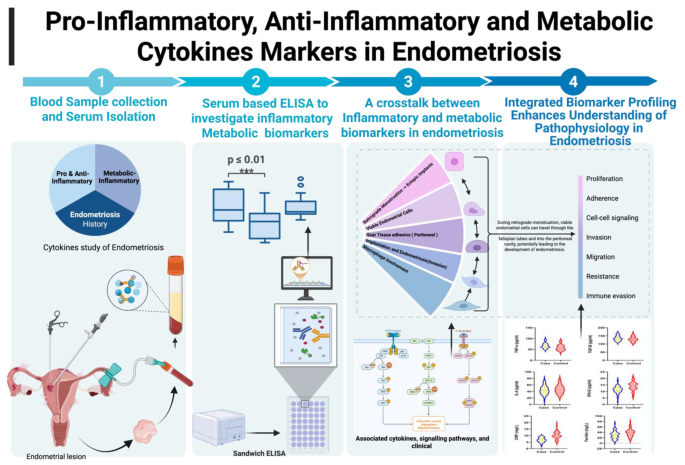
Pro-inflammatory cytokines (TNF-α, IL-1β, IL-6) drive inflammation and disease progression, while anti-inflammatory cytokines (TGF-β, IL-10) maintain immune balance. Metabolic markers like homocysteine, folic acid, and vitamin B12 may influence immune regulation and contribute to endometriosis pathophysiology.
Methodology
Serum levels of TNF-α, IL-1β, IL-6, IL-10, TGF-β, CRP, Ferritin, IL-4, IFN-γ, Homocysteine, Folic Acid, and Vitamin B12 were quantified using ELISA kits. Unpaired t-tests and Pearson correlation were used to assess immune-metabolic differences between endometriosis patients and healthy controls.
Results
TNFα, IL-6, IL-1β, IL-10, homocysteine, ferritin, and reduced IFN-γ and CRP levels in the case group compared to controls (p < 0.05). TNFα (p = 0.0008), IL-1β (p = 0.0005), and homocysteine (p < 0.0001) were notably higher in cases. IFN-γ (p < 0.0001) and CRP (p < 0.0001) were significantly lower in cases. IL-6 (p = 0.0020), IL-10 (p = 0.0051), ferritin (p = 0.0338), and folate (p = 0.0134) also showed significant differences. TGF-β, IL-4, and Vit-B12 levels did not differ significantly (p > 0.05). These findings suggest altered cytokine and biochemical profiles in disease pathophysiology.
Conclusion
The study highlights significant alterations in inflammatory cytokines and metabolic markers in endometriosis patients compared to healthy controls. Elevated pro-inflammatory and altered anti-inflammatory cytokine levels, along with metabolic imbalance, suggest immune-metabolic dysregulation in disease pathogenesis. These findings may aid in identifying potential biomarkers and therapeutic targets for endometriosis.

Follow the Topic
-
Molecular Biology Reports
Molecular Biology Reports is a peer-reviewed general molecular biology journal publishing sound science research and Reviews in all areas of molecular and cellular biology.

Related Collections
With Collections, you can get published faster and increase your visibility.
Digestive Diseases
Molecular Biology Reports’ section on Digestive Diseases is dedicated to the publication of original research, reviews, methodology, and correspondence papers covering the molecular, genetic, and biochemical mechanisms underlying digestive diseases, including inflammatory bowel disease, gastrointestinal cancers, liver diseases, and metabolic disorders.
Topics that will be considered include but are not limited to: molecular pathways involved in disease pathogenesis; genetic and epigenetic factors contributing to disease susceptibility; host-microbiome interactions; the role of immune responses; and the development of biomarkers and therapeutic targets.
Articles must contain some molecular biology techniques to be considered.
Publishing Model: Hybrid
Deadline: Ongoing
Neuroscience
Molecular Biology Reports’ section on Neuroscience is dedicated to the publication of high-quality original research, reviews, methodology and correspondence papers covering all areas of neuroscience research. Articles must contain some molecular biology techniques; purely in silico studies are not within the scope of the Journal.
Articles that will be considered include but are not limited to: molecular mechanisms of normal neural activity and development in different species; molecular mechanisms of the pathogenesis of neural diseases, such as Alzheimer’s and Parkinson’s disease, ALS, stroke, epilepsy, injuries and cancer; prognostic genomics; genetic polymorphisms associated with increased risk of neurological diseases; and novel therapies.
Publishing Model: Hybrid
Deadline: Ongoing