Editor story: Dr. Geeta Behera
Published in Biomedical Research and General & Internal Medicine

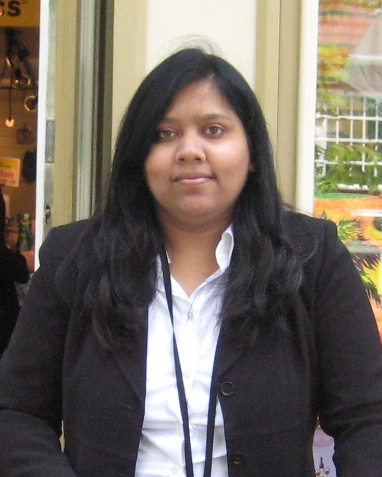
Dr. @Geeta Behera is currently working as a clinical and research Additional Professor in Ophthalmology at Jawaharlal Institute of Postgraduate Medical Education and Research (JIPMER), in Puducherry, India. Dr. Behara’s clinical and research work focuses on the anterior segment of the eye, specifically glaucoma, cataract, and cornea-refractive services. She has a special interest in glaucoma research on pathogenesis, diagnostics, and imaging technology, as well as cornea research related to ocular surface and inflammatory diseases. She joined the Editorial Board of Scientific Reports in June 2024 and currently serves as Guest Editor for the Collection “Glaucoma Genetics”.
***
In this interview, we asked Dr. Behera to talk to us about her work as an Editor at Scientific Reports. Read on to find out more!
What do you like most about handling manuscripts at Scientific Reports?
I am enjoying my experience as an Editorial Board Member of Scientific Reports. I look forward to evaluating diverse manuscripts on ophthalmology research from around the world. It has certainly broadened my horizons in my field of work. I am truly humbled by my peers (authors and peer reviewers) since I began working in this position. I find the working system, the user-friendly software, and the fantastic Editorial support (friendly reminders, adjudication of difficult decisions) particularly helpful. Overall, the manuscript review process is fair and truly upholds scientific rigour.
We know that finding reviewers is one of the hardest parts of an editorial role. Do you have any tricks on finding reviewers?
The software (SNAPP Editorial system) is very efficient at reviewer matching for the submitted manuscripts. I usually invite reviewers who have published in the last five years and are listed as previous reviewers for Springer journals. I follow the notifications regularly and keep sending invites till I get acceptance from at least two reviewers. When that does not work, I use my peer network to secure reviewers. For very specialised manuscripts, I seek reviews from experts in that specific area, and they are usually responsive.
How important is reproducibility in research? As an Editor, how do you help authors report reproducible results?
Reproducibility is essential to scientific research, ensuring that results can be independently verified to build reliable knowledge and prevent errors or fraud. As an editor, I carefully evaluate the research methods, particularly if scientifically valid procedures specific to the study are elucidated in detail, and key methods like randomisation, blinding, etc., as appropriate to the study design, are mentioned. Correct use of statistical methods and the completeness of the data presented are essential. Appropriate study registration and data deposition to repositories also increase the validity of the study.
Do you think Scientific Reports help reduce publication bias, and if yes, how?
I cannot definitively comment on this, as it involves independent views of the handling editors and peer reviewers. Scientific Reports policies favour good research practices. However, sensitisation of investigators, editors, and peer reviewers to understand the extent to which resources are saved by presenting and accepting negative results would reduce publication bias. Another aspect is that funding prioritises novel over replication studies, thus increasing publication bias.
Hence, the appropriate handling of a manuscript that reports on negative results becomes important, not desk rejecting, but evaluating its methodological rigour, data presentation, protocol review, and appropriately assigning it to an unbiased expert reviewer are key editorial steps to reduce publication bias.
You are leading one of our Guest-Edited Collections, Glaucoma Genetics. What interested you about becoming a Guest Editor? What is your Collection focused on?
I was invited to join as a Guest Editor for Glaucoma Genetics with other eminent global editors, and I was honoured to do so. I have a special interest in glaucoma pathogenesis and keep abreast of developments through my network of peers in India. Glaucoma Genetics is a rapidly evolving area of research worldwide, with tremendous work in progress.
Leaning on your expertise in ophthalmology: Could you share the signals you look for to assess whether a submission is clinically meaningful and methodologically robust? In particular, what are your key early “go/no-go” checks when you first open a glaucoma genetics paper, and what common pitfalls or missteps most often prompt a triage rejection?
When reviewing a glaucoma genetics paper, the key checks are clear glaucoma subtype definitions using standard criteria, adequate sample size for the study, and preferably novelty beyond known loci, especially if already reported in a particular population and ancestry-matched controls. Any functional validation or pathway links are also desirable. Underpowered studies and inappropriate glaucoma classification would lead to an automatic triage rejection.
Methodological quality and reporting standards: What recommendations would you give authors to strengthen their design, analysis, and interpretation, particularly for imaging‑based submissions (OCT, fundus photography, etc.), and what red flags do you typically scan for when reviewing figures and data visualizations’?
An appropriate study design and data analysis form the foundation of good research, and it varies with the type of study planned - structure-function analyses, diagnostic validity studies, progression analyses or clinical correlational studies. For imaging studies, the appropriate use of standard clinical and diagnostic criteria, reporting on the equipment, and quality of scans/reliability of perimetry in the methods is critical. Most glaucoma imaging researchers are aware of the standard criteria and usually report them. The statistical analyses, however, are variable, and researchers may overlook accounting for clustering when reporting on analyses using data from both eyes. The most common red flags in figures are manipulation artefacts, missing scales or labels or controls, and generally poor-quality images with motion artefacts or non-segmented OCT layers.
Finally, what is one piece of advice you would offer to early-career researchers working in glaucoma research today?
Glaucoma research is very exciting today, and there are several avenues of investigation from translational research, innovations in diagnostics and therapy to clinical and public-health related studies. Maintaining scientific rigour is the cornerstone, and methodology is the key to that!
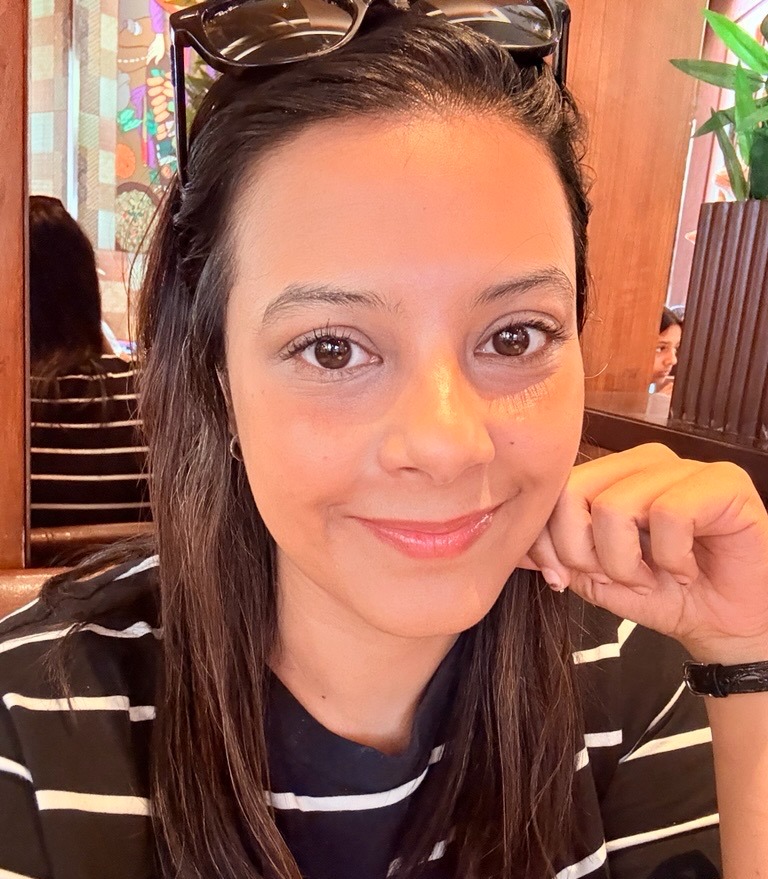
I am a Senior Editor at Scientific Reports with a background in molecular genetics and Ophthalmology. I am thrilled to have joined the vibrant team of Scientific Reports in January, 2023 and am passionate about scientific story-telling. I am from Assam, a northeastern state of India.
Follow the Topic
-
Scientific Reports

An open access journal publishing original research from across all areas of the natural sciences, psychology, medicine and engineering.
Your space to connect: The Macular degeneration Hub
A new Communities’ space to connect, collaborate, and explore research on Ophthalmology and Eye Diseases!
Continue reading announcementRelated Collections
With Collections, you can get published faster and increase your visibility.
Dementia
Publishing Model: Hybrid
Deadline: Apr 30, 2026
Advances in neurodegenerative diseases
Publishing Model: Hybrid
Deadline: Jun 30, 2026



Please sign in or register for FREE
If you are a registered user on Research Communities by Springer Nature, please sign in