Editor Story: Dr. Marilisa Leone
Published in Chemistry and Cell & Molecular Biology





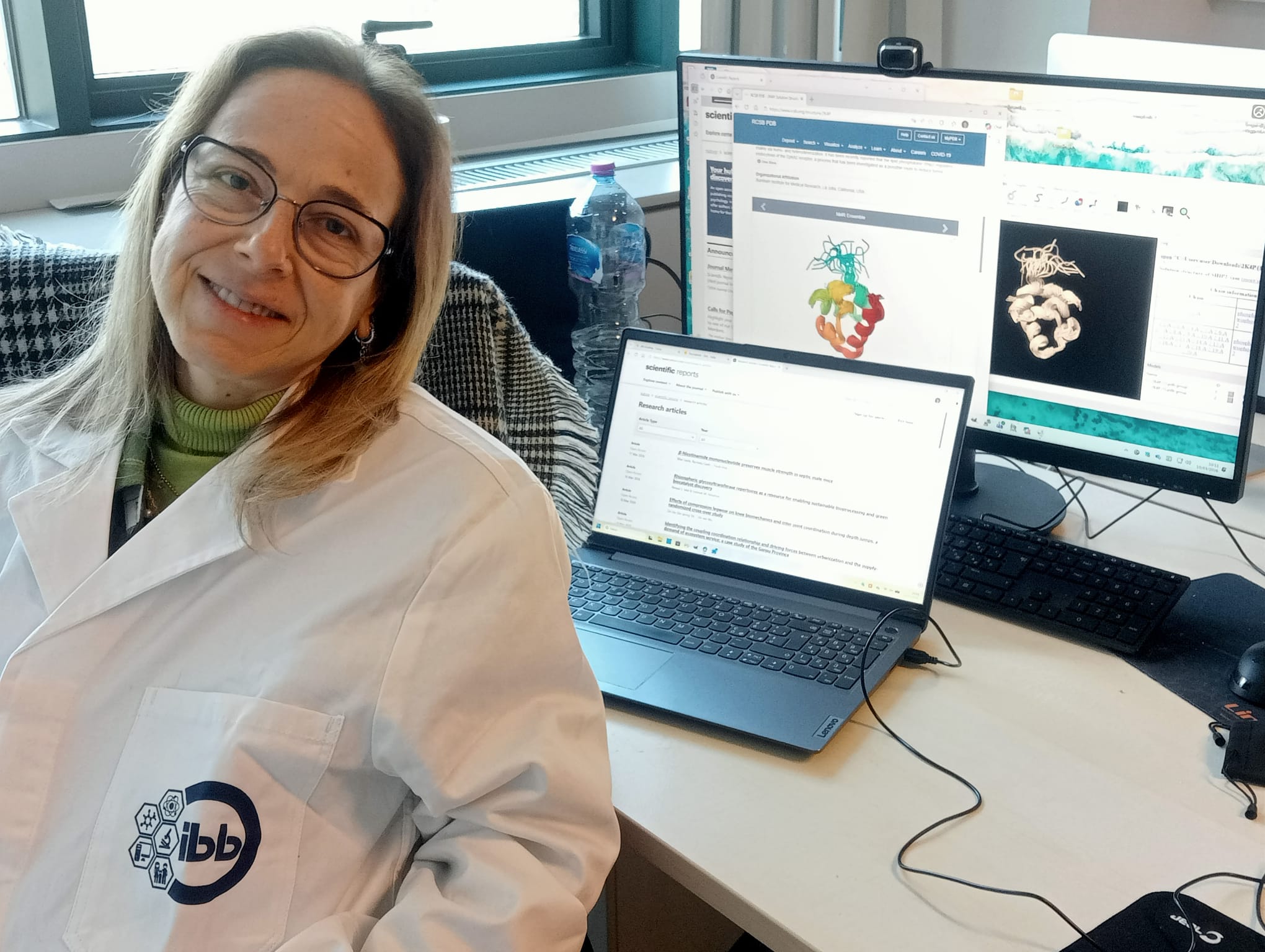
Dr. Marilisa Leone is a Senior Researcher at the Institute of Biostructures and Bioimaging (IBB-CNR) in Naples, Italy, and has served on the Editorial Board of Scientific Reports since 2018. In 2025, she received the Springer Nature Editorial Contribution Award and the Author Service Award.
She earned her Master’s degree in Chemistry in 1999 and her PhD in Chemical Sciences in 2003 from the University “Federico II” Naples, Italy. An NMR specialist with extensive training in drug discovery at the Burnham Institute for Medical Research in San Diego, USA. Her laboratory currently focuses on developing peptide- and small molecule-based anticancer tools targeting SAM (sterile alpha motif) domain-mediated protein–protein interactions using NMR and ancillary techniques.
***
In this series of Editor Stories, we asked her to reflect on her long-standing editorial role with Scientific Reports and to share her insights and advice. Read on to learn more!
What do you like most about handling manuscripts at Scientific Reports?
Before joining Scientific Reports in 2018, I had never served as an Editorial Board Member for any journal. Handling manuscripts has represented, for me, a moment of terrific professional and scientific growth. As a multidisciplinary journal, Scientific Reports offers me the opportunity to engage with the latest scientific trends and to learn about emerging techniques and software, sometimes even inspires me to apply those diverse technologies to my research activities. It is also inspirational to make crucial decisions that can help authors improve the quality of their studies and bring them to a more publication-ready level.
We know that finding reviewers is one of the hardest parts of an editorial role. Do you have any tricks on finding reviewers?
To find a referee, I use the SN Reviewer Finder search tool by imposing certain rules. I typically select a few keywords based on the manuscript abstract; look for referees with an h-index of around 15 to 30, exclude anyone with a potential conflict of interest, and select candidates who have published at least 25 papers in the past five years. I believe referees should have the proper experience to play such a role so, it is appropriate to involve early-career researchers in peer-review but, they should be supported by an experienced tutor, if needed, during the peer review process.
If you were to give a piece of advice to other Editors, what would that be?
1) Don’t be shy or afraid to give the wrong impression. If at a certain moment of the peer-review process, you have doubts on how to proceed, stop, contact the Scientific Reports help desk, and wait for their support (I have always received the right piece of advice doing that!).
2) Never “charge” yourself too much. It is better to avoid handling too many submissions at the same time because there’s the risk of not being able to process all of them satisfactorily.
How important is reproducibility in research? As an Editor, how do you help authors report reproducible results?
On a scale from 1 to 100, the importance of result reproducibility should be 100. Reproducible data are the most reliable, as they have been confirmed through multiple experiments and represent those that in theory can contribute to important discoveries. Reproducibility is especially important in the context of journals like Scientific Reports, which focus on publishing scientifically sound work rather than placing excessive emphasis on originality. To ensure reproducible results, I always look carefully at the statistical analyses performed and ask authors to check, for each measurement, the extent of the related errors and standard deviations, and to present their results with the correct number of significant digits.
What are the key things journals should do to ensure scientific rigor?
Here’s a list of a few key points.
1) To check for plagiarism, as is routinely done nowadays.
2) To ask authors to repeat main experiments (those leading to major conclusions) at least three times and include the results of all three experiments in the Supplementary material.
3) To make sure that the Materials and Methods sections are accurate and include as many details as possible to ensure data reproducibility.
4) Regarding structural data, including those derived from docking, to ALWAYS deposit coordinates in public databases like Protein Data Bank (https://www.rcsb.org/).
5) Check referees’ reports carefully to support editors and ensure that, given the journal's multidisciplinary nature, the referees’ panel should collectively cover all major topics of the study.
Women perspective: Looking to the future, how can we further promote inclusivity, diversity and rigor in scientific publishing?
As a woman, I feel honored to be part of the editorial community where, honestly, thus far I have never perceived gender-based differences. I have always felt that editorial contributions are recognized on the basis of dedication, commitment, and quality of work. In this regard, in 2025, I was awarded the Springer Nature Editorial Contribution Award and the Author Service Award, which represented for me an important recognition of my contribution to the journal. At the same time, I believe that inclusivity in scientific publishing should be considered more broadly, not only in terms of gender, but also in terms of access to publication opportunities. When handling submissions during the peer review process, I always try to do my best to ensure good scientific practice and promote rigor in science. One issue associated with publishing in Scientific Reports is the Open Access-related article processing charges (APCs), as research funds often cannot cover these expenses. Many studies submitted to SciRep come from resource-limited countries where research institutions may not be able to support authors in paying such fees. In these cases, providing full waivers for APCs may be beneficial to favor the Scientific Reports Open Access model and consequently enhances inclusivity and diversity. In the future, I believe novel AI-based tools will help promote even more rigorous science by unveiling scientific misconduct more efficiently, including plagiarism, data manipulation, unnecessary self-citation practices, etc.).
ORCID: https://orcid.org/0000-0002-3811-6960
Webpage: https://www.ibb.cnr.it/?command=viewu&id=418

I joined Scientific Reports in September 2023 after completing my PhD in Biological Sciences from CSIR-National Chemical Laboratory, Pune. I have a background in Agriculture, Biotic and Abiotic Stresses in Crops, Plant-Pathogen Interaction, and Omics.
Follow the Topic
-
Scientific Reports
An open access journal publishing original research from across all areas of the natural sciences, psychology, medicine and engineering.

Related Collections
With Collections, you can get published faster and increase your visibility.
Computational biology and mathematical modelling of biological systems
Publishing Model: Open Access
Deadline: Jul 18, 2026
Water pollution and advanced treatment processes
Publishing Model: Hybrid
Deadline: May 31, 2026

Please sign in or register for FREE
If you are a registered user on Research Communities by Springer Nature, please sign in