“Essential applications in pharmacotherapy and oncological medicine of some chelated metal complexes and their fundamental role in effective cancer treatment”
Published in Biomedical Research
Content: Cancer remains one of the leading causes of mortality worldwide, necessitating the continuous development of innovative therapeutic strategies. Chelated metal complexes have emerged as crucial players in the realm of cancer therapy due to their unique chemical properties and the ability to modulate biological targets effectively. The stability of these metal-complex combinations is primarily influenced by the type of chelator, the metal involved, and the coordination geometry. Metals such as Platinum Pt (II), Gadolinium, Palladium and Gold can undergo chelation, leading to various biomedical applications, particularly in oncology. Chelated metal complexes can act through multiple main mechanisms: DNA Interaction: Many metal complexes demonstrate a strong affinity for DNA, leading to the formation of covalent bonds with nucleobases. Platinum-based agents, like cisplatin, disrupt DNA replication and transcription, prompting apoptosis in cancer cells. Reactive Oxygen Species (ROS) Production: Certain chelated metals can induce oxidative stress by generating ROS, destroying cellular components such as damaged molecules of lipids, proteins, and also damaged DNA. This mechanism is exploited in therapies to induce cell death, particularly in tumor cells. Targeted Drug Delivery: Chelated metal complexes can be engineered for targeted delivery. By attaching ligands or antibodies, these complexes can preferentially bind to cancer cell receptors, ensuring localized treatment and minimizing systemic toxicity. Some Platinum Pt (II) derived metal complexes are fundamental for their anticancer action: Cisplatin (Cis Diammine-Dichloro-Platinum(II)) is an essential Platinum-based chemotherapeutic agent. It forms strong covalent bonds with DNA, causing cross-linking and ultimately inducing apoptosis. That chelated Platinum Pt (II) complex is widely used to treat various cancers, including testicular, ovarian, bladder, and lung cancers. Carboplatin, a second-generation platinum-based Pt (II) drug, it interacts with DNA but has a more favorable side effect profile and is less susceptible to drug resistance. It is often used in ovarian cancer treatment and in combination chemotherapy for lung cancer. Oxaliplatin, another platinum-based agent is frequently used in combinatory therapies. Induces DNA damage through the formation of cross-links, particularly in cancer cells resistant to cisplatin. It is primarily used in effective treatment of colorectal cancer. Ongoing research aims to refine these complexes to enhance selectivity, reduce side effects, and overcome resistance mechanisms. Furthermore, the development of multifunctional chelated metal complexes that combine therapeutic and imaging capabilities represents a significant advancement in personalized medicine. These innovations promise to deeplyimprove treatment efficacy, provide real-time monitoring, and tailor therapies to individual patient profiles.
(Chelation refers to the process in which metal ions form stable coordination complexes with organic molecules known as chelators, which have multiple and essential biomedical applications especially in the effective treatment of chronic diseases and various Cancer forms.)
Importance of Chelated Metal Complexes in Medicine
Chelation involves the coordination of a metal ion by multidentate ligands, forming highly stable cyclic structures. These complexes exhibit physicochemical and biological properties distinct from both the free metal ions and ligands. In pharmacotherapy, chelated metal complexes provide several major advantages:
- improved stability and bioavailability,
- controlled redox behavior,
- enhanced interaction with nucleic acids and proteins,
- selective cellular targeting,
- tunable pharmacokinetic properties,
- reduced systemic toxicity.
The therapeutic importance of metal complexes extends across numerous medical fields, including:
- oncology,
- antimicrobial therapy,
- anti-inflammatory medicine,
- diagnostic imaging,
- radiopharmaceuticals,
- cardiovascular medicine,
- neurodegenerative disease treatment.
Among these applications, oncology remains the most significant and extensively studied domain.
Fundamental Role of Metal Chelates in Cancer Therapy
Cancer involves uncontrolled cellular proliferation, genomic instability, resistance to apoptosis, angiogenesis, and metastatic progression. Chelated metal complexes can interfere with these processes through multiple biochemical pathways, making them powerful antitumor agents.
Their mechanisms include:
- DNA effective crosslinking,
- oxidative stress induction,
- mitochondrial dysfunction,
- inhibition of DNA replication,
- enzyme inhibition,
- disruption of cellular redox homeostasis,
- activation of apoptosis,
- interference with signal transduction pathways.
Unlike many organic drugs, metal complexes may exert cytotoxicity through several simultaneous mechanisms, reducing the likelihood of drug resistance.
Platinum-Based Chelated Complexes
Cisplatin. The discovery of cisplatin revolutionized oncological medicine and established metal coordination compounds as essential anticancer therapeutics. Cisplatin contains a central platinum(II) ion coordinated with ammonia and chloride ligands in a square-planar geometry.
Major clinical applications
Cisplatin is widely used in:
- testicular cancer,
- ovarian cancer,
- bladder cancer,
- lung cancer,
- head and neck malignancies.
Mechanism of action
Inside cancer cells, chloride ligands are replaced by water molecules, generating highly reactive aqua complexes capable of binding DNA bases, especially guanine residues. This leads to:
- intra- and interstrand DNA crosslinks,
- inhibition of DNA replication,
- transcriptional arrest,
- apoptosis induction.
Clinical significance
Cisplatin dramatically improved survival rates in testicular cancer and remains one of the most successful chemotherapeutic agents ever developed.
Limitations
Despite its efficacy, cisplatin presents severe adverse effects:
- nephrotoxicity,
- neurotoxicity,
- ototoxicity,
- myelosuppression,
- drug resistance.
These limitations stimulated the development of second- and third-generation platinum drugs.
Carboplatin
Carboplatin demonstrates:
- lower nephrotoxicity,
- improved tolerability,
- similar antitumor activity.
It is extensively used in ovarian and lung cancers.
Oxaliplatin
Oxaliplatin became fundamental in colorectal cancer therapy, particularly in combination regimens such as FOLFOX. Its bulky ligand structure contributes to activity against cisplatin-resistant tumors. These derivatives were developed to reduce toxicity and overcome cisplatin resistance.

Ruthenium Chelated Complexes
Ruthenium-Based Anticancer Agents
Ruthenium complexes emerged as promising alternatives because ruthenium can mimic iron in biological systems, facilitating selective tumor uptake.
Advantages
Ruthenium complexes often demonstrate:
- reduced systemic toxicity,
- selective tumor accumulation,
- antimetastatic activity,
- activation in hypoxic tumor environments.
Mechanisms
Their antitumor mechanisms include:
- DNA binding,
- reactive oxygen species generation,
- protein interaction,
- mitochondrial targeting.
Several ruthenium compounds have entered clinical trials, highlighting their therapeutic potential in resistant cancers.Ruthenium (III) complexes are a prominent class of experimental metallodrugs designed as safer and more effective alternatives to traditional platinum-based chemotherapies like cisplatin. While no ruthenium drug is currently FDA-approved for commercial use, several have advanced through human clinical.
- Low Toxicity: They generally exhibit lower systemic toxicity than platinum drugs, meaning they cause fewer severe side effects in healthy tissues.
- Iron Mimicry: Ruthenium can mimic iron by binding to transferrin, a protein that transports iron in the blood. Since cancer cells often have more transferrin receptors to support their rapid growth, ruthenium drugs can "hitch a ride" directly into tumors.
- Activation by Reduction: Many are administered as inactive Ru(III) prodrugs. Once they enter the low-oxygen (hypoxic) and acidic environment of a tumor, they are reduced to the more reactive and toxic Ru(II) form, which then attacks the cancer cell from within.
- BOLD-100 (formerly NKP-1339): A Ru(III) complex that has undergone Phase Ib trials, showing promise in treating advanced solid tumors, including colorectal cancer. The full name is: sodium trans-[tetrachlorobis(1H-indazole)ruthenate(III)].
- NAMI-A: Known specifically for its antimetastatic properties. Unlike most drugs that target the primary tumor, NAMI-A was designed to stop cancer from spreading to other organs ( is imidazolium trans-[tetrachloro(1H-imidazole)(S-dimethylsulfoxide)ruthenate(III)]. }
- KP1019: An earlier candidate effective against primary tumors, though its development was hindered by low solubility, leading to the creation of the more soluble BOLD-100.(indazolium trans-[tetrachlorobis(1H-indazole)ruthenate(III)])
- TLD1433: Currently being studied as a photosensitizer for PhotoDynamic Therapy (PDT) to treat bladder cancer.The complete systematic name for TLD1433 is ruthenium(2+), bis(4,4'-dimethyl-2,2'-bipyridine-\(\kappa \)N1,\(\kappa \)N1')(2-(2,2':5',2''-terthiophen)-5-yl-1H-imidazo[4,5-f][1,10]phenanthroline-\(\kappa \)N7,\(\kappa \)N8)-, chloride (1:2).
- Selective Tumor Uptake: The drug is instilled directly into the bladder via a catheter. It possesses up to a 192-fold higher selectivity for bladder tumor tissue over healthy tissue. This happens because it mimics iron, binding to transferrin to enter fast-growing cancer cells.
- Laser Activation: Doctors flush out the remaining free drug and illuminate the bladder with a medical laser. TLD1433 is optimized to absorb green laser light (532 nm).
- Oxidative Explosion: Upon absorbing the light, the central Ruthenium(II) atom transfers energy to surrounding oxygen molecules. This produces a violent burst of singlet oxygen and Reactive Oxygen Species (ROS).
- Targeted Destruction: The ROS cause local lipid peroxidation, ripping apart the cell membranes and destroying the tumor from the inside out. This rapid cell destruction triggers an immunogenic cell death, signaling the patient's own immune system to attack any remaining cancer cells.
- DNA Damage: Similar to cisplatin, they can bind directly to DNA to block replication and transcription, though they often target different sites.
- Oxidative Stress: They trigger the production of Reactive Oxygen Species (ROS), which overwhelm and kill the cancer cell.
- Anti-Angiogenesis: Some complexes, like NAMI-A, prevent tumors from growing new blood vessels, essentially starving the tumor of nutrients.
- Enzyme effective Inhibition: They can specifically inhibit enzymes like topoisomerases or kinases that are essential for tumor cell division.

Indium In (III) complexes play a critical role in cancer management, functioning primarily as gold-standard nuclear imaging agents, while non-radioactive derivatives are being aggressively developed as experimental chemotherapies and photosensitizers. Unlike ruthenium, which is primarily researched for direct tumor destruction, indium’s main clinical success stems from its radioactive properties
- Indium-111 Pentetreotide (OctreoScan): This coordination complex couples \(^{111}\text{In}\) with a somatostatin analog (octreotide) via a DTPA chelator. It targets overexpressed somatostatin receptors (SSTR2 and SSTR5) to explicitly pinpoint Neuroendocrine Tumors (NETs) and their metastases.
- Indium-111 Capromab Pendetide (ProstaScint): A monoclonal antibody complexed with Indium-111 designed to bind to Prostate-Specific Membrane Antigen (PSMA), allowing doctors to map the staging and recurrence of prostate cancer.
- Auger Electron Therapy: When \(^{111}\text{In}\) complexes undergo decay inside a cell, they emit low-energy Auger electrons. If the complex can be successfully shuttled into the cell nucleus, these electrons act like microscopic scissors, ripping apart the cancer cell's DNA.
- Thiosemicarbazone & Schiff Base Complexes: Indium bound to these organic ligands displays intense cytotoxic (cell-killing) action against breast, prostate, and lung cancer cell lines. They work by triggering intracellular oxidative stress, forcing cancer cells into apoptosis (programmed cell death).
- Radiosensitization: Recent oncology studies demonstrate that coordination complexes like Indium(III) Schiff base derivatives make tumors much more vulnerable to standard radiation therapy. Combining these complexes with gamma radiation increases tumor cell death up to 7.5-fold in aggressive triple-negative breast cancers.
- Transferrin Transport: Mirroring ruthenium, Indium(III) perfectly mimics iron in the body, binding strongly to the blood protein transferrin. Because iron-hungry tumor cells overexpress transferrin receptors, the indium complex is selectively pulled inside the malignant cell.
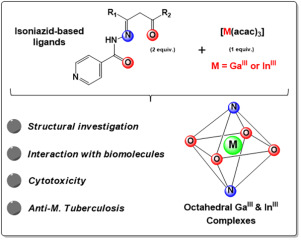
Gallium and Indium complexes with isoniazid-derived ligands: Interaction with biomolecules and biological activity against cancer cells and Mycobacterium
Gold Chelated Complexes
Gold Complexes in Oncology

Gold complexes exhibit significant biological activity due to their affinity for sulfur-containing biomolecules and enzymes.
Anticancer mechanisms
Gold compounds can:
- inhibit thioredoxin reductase,
- induce oxidative stress,
- disrupt mitochondrial function,
- promote apoptosis.
Gold-based therapeutics are especially interesting in tumors resistant to platinum drugs.

Copper Chelated Complexes
Copper Coordination Compounds


Copper Cu (II) is an essential trace element involved in angiogenesis and oxidative metabolism. Chelated copper complexes may exploit altered copper metabolism in tumors.
Biological effects
Copper complexes can:
- catalyze ROS formation,
- damage DNA,
- inhibit proteasomes,
- effectively induce apoptosis.
Some copper chelates demonstrate selective toxicity toward malignant cells while sparing healthy tissue.

Iron Chelation and Cancer Therapy
Iron Chelators in Oncology
Iron is essential for rapidly proliferating cancer cells. Chelating agents that sequester intracellular iron can finally suppress tumor growth.
Therapeutic effects
Iron chelators:
- inhibit ribonucleotide reductase,
- impair DNA synthesis,
- induce cell cycle arrest,
- promote apoptosis.
This approach is particularly relevant in leukemia and aggressive proliferative tumors.
Chelated Metal Complexes in Targeted Therapy and Nanomedicine
Modern research combines metal complexes with:
- nanoparticles,
- liposomes,
- antibodies,
- peptides,
- polymeric carriers.
These systems improve:
- targeted delivery,
- tumor selectivity,
- controlled drug release,
- pharmacokinetics.
Nanostructured metal complexes may reduce systemic toxicity while increasing intratumoral accumulation.
Role in Diagnostic and Theranostic Medicine
Certain chelated complexes are indispensable in medical imaging.
Examples include:
- Gadolinium complexes in MRI,
- Technetium complexes in nuclear medicine,
- radiometal chelates for PET imaging.
Theranostic systems integrate diagnosis and therapy into a single platform, representing a major advancement in precision oncology.
- Tracer Injection: A small amount of a radioactive substance (usually a sugar-like compound called FDG) is injected, inhaled, or swallowed.
- Cellular Absorption: Diseased or highly active cells—such as rapidly growing cancer cells—consume this tracer much faster than normal, healthy tissue.
- Imaging: The PET scanner detects the faint energy released by the tracer and translates it into detailed three-dimensional (3D) images, highlighting "hot spots" where activity is highest.
In MRI (Magnetic Resonance Imaging), IR stands for Inversion Recovery. It is a specialized imaging technique used to manipulate image contrast and selectively "null" (remove) the signal from specific tissues, such as fat or spinal fluid, to make underlying structures or abnormalities easier to see. Unlike standard imaging scans, an IR sequence begins with an initial radiofrequency pulse that flips the tissue's magnetization entirely upside down. As the tissue relaxes, its magnetization passes through a "zero point." By timing the next pulse precisely when this zero point occurs, the scanner effectively cancels out that tissue’s signal, leaving it completely black on the scan.
Iridium complexes are emerging as a powerful alternative to traditional platinum-based drugs like cisplatin for cancer treatment. While platinum drugs are highly effective, they often suffer from issues like high toxicity, lack of selectivity, and the development of drug resistance in tumors. Iridium-based compounds, particularly Iridium(III) complexes, are being developed to overcome these limitations with unique mechanisms of action
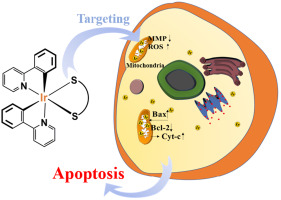
Cyclometalated iridium(III) dithioformic acid complexes could target mitochondria and amplify apoptosis signals by activating downstream pathway to promote apoptosis.
- Stability & Solubility: They generally exhibit high stability and good water solubility, making them easier to handle and administer.
- Tunability: Their structures can be easily modified with different ligands to change their reactivity, targeting, and luminescence.
- Luminescence: Many iridium complexes are naturally phosphorescent, which allows them to serve as theranostic agents—molecules that can both diagnose (by imaging the tumor) and treat the cancer simultaneously.
- Selectivity: Certain complexes can be designed to activate only in the acidic environment of a tumor, sparing healthy tissue from damage.
- Mitochondrial Targeting: Many cyclometalated iridium complexes specifically target the mitochondria, disrupting the cell's energy production and inducing apoptosis (programmed cell death).
- Catalytic Activity: Some iridium complexes act as catalysts within the cell, facilitating transfer hydrogenation reactions. This disrupts the redox balance of the cancer cell, leading to its destruction.
- Protein Inhibition: Newer research has identified iridium complexes that bind to specific cancer-driving proteins, such as Girdin, which is involved in the metastasis of lung and breast cancers.
- Photodynamic Therapy (PDT): Iridium complexes can act as photosensitizers. When activated by specific wavelengths of light, they generate reactive oxygen species (ROS) that kill cancer cells.
Major Challenges in Metal-Based Chemotherapy
Despite major therapeutic success, challenges remain:
- acquired drug resistance,
- systemic toxicity,
- poor selectivity,
- metabolic instability,
- tumor heterogeneity.
Current medicinal chemistry research focuses on:
- novel ligand design,
- tumor-specific activation,
- redox-responsive complexes,
- photoactivated metal drugs,
- multifunctional coordination compounds.
Future Perspectives
The future of chelated metal complexes in oncology is highly promising. Advances in:
- coordination chemistry,
- molecular pharmacology,
- bioinorganic chemistry,
- nanotechnology,
- personalized medicine
are enabling the development of next-generation anticancer agents with enhanced efficacy and lower toxicity.
Emerging approaches include:
- photoactivatable metal complexes,
- immunomodulatory metal drugs,
- metal-based epigenetic therapeutics,
- multifunctional theranostic agents,
- artificial metalloenzymes for targeted catalysis in tumors.
Conclusion
Chelated metal complexes represent one of the most important classes of compounds in modern medicinal chemistry and pharmacotherapy. Their unique coordination properties, redox activity, geometric diversity, and ability to interact selectively with biomolecules have enabled the development of numerous therapeutic agents, particularly in oncology. Over recent decades, metal-based drugs have transformed cancer treatment, with platinum coordination compounds becoming foundational chemotherapeutic agents and newer transition-metal complexes emerging as promising alternatives with improved selectivity and reduced toxicity.Chelated metal complexes have become indispensable in pharmacotherapy and oncological medicine. Their structural diversity, unique electronic properties, and multifaceted biological mechanisms enable therapeutic activities unattainable by many purely organic compounds. Platinum-based drugs revolutionized cancer chemotherapy and demonstrated the extraordinary medical potential of coordination compounds, while newer complexes involving ruthenium, gold, copper, and iron continue expanding the boundaries of anticancer therapy.The integration of coordination chemistry with molecular oncology, nanomedicine, and targeted drug delivery is driving the emergence of safer and more effective metal-based therapeutics. Consequently, chelated metal complexes remain fundamental components of current cancer treatments and represent one of the most promising frontiers in future oncological precision medicine.
References
-
Bioinorganic Medicinal Chemistry
Alessio, E. (Ed.). Bioinorganic Medicinal Chemistry. Wiley-VCH, 2011. -
Metal Ions in Biological Systems
Sigel, A., Sigel, H. (Eds.). Metal Ions in Biological Systems: Anticancer and Antitumor Agents. CRC Press. -
Medicinal Organometallic Chemistry
Jaouen, G., Metzler-Nolte, N. (Eds.). Medicinal Organometallic Chemistry. Springer. - Rosenberg, B., VanCamp, L., Krigas, T. “Inhibition of Cell Division in Escherichia coli by Electrolysis Products from a Platinum Electrode.”
Nature, 1965, 205, 698–699.
— Landmark discovery leading to Cisplatin. - Kelland, L. “The Resurgence of Platinum-Based Cancer Chemotherapy.”
Nature Reviews Cancer, 2007, 7, 573–584. -
Cisplatin, Carboplatin, and Oxaliplatin in cancer therapy:
Wang, D., Lippard, S. J. “Cellular Processing of Platinum Anticancer Drugs.”
Nature Reviews Drug Discovery, 2005, 4, 307–320. - Hartinger, C. G., Dyson, P. J. “Bioorganometallic Chemistry — From Teaching Paradigms to Medicinal Applications.”
Chemical Society Reviews, 2009, 38, 391–401. -
Ruthenium Anticancer Complexes
Allardyce, C. S., Dyson, P. J. “Ruthenium in Medicine: Current Clinical Uses and Future Prospects.”
Platinum Metals Review, 2001, 45(2), 62–69. -
Gold Complexes
Ott, I. “On the Medicinal Chemistry of Gold Complexes as Anticancer Drugs.”
Coordination Chemistry Reviews, 2009, 253, 1670–1681. -
Copper Chelates
Santini, C., Pellei, M., Gandin, V., Porchia, M., Tisato, F., Marzano, C.
“Advances in Copper Complexes as Anticancer Agents.”
Chemical Reviews, 2014, 114, 815–862. -
Iridium Complexes
Liu, Z., Sadler, P. J. “Organoiridium Complexes: Anticancer Agents and Catalysts.”
Accounts of Chemical Research, 2014, 47, 1174–1185. -
Gallium Complexes
Chitambar, C. R. “Gallium-Containing Anticancer Compounds.”
Future Medicinal Chemistry, 2012, 4, 1257–1272. -
Titanium Anticancer Complexes
Kostova, I. “Titanium and Vanadium Complexes as Anticancer Agents.”
Anti-Cancer Agents in Medicinal Chemistry, 2009, 9, 827–842. -
Lanthanide Complexes
Bunzli, J.-C. G. “Lanthanide Luminescence for Biomedical Analyses and Imaging.”
Chemical Reviews, 2010, 110, 2729–2755. -
International Council for Harmonisation
ICH Q2(R1): Validation of Analytical Procedures: Text and Methodology. -
Principles of Bioinorganic Chemistry
Lippard, S. J., Berg, J. M. Principles of Bioinorganic Chemistry. University Science Books. -
Metals in Medicine
Hall, M. D., Hambley, T. W. Metals in Medicine. Wiley. -
Bioinorganic Chemistry
Crichton, R. Biological Inorganic Chemistry: A New Introduction to Molecular Structure and Function. Academic Press. -
Rare Earth Metal Complexes
Zhang, P., Sadler, P. J. “Advances in the Design of Organometallic Anticancer Complexes.”
Journal of Organometallic Chemistry, 2017. -
Medicinal Inorganic Chemistry
Navarro, M. “Gold Complexes as Potential Anti-Parasitic and Anticancer Agents.”
Coordination Chemistry Reviews, 2009. - Kar, B., Roy, N., Pete, S., Moharana, P., Paira, P.“Ruthenium and iridium based mononuclear and multinuclear complexes: A Breakthrough of Next-Generation Anticancer Metallopharmaceuticals.”norganica Chimica Acta, 2020, 512, 119858.
- Ma, D.-L., Wu, C., Wu, K.-J., Leung, C.-H. “Iridium(III) Complexes Targeting Apoptotic Cell Death in Cancer Cells.” Molecules, 2019, 24(15), 2739.
- Liu, Z., Sadler, P. J. “Organoiridium Complexes: Anticancer Agents and Catalysts.” Accounts of Chemical Research, 2014, 47(4), 1174–1185.
- Recent advances in ruthenium(II) and iridium(III) nanosystems for cancer therapy and imaging: “Recent Advances in Ruthenium(II) and Iridium(III) Complexes Containing Nanosystems for Cancer Treatment and Bioimaging.” Coordination Chemistry Reviews, 2021, 443, 214016.
- ***Advances in iridium anticancer compounds: “Advances in Novel Iridium(III) Based Complexes for Anticancer Applications: A Review.” Inorganica Chimica Acta, 2020, 513, 119925.
- Masternak, J., Gilewska, A., Barszcz, B., et al. “Ruthenium(II) and Iridium(III) Complexes as Tested Materials for New Anticancer Agents.” Materials, 2020, 13(16), 3491.
- Golbaghi, G., Castonguay, A. “Rationally Designed Ruthenium Complexes for Breast Cancer Therapy.” Molecules, 2020, 25(2), 265.
- Tan, C.-P., Zhong, Y.-M., Ji, L.-N., Mao, Z.-W. “Phosphorescent Metal Complexes as Theranostic Anticancer Agents: Combining Imaging and Therapy in a Single Molecule.” Chemical Science, 2021, 12, 2357–2367.
- Construction of multinuclear ruthenium and iridium complexes for selective tumor therapy: “Construction of Homo and Heteronuclear Ru(II), Ir(III) and Re(I) Complexes for Target Specific Cancer Therapy.” Coordination Chemistry Reviews, 2022, 460, 214462.
- Bioinorganic Chemistry Sadler, P. J., Guo, Z. “Metal Complexes in Medicine: Design and Mechanism of Anticancer Agents.”Pure and Applied Chemistry.
- Medicinal Organometallic Chemistry Jaouen, G., Metzler-Nolte, N. (Eds.). Medicinal Organometallic Chemistry. Springer.
- Bioinorganic Medicinal Chemistry Alessio, E. (Ed.). Bioinorganic Medicinal Chemistry. Wiley-VCH.
- Principles of Bioinorganic Chemistry Lippard, S. J., Berg, J. M. Principles of Bioinorganic Chemistry. University Science Books.
- Medicinal Inorganic Chemistry Romero-Canelón, I., Sadler, P. J. “Next-Generation Metal Anticancer Complexes: Multitargeting via Redox Modulation.”
- Inorganic Chemistry. Photoactive iridium complexes in photodynamic therapy: “Photoactive and Luminescent Transition Metal Complexes as Anticancer Agents.” Frontiers in Chemistry, 2022.

From October 1990 until September 1995, I attended and graduated the courses of the Textile Faculty, textile chemical dyeing and processing section, part of the Technical University “Gh. Asachi” of Iasi, Romania, Faculty of Textiles, Department of chemical textile dyeing, chemical treatments and chemical processing within Technical University “Gh. Asachi” of Iasi , Romania. In October 1995 I have obtained a Bachelor’s degree in Chemistry and Chemical Engineering , Textile Chemical Engineering specialization. From October 2008 to September 2013 I have attended and graduated the courses of “Grigore T. Popa” University of Medicine and Pharmacy of Iasi, Faculty of Pharmacy. I have earned a Bachelors degree in Pharmacy and Pharmaceutical Sciences, with freely right to practice. I have obtained a second Bachelors degree in Pharmacy and Pharmaceutical Sciences specialization. In 13 October 2011, I earned the the Ph.D. Doctorate title in Pharmacy, Doctorate in Pharmacy and Pharmaceutical Sciences, Chemical Analysis and Analytical Chemistry domain, through the public presentation of the doctoral thesis: “Contributions for the knowledge of the involvement of some reactive dyes in the determination of biological effects, in correlation with their physical-chemical properties”. I own two qualifications: Chemical Engineer and Pharmacist.Since March 2000. I am continuously working in Teaching, Biomedical and Pharmaceutical Research domains at Grigore T. Popa University of Medicine and Pharmacy, Biomedical Sciences Department, Faculty of Medical Bioengineering, 16 Universitatii Street, Iasi 700115, Romania. I am continuously working as a chemistry Lecturer/Associate Professor at Grigore T. Popa University of Medicine and Pharmacy of Iasi, Romania, Faculty of Medical Bioengineering, Biomedical Sciences Department. I am a chemical engineer, my first specialization consists of the Chemistry disciplines. My second specialization refers to the Pharmacy domain and Pharmaceutical Sciences. I have a PhD in Pharmaceutical Sciences, Chemical Analysis, and Analytical Chemistry domain. My specific research and development branches are:: inorganic chemistry, general chemistry, biomedical engineering, chemical organic synthesis, organic chemistry, analytical chemistry, chemical and biochemical complete analysis, chemical instrumental analysis, textile chemistry and the chemistry of dyes, pharmacy and pharmaceutical sciences domain, pharmacology, and immunology, pharmaceutical and medicinal chemistry, Solid State Chemistry, Biochemistry, Chemistry of the Coordination Compounds and Chelated Metal Complexes, Physical Chemistry, Chemistry of Polymers and Biomaterials, Biostatistics and Statistical analyses, Statistical Validation procedures