Experimental and numerical investigation to optimise liquid desiccant system for advanced air conditioning
Published in Bioengineering & Biotechnology and Sustainability
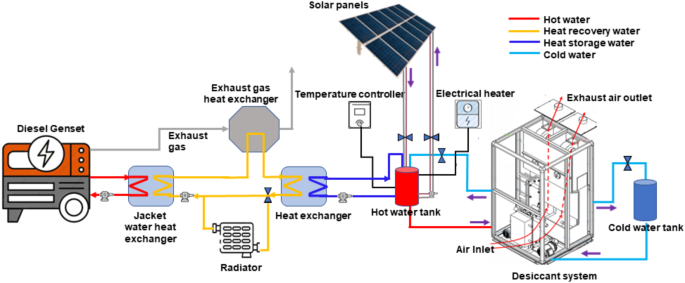

The system’s functionality was influenced by the operational temperature and air flow rate, and the dehumidification effectiveness was higher at low operating temperatures and low airflow rates. An ANN metamodel-based control strategy is also proposed for implementation in hybrid thermo-chemical networks with the help of system performance data and real-time data. The suggested ANN model’s results were validated using a variety of measuring techniques, including the RMSE, MAPE, correlation (R), and coefficient of determination (R2). The proposed ANN analysis achieved an excellent correlation between predicted and experimentally measured data.

Follow the Topic
-
Scientific Reports
An open access journal publishing original research from across all areas of the natural sciences, psychology, medicine and engineering.

What are SDG Topics?
An introduction to Sustainable Development Goals (SDGs) Topics and their role in highlighting sustainable development research.
Continue reading announcementRelated Collections
With Collections, you can get published faster and increase your visibility.
Phytochemicals and health
Publishing Model: Open Access
Deadline: Oct 28, 2026
Cancer Prevention and Control
Publishing Model: Hybrid
Deadline: Feb 19, 2027