Flexible Polymer‑Based Electronics for Human Health Monitoring: A Safety‑Level‑Oriented Review of Materials and Applications
Published in Materials
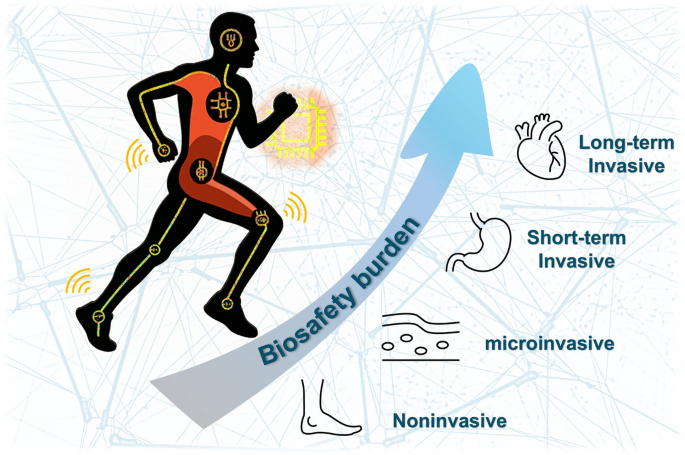
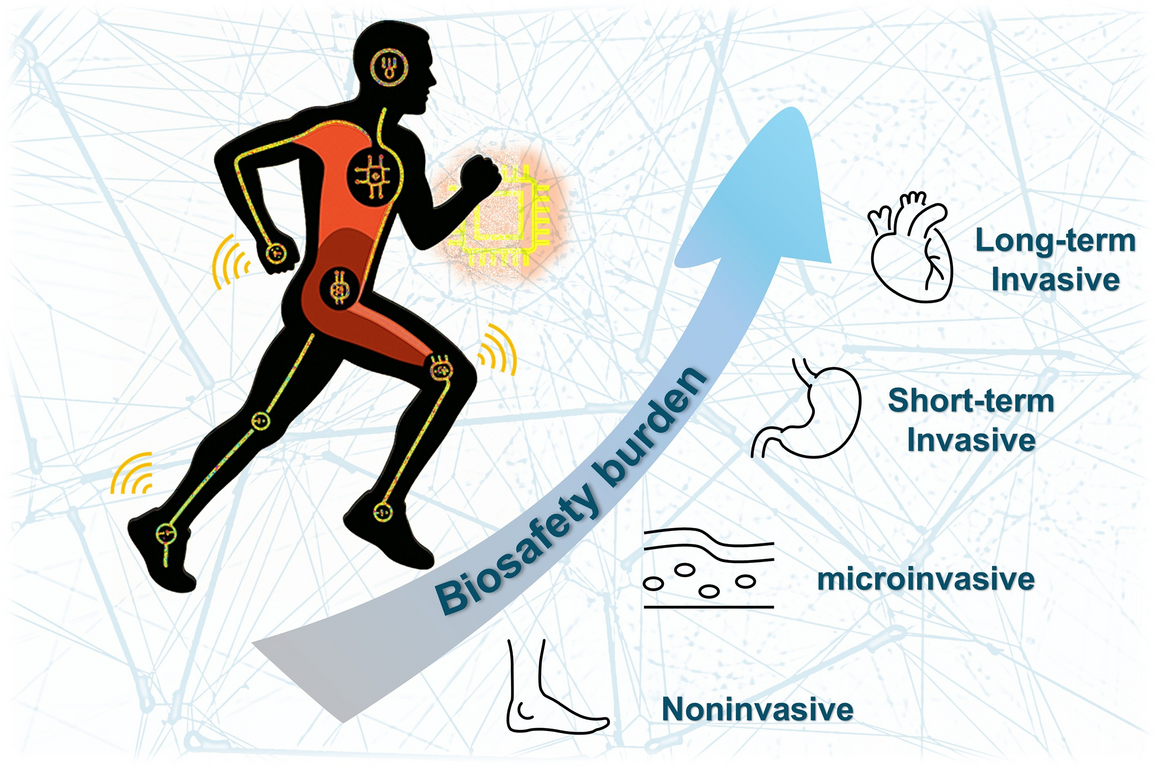

As health monitoring becomes increasingly important for disease prevention, early diagnosis, and high-quality living, the demand for wearable and implantable bioelectronics has grown rapidly. Traditional rigid electronic devices often suffer from mechanical mismatch with biological tissues, leading to discomfort and unstable signal acquisition. Recently, researchers from Kyoto University and the National University of Singapore, led by Professor Keiji Numata and Professor Bo Pang, presented a comprehensive review on polymer-based flexible electronics for human health monitoring. This work introduces a safety-level-oriented framework that systematically connects material design, device architecture, and biosafety considerations for next-generation health-monitoring technologies.
Why Flexible Polymer-Based Electronics Matter
- Personalized Health Monitoring: Flexible polymer-based devices can continuously track physiological signals such as electrophysiological activity, biochemical markers, and mechanical motion, enabling personalized and preventive healthcare.
- Superior Biocompatibility: Polymeric materials provide mechanical flexibility, tunable biochemical functionality, and soft interfaces that can conform to human tissues, improving comfort and signal stability.
- Integration with Daily Life: Compared with rigid electronics, flexible devices can operate in both clinical and everyday environments, enabling long-term monitoring during sleep, exercise, and routine activities.
Innovative Framework and Material Design
- Safety-Level-Oriented Framework: The review proposes a systematic classification of polymer-based health-monitoring devices according to safety level, ranging from noninvasive wearables to long-term implantable systems.
- Functional Polymer Materials: Key material systems—including hydrogels, elastomers, conductive polymers, and biodegradable polymers—are discussed for their roles in device interfaces, signal acquisition, and data transmission.
- Device Modality Classification: Health-monitoring platforms are categorized into four major modalities: noninvasive devices, microinvasive systems, short-term implantable devices, and long-term implantable electronics.
- Material–Safety Relationships: The study highlights how mechanical compliance, chemical stability, electrical safety, and immune compatibility determine the suitability of polymer materials for different biomedical applications.
Applications and Future Outlook
- Noninvasive Wearable Monitoring: Flexible polymer-based patches, electronic skins, and smart textiles can capture signals such as heart rate, pressure, strain, temperature, and biochemical biomarkers from sweat or skin.
- Microinvasive Biosensing: Technologies such as microneedle arrays and mucosa-interfacing sensors provide improved biochemical sensitivity by accessing interstitial fluid or mucosal biomarkers.
- Short-Term Implantable Devices: Biodegradable polymer systems enable temporary monitoring of physiological signals after surgery or during acute disease treatment without requiring device removal.
- Long-Term Implantable Electronics: Advanced encapsulation materials, conductive polymers, and biointerface engineering strategies support chronic monitoring for applications such as neural recording, glucose sensing, and cardiovascular monitoring.
This comprehensive review provides a roadmap for the development of safe, adaptive, and multifunctional polymer-based health-monitoring systems. By integrating materials science, flexible electronics, and biomedical engineering, the study highlights how polymer-based devices can enable continuous physiological monitoring and personalized healthcare, paving the way for next-generation wearable and implantable medical technologies.

Editor of Nano-Micro Letters, which is an Open-Access, peer-reviewed journal reported papers that have at least one dimension ranging from a few sub-nanometers to a few hundreds of micrometers. The journal is published by Springer Nature and indexed by SCI, EI, SCOPUS, Pubmed, etc. The 2025 JCR Impact Factor is 38.5. The 2025 CiteScore is 58.9.
Follow the Topic
-
Nano-Micro Letters
Nano-Micro Letters is a peer-reviewed, international, interdisciplinary and open-access journal that focus on science, experiments, engineering, technologies and applications of nano- or microscale structure and system in physics, chemistry, biology, material science, and pharmacy.