From Evidence to Action: Taking AMR Research to the House of Commons
Published in Microbiology, Public Health, and Law, Politics & International Studies



Explore the Research
dlaf218?utm_campaign=related_content&utm_source=HEALTH&utm_medium=communities
Next month, a parliamentary roundtable on antimicrobial resistance will be convened at the House of Commons. It is the culmination of years of research, policy engagement, and a deep conviction that academic evidence must reach the people who make decisions.
The event, 'Translating AMR Research into Parliamentary Action,' brings together MPs, clinical leaders, public health experts, and patient advocates for a focused two-hour discussion. Our goal is not simply to present research findings, but to co-create actionable recommendations with parliamentarians for the UK's response to AMR.
Why Now?
Antimicrobial resistance is often called a 'silent pandemic.' Unlike COVID-19, it does not dominate headlines, yet it already contributes to over 1.2 million deaths globally each year. In the UK, we have a National Action Plan, surveillance systems, and stewardship programmes. But translating evidence into sustained policy action remains a challenge.
Last year, we submitted written evidence to the UK Parliamentary Public Accounts Committee inquiry on AMR. That evidence was cited in the Committee's June 2025 report. It was a reminder that Parliament is listening - but also that researchers need to do more than publish papers. We need to be in the room.
Parliamentary Hosts
The roundtable is hosted by three parliamentarians with direct engagement in AMR policy:
- Andrew Lewin MP, Member of Parliament for Welwyn Hatfield, will host the first hour and welcome attendees to Westminster.
- Dr Danny Chambers MP, Member of Parliament for Winchester and Secretary of the All-Party Parliamentary Group on Antimicrobial Resistance, will host the second hour and lead the parliamentary discussion.
- Baroness Bennett of Manor Castle, House of Lords and Treasurer of the APPG on Antimicrobial Resistance, will contribute to the policy discussion.
Project Lead & Principal Investigator
- Dr Rasha Abdelsalam Elshenawy, Senior Lecturer at the University of Hertfordshire and Associate Editor of JAC-Antimicrobial Resistance, is the lead organiser and Principal Investigator of this initiative. She will speak in this roundtable about the implementation science in antimicrobial stewardship to tackle antimicrobial resistance.
Chair
- Professor Sam Salek, Emeritus Professor at the University of Hertfordshire, will chair the session.
Speakers
The roundtable brings together expert voices from across the AMR landscape:
- Professor Zoe Aslanpour, Professor of Public Health and Patient Safety at the University of Hertfordshire, will discuss lessons from COVID-19 for building resilient antimicrobial stewardship systems.
- Dr Alicia Demirjian, Head of AMR and Prescribing at the UK Health Security Agency, will present national surveillance data and its implications for action.
- Professor Andrew Seaton, President of the British Society for Antimicrobial Chemotherapy (BSAC), will share insights on implementing stewardship across health systems.
- Vanessa Carter, AMR survivor and founder of The AMR Narrative, will bring the patient voice - a perspective too often missing from policy discussions.

This is not a presentation to MPs. It is a conversation with them. The second half of the event is dedicated to discussion and recommendation co-creation, where MPs and experts will work together to shape proposals for the UK National Action Plan on AMR.
From Research to Policy
In November 2025, I published a commentary in JAC-Antimicrobial Resistance proposing a five-pillar framework for crisis-resilient antimicrobial stewardship: digital innovation, One Health integration, workforce development, surveillance strengthening, and governance reform. This roundtable is an opportunity to test those ideas with policymakers and refine them based on parliamentary perspectives.
The outputs will include a policy brief with actionable recommendations, a reflective report, and a peer-reviewed publication documenting the research-to-policy translation process.
Why This Matters
Too often, academic research stops at publication. We write papers, present at conferences, and hope someone in government is paying attention. But hope is not a strategy.
If we want our research to make a difference, we need to build relationships with policymakers, understand their constraints, and present evidence in ways that are useful to them. That means being in Westminster, not just writing about it.
This roundtable is one small step in that direction. I am grateful to the ESRC Impact Acceleration Account at the University of Hertfordshire for funding this initiative, and to all the speakers and parliamentarians who have committed their time.
I will share reflections after the event. For now, I am focused on making those two hours count.
Register Your Interest
This event is by invitation only, but we welcome expressions of interest from stakeholders who would like to receive the event outputs:
Report - A reflective summary of key themes and outcomes
Policy Brief - Actionable recommendations for policymakers
Peer-Reviewed Publication - Journal article on research-to-policy translation
To register your interest, please complete our Expression of Interest form.
Link to this "Translating AMR Research into Parliamentary Action: A Multi-Stakeholder Roundtable".
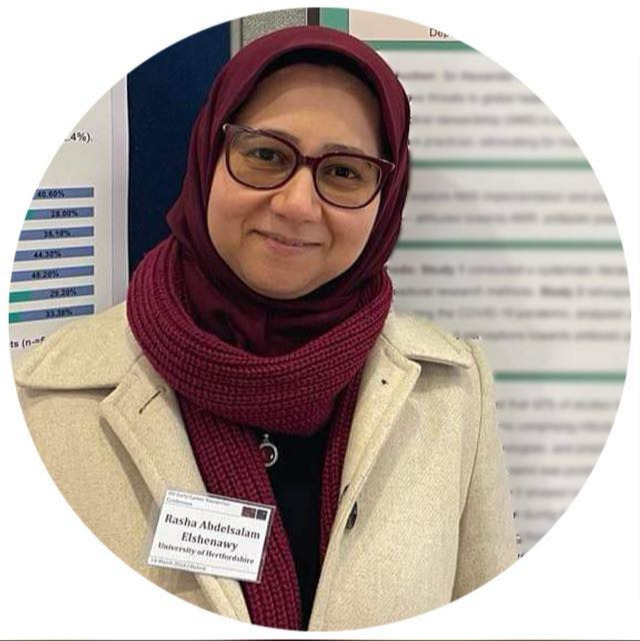
Dr Rasha Abdelsalam Elshenawy is Senior Lecturer in Antimicrobial Resistance and Stewardship, Infection Management, Research, Public Health and Patient Safety at the University of Hertfordshire and Consultant in Antimicrobial Resistance (AMR) and Stewardship (AMS) for the South Centre, Geneva. With over 20 years’ experience in clinical pharmacy and antimicrobial stewardship, she leads research on antibiotic prescribing, patient safety, and health systems strengthening.
Her work has directly informed UK parliamentary policy through written evidence submissions and contributes to global health initiatives aligned with the UN Sustainable Development Goals. She has authored more than 120 publications, served as Associate Editor for JAC–Antimicrobial Resistance, and directs the internationally recognised FADIC Antimicrobial Stewardship School. Her expertise spans AMS implementation, digital health, AI in prescribing, pandemic preparedness, and public engagement in AMR.