From Punch Cards to the AI Age: How Modern Tools Breathed New Life into a 1972 FORTRAN Code for Curved Pipe Flow
Published in Physics, Computational Sciences, and Mathematics


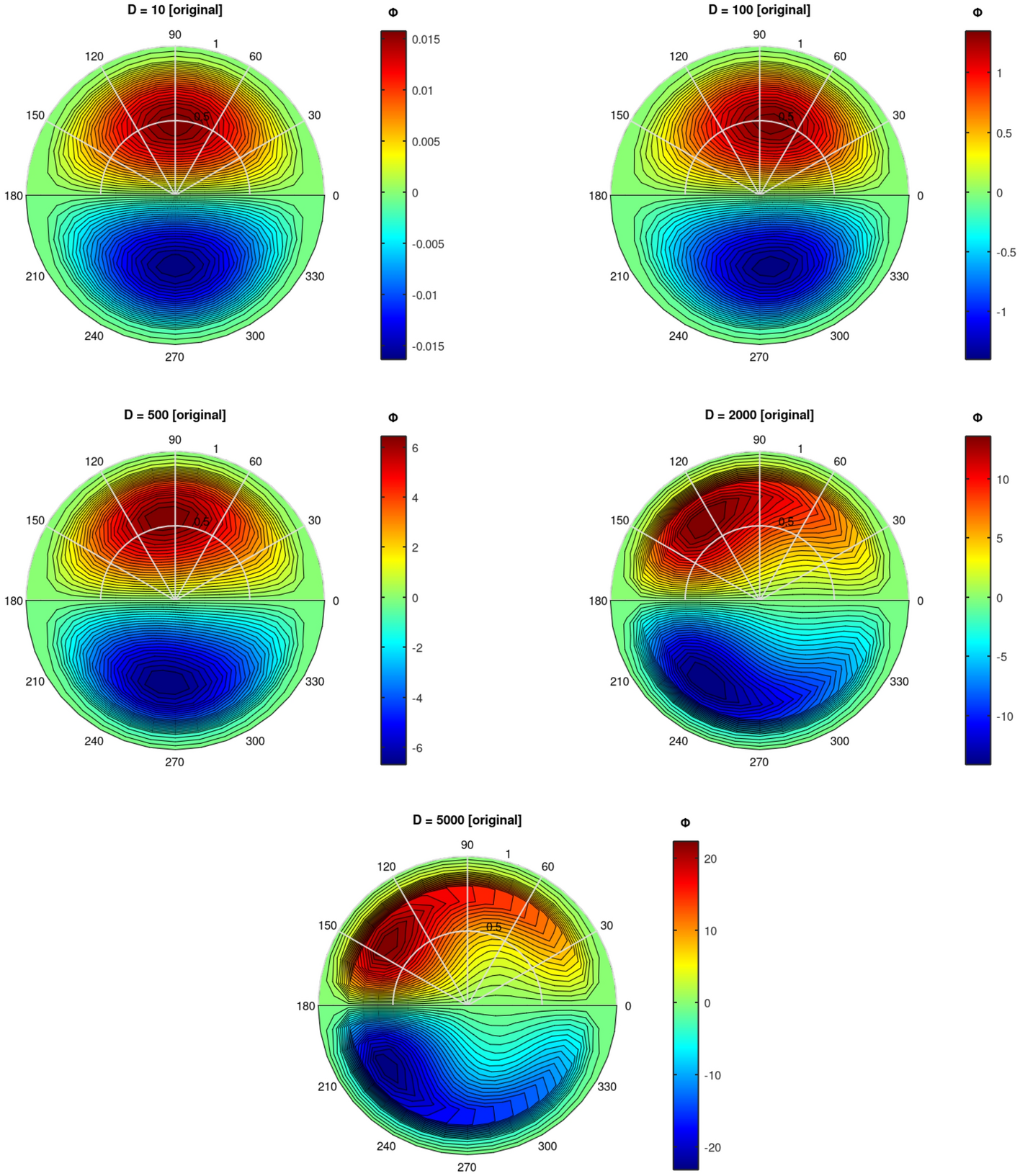

Laminar flow in curved pipes is a foundational topic in fluid dynamics, shaped by Dean's pioneering theoretical work in the late 1920s and extended by subsequent researchers through increasingly sophisticated numerical solutions. Despite this rich history, the legacy computational codes underpinning many of these studies have remained largely inaccessible — trapped in obsolete formats and deteriorating archives. A recent paper by Nils Tångefjord Basse, published in Discover Mechanical Engineering, directly addresses this problem by reviving a 1972 FORTRAN 66 code for simulating laminar flow in curved pipes and bringing it up to modern Fortran standards.
Basse employed a suite of artificial intelligence tools — including Amazon Textract for optical character recognition, ChatGPT-4 for code conversion, and GitHub Copilot for refactoring — to digitize, translate, and debug the original code. This methodological approach not only preserves historically significant scientific software but demonstrates a replicable workflow for the broader research community. The effort produced two distinct deliverables: a minimal modern Fortran version faithfully replicating the original output, and a fully modernized version incorporating modules, structured loops, double-precision arithmetic, and dynamic file handling.
The revived code successfully reproduced established results, including the characteristic Dean vortex structures and their influence on streamwise flow. Doubling the computational grid resolution further refined predictions for key flow parameters, bringing them into closer agreement with the more accurate finite difference scheme of Collins and Dennis (1975).
The work carries clear value for both education and research. By making the updated code openly available, Basse provides a fast, transparent tool for studying canonical laminar flows in curved pipes. The paper also stands as a compelling example of what the author calls "numerical archaeology" — recovering and modernizing classical solutions to ensure their continued relevance in contemporary fluid dynamics.

My main specialty and passion is fluid mechanics. I have studied flow in fusion plasmas, gases, liquids and mixtures. Understanding is gained by a combination of measurements, theory, modelling and simulation.
Follow the Topic
-
Discover Mechanical Engineering
This is a multi-disciplinary, open access, community-focussed journal publishing research from across all fields relevant to mechanical engineering.

Related Collections
With Collections, you can get published faster and increase your visibility.
Advanced Materials for Energy Harvesting and Conversion in Mechanical Systems
We invite original research contributions that explore the role of advanced materials in enhancing energy harvesting and conversion within mechanical systems. This interdisciplinary topic bridges key areas of Materials Science, Energy Engineering, and Mechanical Design, with a focus on enabling technologies for sustainable and efficient energy utilization.
Scope of the Special Topic:
1. Advanced Materials for Energy Applications
Innovative materials are at the heart of modern energy solutions. We seek research on the development, characterization, and integration of materials engineered for high efficiency in energy capture and conversion. This includes, but is not limited to:
- Piezoelectric, thermoelectric, and pyroelectric materials for mechanical energy harvesting
- Magnetostrictive and triboelectric materials for self-powered systems
- Nanostructured and multifunctional materials that enhance energy conversion rates
- Smart and adaptive materials that respond to mechanical, thermal, or environmental stimuli
- Composite materials designed for structural energy harvesting applications
- Material degradation, durability, and fatigue under energy cycling conditions
2. Energy Harvesting Mechanisms in Mechanical Systems
We encourage submissions focused on experimental and computational studies of energy harvesting techniques integrated within mechanical systems, such as:
- Structural integration of energy harvesting components (e.g., in automotive, aerospace, or biomedical devices)
- Design and optimization of mechanical systems for maximum energy capture
- Modeling and simulation of material behavior under dynamic loading using tools like FEM or multiphysics platforms
- Mechanical-to-electrical energy conversion pathways using novel material systems
3. Conversion and Storage Technologies
The efficient conversion and storage of harvested energy is critical. Topics of interest include:
- Coupling of materials with energy storage devices (e.g., microbatteries, supercapacitors)
- Thermodynamic and mechanical efficiency analysis of energy conversion systems
- Hybrid systems combining mechanical harvesting with solar, thermal, or electrochemical energy
- Integration of energy harvesting materials into IoT and self-sustaining devices
This Collection aims to address global energy challenges through material innovation, supporting the transition to sustainable technologies and systems with enhanced energy autonomy. Researchers from academia, industry, and national labs are encouraged to submit cutting-edge work that demonstrates experimental validation, novel design approaches, or breakthrough material systems.
This Collection supports and amplifies research related to SDG 7, and SDG 9.
Keywords: Energy Harvesting Materials, Mechanical-to-Electrical Energy Conversion, Piezoelectric and Thermoelectric Materials, Smart and Functional Materials, Multifunctional Composites, Energy Storage Integration, Sustainable Mechanical Systems
Publishing Model: Open Access
Deadline: Jan 31, 2027
Magnetically Influenced Convection and Heat Transfer: From Fundamentals to Applications
The interplay between magnetic fields and fluid dynamics has emerged as a significant area of study, particularly in the context of heat transfer processes. Magnetohydrodynamics (MHD) investigates the behavior of electrically conducting fluids in the presence of magnetic fields, unveiling unique phenomena that can enhance thermal convection and optimize heat transfer, which has profound implications for various applications, from industrial cooling systems to advanced energy generation technologies.
This Collection aims to provide a comprehensive platform for cutting-edge research on the principles, applications, and implications of magnetically influenced convection and heat transfer. Topics of interest include, but are not limited to:
- Magnetohydrodynamics in Thermal Systems
- Effects of Magnetic Fields on Buoyancy-Driven Flow
- Heat Transfer Enhancement Techniques
- Electromagnetic Control in Cooling Applications
- Numerical Simulations of MHD Phenomena
- Data-Driven Simulations of Magnetohydrodynamic Phenomena and Thermal Systems
This Collection supports and amplifies research related to: SDG 7 and SDG 9.
Publishing Model: Open Access
Deadline: Dec 09, 2026