From Silence to Semiosis: A Personal Journey Back to the Philosophy of Biology
Published in Arts & Humanities and Philosophy & Religion


A journey interrupted
In 2020, I suffered a brain haemorrhage. It was an experience that changed many aspects of my life, including my relationship with academic writing.
In the years that followed, I attempted to publish a few papers in international journals. They were rejected. Rejection is, of course, an ordinary part of academic life. Yet knowing this intellectually and experiencing it personally are two different things.
After those experiences, I gradually lost both the opportunity and the courage to submit my research to journals indexed in AHCI or SSCI. I continued reading, researching, and writing, but much of my work remained unfinished or unpublished.
The questions that interested me had not disappeared. Neither had my desire to contribute to the philosophy of biology. Yet I had become increasingly distant from the international scholarly conversations in which I hoped to participate.
A turning point in Bucharest
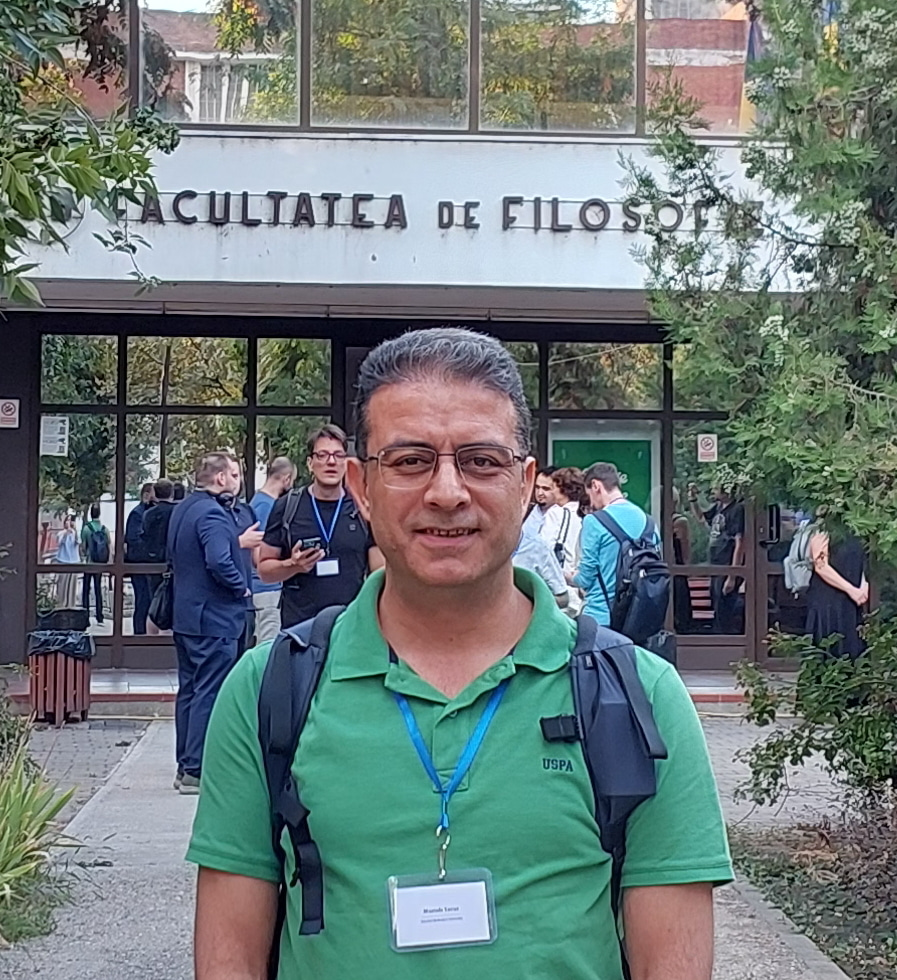
The turning point came when I was elected to the Steering Committee of the European Network for the Philosophy of Science (EENPS) and delivered a presentation in Bucharest.
Being among colleagues who shared my intellectual interests reminded me of something important. Although I had written extensively on the philosophy of biology, most of that work had appeared in Turkish. My ideas were available to readers in Türkiye, but less accessible to international colleagues.
I remember making a decision that day:
If I wanted to participate more fully in these conversations, I needed to give my colleagues something they could read, question, criticise, and discuss directly.
When I returned to Istanbul, I began opening old folders on my computer.
Some contained manuscripts that had been waiting for five years; others held research notes and unfinished papers dating back seven years or more. I found questions that still seemed worth asking and projects that had quietly survived despite my hesitation.
I began organising them and returning to the unfinished manuscripts one by one.
Because of family responsibilities, much of this work took place at night. While the city grew quiet, I read, revised arguments, checked references, and gradually completed papers that had remained unfinished for years.
It was demanding, sometimes exhausting, but also deeply rewarding. One of those manuscripts eventually became my new article in Biosemiotics.
Returning to my first scientific love: lichens
Lichens have a special place in my academic life. They were among my earliest research interests, and I have studied them from several perspectives: taxonomy, ecology, environmental monitoring, history of biology, and the history of medicine.
To someone unfamiliar with them, lichens may seem like unremarkable organisms growing on rocks, tree bark, or old walls. Yet they are extraordinary biological associations.
A lichen typically involves a fungus living in close association with one or more photosynthetic partners, such as green algae or cyanobacteria. Many lichens also harbour bacteria and other fungi. What appears to be a single organism can therefore contain several living partners, each with its own evolutionary history.
This complexity raises a surprisingly difficult question:
What exactly is the individual in a lichen?
Is it the fungus? The photosynthetic partner? The visible lichen body, known as the thallus? Or can the entire symbiotic association be considered an individual?
For me, this question connects lichen biology with a broader philosophical problem: what makes a living being an individual?
The more I considered it, the more I realised that the boundaries of an organism might not tell the whole story.
Beyond the visible boundaries of life
Biologists and philosophers have proposed different ways of understanding individuality. Some emphasise physical boundaries and morphology. Others focus on physiological integration, reproduction, inheritance, or evolutionary processes.
But lichens suggest that another dimension deserves attention: the organisation of meaningful relationships among living partners.
This is where biosemiotics enters the picture.
Biosemiotics investigates sign processes in living systems. In simple terms, it asks how living beings respond to conditions that matter to their continued existence, and how biological interactions involve discrimination, interpretation, and regulation.
However, not every biological interaction is necessarily a sign process, and not every coordinated response demonstrates that an entire lichen functions as a single semiotic agent.
This distinction became central to my article.
I propose semiotic individuality as a complementary dimension of biological individuality: a way of investigating whether, how, and at what scale a symbiotic association maintains organised, context-sensitive, sign-mediated relationships.
To make the idea scientifically useful, I develop four operational dimensions: context sensitivity, norm-guided correction, relational persistence, and remapping.
The framework does not claim that all lichens are unified semiotic individuals. Instead, it asks what evidence would justify such a conclusion and what evidence would require us to weaken or reject it.
The challenge of writing the paper
Writing this article was not easy.
My background in lichenology gave me familiarity with the biological systems, while my work in the history and philosophy of biology provided another perspective. Yet bringing these fields into a convincing dialogue required more than placing philosophical concepts beside biological examples.
One particularly difficult challenge was distinguishing semiotic explanations from ordinary mechanistic descriptions.
If we describe a biological interaction using the language of signs, meanings, or interpretation, what have we actually explained? Have we identified something that can be investigated differently, or merely introduced another vocabulary for an already familiar mechanism?
I spent considerable time working through these questions.
The resulting paper does not offer a final answer to the problem of lichen individuality. Instead, it proposes a research programme that can be developed, tested, and criticised.
A second celebration
My article, “Semiotic Individuality in Lichen Symbioses: An Operational Framework,” was published in Biosemiotics on 28 October 2026.
I learned of its publication the following day, 29 October, Republic Day in Türkiye, when we celebrate the founding of the Turkish Republic.
For me, it became a day of two celebrations: a national holiday and a deeply personal academic milestone. In a sense, it felt like a second Republic Day celebration of my own.
Yet the significance of this publication extends beyond another entry on my academic CV.
It represents a return to an international scholarly conversation from which I had felt distant for several years. It also reconnects different parts of my intellectual life: the biologist who first became fascinated by lichens, the historian who explored how earlier scholars understood them, and the philosopher who continues to ask what life and individuality mean.
Perhaps there is something fitting about finding this connection through lichens. After all, the central theme of my paper is that individuality cannot always be understood by examining isolated components alone. Relationships matter.
I do not know how readers will receive my proposal. Some may find it useful; others may challenge its assumptions. I welcome both responses.
What matters most to me is that these ideas are now available for discussion.
And if you have ever left a manuscript unfinished for years, perhaps my experience offers one modest encouragement:
An unfinished manuscript is not necessarily an abandoned idea. Sometimes it is simply waiting for the right moment to become part of a conversation.
Follow the Topic

Introducing the Palgrave Macmillan Campaign for the Humanities
At Palgrave Macmillan we publish cutting-edge humanities research that has real-world impact. This research community brings together the voices of our authors and editorial team to highlight and publicize the value of the humanities and humanities research in our world today.
Continue reading announcement