From the BugBitten Archives: Clocking out -knocking out circadian clock gene disrupts key functions in Aedes mosquitoes
Published in Microbiology and Zoology & Veterinary Science



This blog was originally posted on the old BugBitten WordPress site . We are resharing it now on the Research Communities site.
Aedes aegypti is a species of mosquito that is a disease vector for several arboviral diseases such as dengue, Zika and chikungunya that affect millions of people globally. Many of these diseases do not have vaccines readily available, and so a lot of emphasis is put on controlling the spread of the vector. Molecular approaches to vector control have been emerging over the past ten years, with genetically modified mosquitoes being released into the wild to control breeding in mosquito populations.
Vinaya Shetty and colleagues have been looking at another way to disrupt mosquito populations, by investigating whether removing key genes related to the circadian clock of the mosquitoes could impact their clock-dependent biological processes.

Mosquitoes display time-related behaviours such as feeding at certain times of the day. For A. aegypti feeding is a day time activity – mainly in the early morning and late afternoon – whilst the anopheline mosquito is a nocturnal feeder.
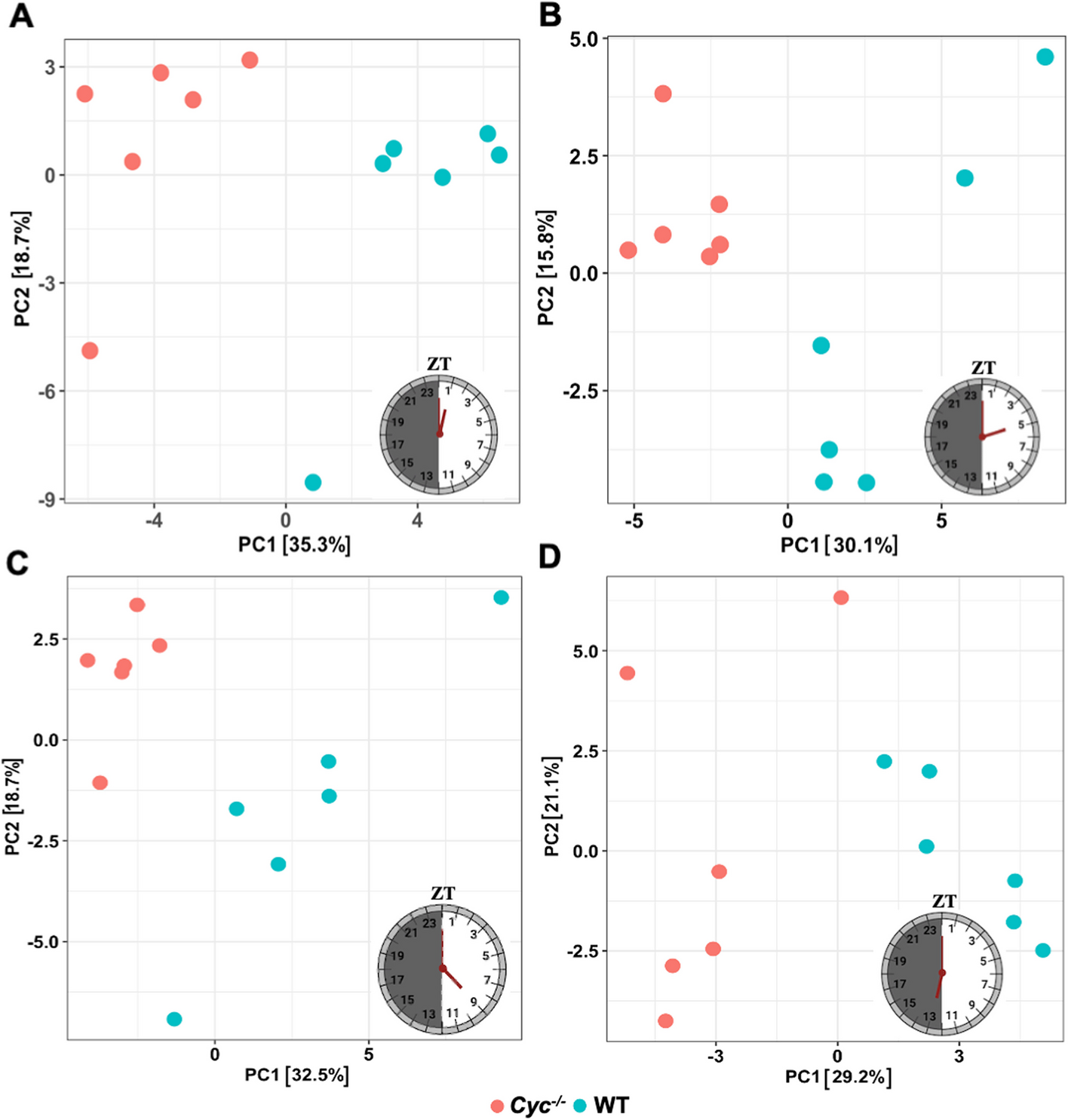
In their 2022 study, Vinaya Shetty and colleagues knocked out the core clock cycle gene in A. aegypti using CRISPR/Cas9 and found the mRNA expression of 7 circadian related genes were changed. This knock out affected the mosquito’s longevity, feeding pattern and reproductive fitness. Their latest study explored this further by using transcriptome profiling and differential gene expression to determine the network of genes and biological pathways that were affected by disrupting the clock gene.
Differential gene expression enabled Shetty and colleagues to identify thousands of genes that were expressed differently in day-night cycles, and determine that removal of the cycle gene caused disruption in metabolic processes, signaling pathways and immune responses. This showed the vital role that the circadian clock plays in A. aegypti’s life, and targeting it could see massive changes to the mosquito’s behaviour and consequently neutralise its impact as a disease vector.
Cover image credit: Gerd Altmann from Pixabay
Follow the Topic
-
BMC Genomics
This is an open access, peer-reviewed journal that considers articles on all aspects of genetics, genomics and proteomics.
-
BugBitten
A blog for the parasitology and vector biology community.

Related Collections
With Collections, you can get published faster and increase your visibility.
Advances in crop omics
The field of crop omics has rapidly evolved over the past decade, integrating genomics, transcriptomics, and other high-throughput technologies to enhance our understanding of plant biology. This Collection aims to showcase innovative research that leverages these advanced methodologies to explore the genetic and molecular underpinnings of crop traits, including yield, stress resistance, and disease susceptibility. By employing techniques such as RNA-Seq and genome sequencing, the complexities of crop genomes and their interactions with the environment can be revealed, leading to the development of improved cultivars.
Advances in crop omics play a crucial role in addressing global challenges such as food security and climate change. Recent breakthroughs in genomic editing and high-throughput sequencing technologies have enabled the rapid identification of beneficial traits in crops, allowing for more efficient breeding programs. For instance, CRISPR/Cas9 technology has been utilized to develop rice varieties with enhanced resistance to bacterial blight by precisely editing genes associated with disease susceptibility, thereby improving the plant's natural defense mechanisms. Additionally, Next-Generation Sequencing (NGS) has been used to identify single nucleotide polymorphisms (SNPs) linked to drought tolerance in crops, facilitating the development of crop varieties that can thrive in water-scarce environments. These innovations not only enhance crop resilience and productivity but also contribute to sustainable agricultural practices, thereby supporting the need for research that aligns with environmental and socio-economic goals.
Continued exploration in this field promises exciting developments, including the integration of artificial intelligence and machine learning for predictive modeling of crop performance. As researchers study the functional genomics of crops, precision agriculture techniques may emerge to optimize resource use and minimize environmental impact. The potential to develop crops that thrive under varying climatic conditions could revolutionize agricultural practices and ensure food security for future generations.
Topics of interest include, but are not limited to:
- Genomic approaches to crop improvement
- RNA-Seq applications in crop research
- Functional genomics of disease resistance
- Sustainable practices through omics technologies
- Metabolomics and its role in crop trait enhancement
- Epigenetic modifications and their impact on crop development
- The role of microbiomes in crop health and productivity
- Genetic diversity assessment through high-throughput sequencing
- The use of CRISPR technology in targeted trait enhancement
- Machine learning applications in crop phenotype prediction
This Collection supports and amplifies research related to SDG 2: Zero Hunger.
All manuscripts submitted to this journal, including those submitted to collections and special issues, are assessed in line with our editorial policies and the journal’s peer-review process. Reviewers and editors are required to declare competing interests and can be excluded from the peer review process if a competing interest exists.
Publishing Model: Open Access
Deadline: Nov 20, 2026
Omics of parasites 2026
Parasites, ranging from bacteria to multicellular eukaryotes, exhibit sophisticated life cycles and develop complex interactions with their hosts. The development and application of high-throughput omics techniques enabling simultaneous analysis of virtually all genes, transcripts, and proteins has greatly facilitated research in parasite biology. At the dawn of the sequencing era, the sequencing of parasites’ genomes led to the identification of numerous novel virulence factors and potential drug targets. Nowadays, multi-omics approaches are becoming instrumental for pinpointing molecules and pathways involved in parasite development and its complex network of interactions with the host.
For this BMC Genomics Collection, we welcome submissions generating or analyzing omics data (including, but not limited to, genomic, transcriptomic, proteomic, and metabolomic data) or combining them to shed light on parasites’ biology and the molecular basis of host-parasite interactions. The scope of this Collection is wide and submissions on any kind of parasites are welcome.
If you have a data note to submit, please submit to our sister collection Omics of parasites data notes in BMC Genomic Data.
All manuscripts submitted to this journal, including those submitted to collections and special issues, are assessed in line with our editorial policies and the journal’s peer-review process. Reviewers and editors are required to declare competing interests and can be excluded from the peer review process if a competing interest exists.
Publishing Model: Open Access
Deadline: Dec 15, 2026


