What the Kent meningitis outbreak revealed about meningococcal evolution
Published in Microbiology, Protocols & Methods, and Biomedical Research
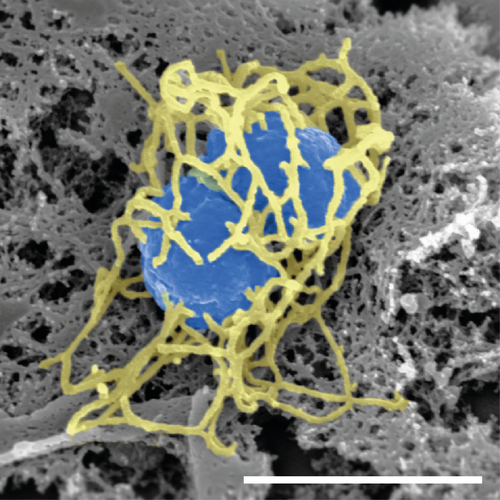
Neisseria meningitidis is, for most of the people carrying it, entirely asymptomatic and uneventful. The meningococcus is a Gram-negative bacteria that is solely adapted to humans. In normal circumstances, the bacteria colonises the nasopharynx without issue, where around 10% of adults and up to 25% of adolescents are asymptomatic carriers. Transmission requires close and prolonged contact, such as kissing, sharing drinks, and via respiratory droplets, hence why incidence peaks in infants and young adults living and socialising in close quarters. Occasionally, it can cross the mucosa into the bloodstream, causing invasive meningococcal disease (IMD), the consequences of which can be among the most serious in clinical medicine (meningitis, septicaemia, or both), with a case fatality rate of 10% to 50% depending on treatment and deterioration measured in hours rather than days.
Thirteen capsular types (serogroups) of N. meningitidis are recognised, but six (A, B, C, W, X and Y) account for almost all IMD cases, and only a small number of "hyperinvasive" clonal complex (ccs) genotypes are responsible. Distribution of these serogroups is largely geographical, with serogroup A historically dominating across the African meningitis belt, where incidence once reached 1 in a 1,000 before the MenAfriVac campaign practically eliminated it entirely.
In countries that vaccinate routinely against A, C, W and Y, only serogroup B is left as the principal cause of IMD. Prevalence is generally low, with under 1 case per 100,000 in most settings.
Neisseria meningitidis has a well characterised virulence and host immune-evasion ‘toolkit’, enabling them to resist phagocytosis, inhibit complement-mediated killing, adhere to epithelial cells and migrate into the bloodstream. Once there, endotoxins can induce haemorrhages and septic shock, and iron-acquisition systems, such as FetA and the haemoglobin-binding receptors, become essential for avoiding oxidative killing.
Two capabilities of meningococcus are key to its ‘success’ and ability to become highly pathogenic, namely ‘phase variation’ for reversibly switching on and off protein expression to rapidly change its phenotype, and their natural competence enabling uptake and exchange of genetic material from its neighbours. As such, commensal Neisseria in the nose/throat represent a ‘standing’ gene pool, sharing antimicrobial resistance, antigenic variation, and virulence factors. Together, these mechanisms greatly increase genetic diversity, and cause predictions of outbreak severity difficult and inaccurate.
Canterbury, March 2026
Between the 5th and 7th of March 2026, several thousand people, mostly students at the University of Kent and Canterbury Christ Church University, attended a nightclub in central Canterbury. The first case of IMD presented on the evening of the 11th of March, and by March 16th, 21 people were hospitalised, nine required intensive care, and two passed away.
The common connection - Nineteen of those 21 people had been at the same club, one was a contact of the attendees, and one had no direct link but lived on the same campus as seven of the other cases. Nineteen cases among 1,821 reported attendees over a three day period is an extraordinary attack rate for an organism that normally causes fewer than 1 case per 100,000 per year.
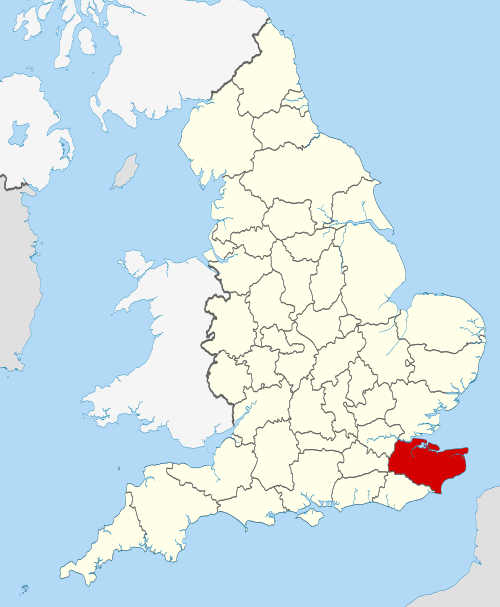
- Map of the United Kingdom, with England divided
- into counties and Kent highlighted in red.
- Source: Wikimedia Commons, Author Nilfanion,
- CC BY-SA 3.0
A new preprint from September 2026, co-authored by UK Health Security Agencies’ (UKHSA) Meningococcal Reference Unit, the University of Oxford and other collaborating UK institutions, sequenced and analysed the genomes of six isolates from those nineteen patients to investigate if the N. meningitidis responsible for outbreak had acquired traits making it highly invasive.
Because every culture-confirmed meningococcal case in England has been whole genome sequenced since 2010, the outbreak organism was characterised within days and could be phylogenetically analysed and compared against >48,000 publicly available meningococcal genomes.
The six sequenced genomes were effectively identical and identified as in capsular serogroup B (sequence type 485), confirming a single point as the source of the outbreak. Upon closer comparison with their nearest ‘relatives’ from cases across Europe in 2022 and 2023, nucleotide variation was identified in some of those key proteins and ‘toolkit’ machinery used to manipulate, reduce and evade host immune recognition.
Specifically, across 2,954 genes, a few core differences were found in genes mediating bacteria-bacteria and bacteria-host interactions, including those iron-acquisition systems and host cell adhesion factors, as well as in a bacterial capsule protein (PorA) that caused a shorted protein and resulted in an epitope folding internally into the protein and rendering it unrecognisable to host immune molecules.
On top of that, the outbreak strain had acquired DNA from elsewhere via horizontal gene transfer (HGT), predominantly from largely non-disease-causing meningococci and the commensal Neisseria cinerea, and some segments from another disease-associated lineage.
The fact that these bacteria can seemingly spontaneously diverge and acquire extreme levels of virulence is not all bad news, as it seems that a strain optimised for invasion is also poorly suited to the asymptomatic carriage on which transmission depends, as patients were too ill to become silent carriers. A retrospective analysis of strains behind previous outbreaks supports this: the serogroup C variants behind focal outbreaks in Cardiff, Southampton and Rotherham in the 1990s were each genomically unique and have not been seen since, and the Southampton strain had altered the very same pilus (cell adhesion) region, from the same harmless donor bacteria. These variants appear to be evolutionary dead ends and have not been seen since.
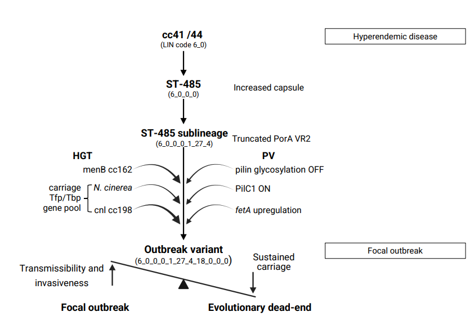
Diagram representing evolutionary trajectory
and genetic changes of ST485, the Kent outbreak variant.
Source: Rodrigues et al (2026), Figure 5.
What follows
The multi-institutional response and collaboration represents text book genomic surveillance, however, the broader lesson establishes that genomics is vital but insufficient on its own. Sequencing identified the strain, established that licensed MenB vaccines should cover it, and enabled a targeted response within days.
However, it cannot forecast these events, because the donors are carriage organisms that surveillance does not (currently) sample. Paired carriage studies, and functional work linking genotype to phenotype, are the obvious gaps to be filled.
Meanwhile, MenB has been in the UK childhood vaccination schedule since only 2015, and protection gained in infancy wanes well before the adolescent risk peaks. This gap is now partly addressed by a programme for new university students, with advisers further pushing for routine vaccination at around 15. Given that a crowded nightclub is an ordinary thing, awareness of the symptoms remains as important as the genomics (see here for information on the signs and symptoms of meningitis and septicaemia).

Dr. Daniel Parsons is a bioinformatician and post-doctoral researcher at the Natural History Museum, London.
His research has largely focused on improving understanding of parasitic flatworm biology and genetic variability, notably schistosomes (causative agents of schistosomiasis), through the application of molecular techniques and genomics approaches. More broadly, Dan is interested in the applications of biotechnology for Neglected Tropical Disease research and how biodiversity and global health are interlinked.
Follow the Topic
-
BugBitten
A blog for the parasitology and vector biology community.