Like
Be the first to like this
Impact of textile dye WW
- Synthetic dyes are a serious threat to the environment.
- They are toxic & carcinogenic
- Azo dyes are persistent
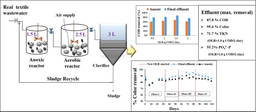
Available treatment techniques for the textile industry WW
- Physicochemical and Standard biological methods proposed.
- Most MOs can grow at neutral pH and low salinity.
- Activated Sludge (AS) is common.
WW characteristics
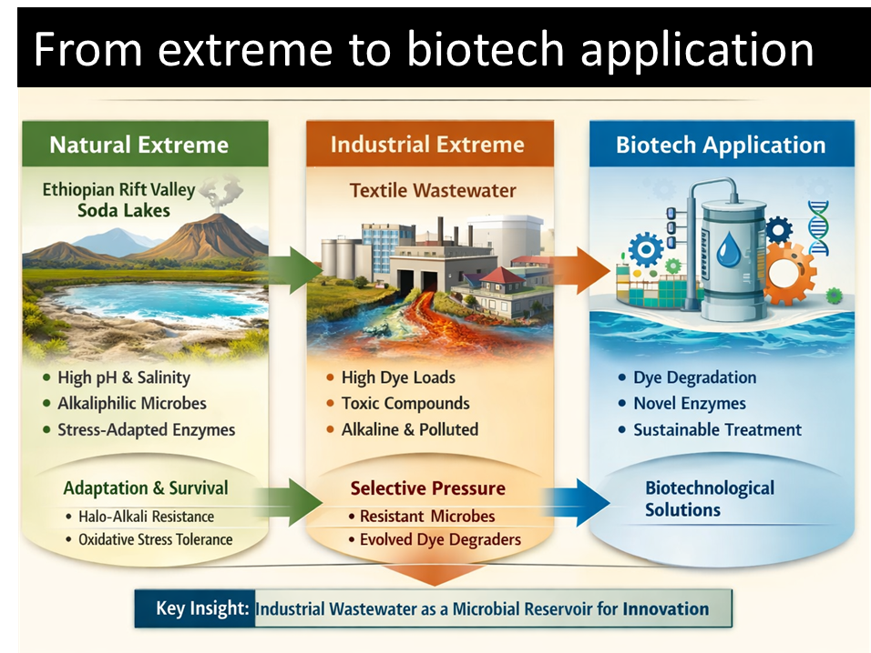
- It is alkaline and saline,
- caustic and other detergents of an alkali nature are used in large quantities.
- It is a challenge for the standard biological treatment process.
- Most MOs grow around neutral pH.
Alkaliphiles
- Adapted to grow under alkaline conditions.
- Have several adaptive response mechanisms in complex chemical mixtures.
- Diverse group of MOs
- Huge potential in the Ethiopian rift valley soda lakes

Dr. Tadele Assefa Aragaw
(She/Her)
Researcher, Bahir Dar University
Follow the Topic
Bioremediation
Physical Sciences > Chemistry > Industrial Chemistry > Chemical Bioengineering > Industrial Microbiology > Bioremediation