Horses, Sensors, and CO₂ Spikes: Can We Monitor Manure in Real Time?
Published in Agricultural & Food Science and Zoology & Veterinary Science
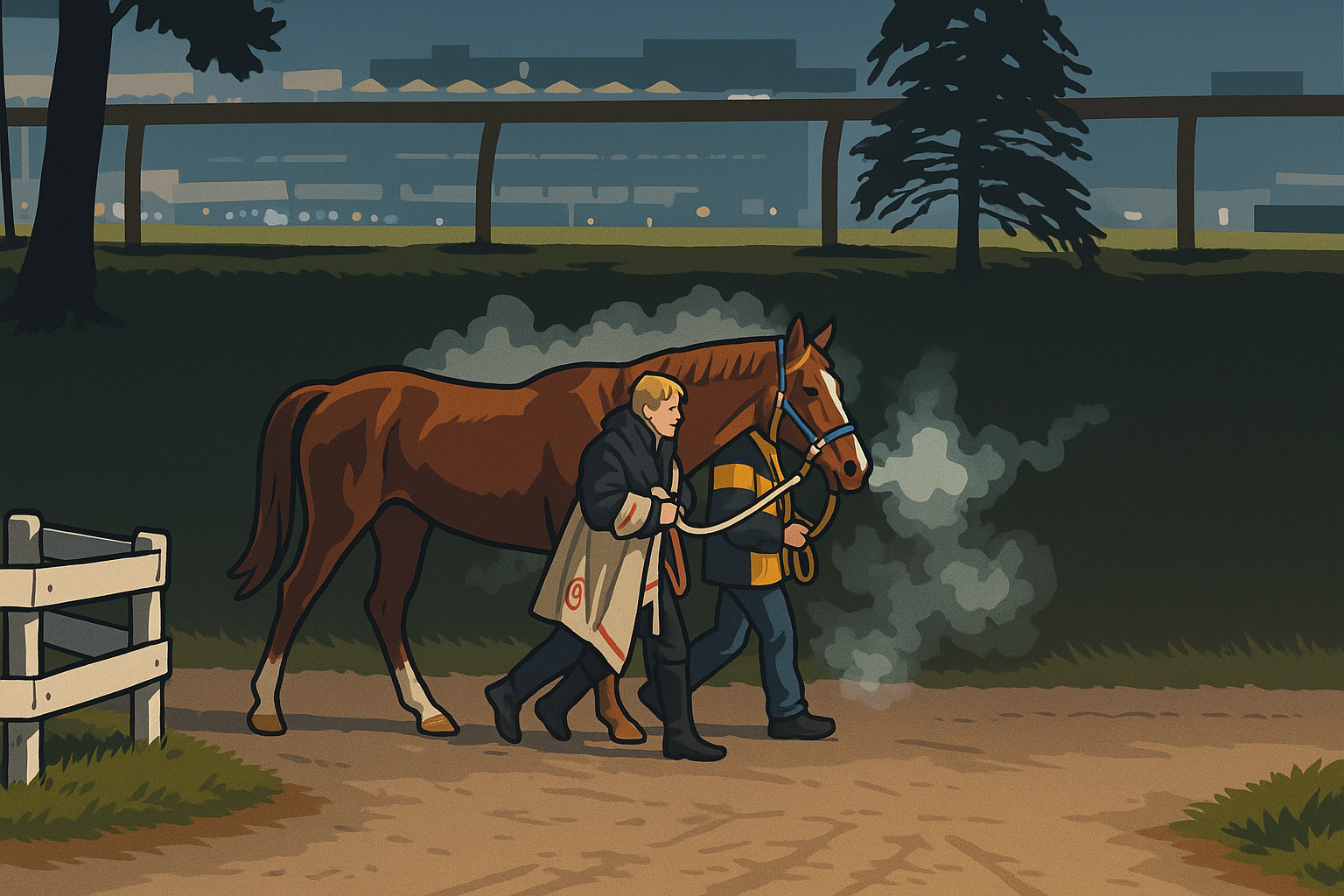





Can wearable CO₂ and VOC sensors detect defecation and urination events in horses? A new study puts it to the test
Published in Dairy Science and Management
June 2025
In a world increasingly driven by data and precision agriculture, the idea of using wearable sensors to monitor livestock behavior has great appeal—especially for tracking manure emissions, which are both an environmental concern and a management challenge. A recent study by Wright et al. (2025) took a novel approach: placing open-source gas sensors on horses’ tailheads to detect spikes in CO₂ and volatile organic compounds (VOCs) during defecation and urination events.
The Study at a Glance
Researchers monitored four horses in a barn setting over nine days, collecting gas sensor data and validating emission events through video observation. They then applied machine learning models—including Random Forest, Support Vector Machine, and Extreme Gradient Boosting—to determine whether the sensor data could accurately predict these events.
What They Found
-
CO₂ and VOC spikes often coincided with defecation and urination—but also occurred during unrelated behaviors, introducing significant noise.
-
Machine learning algorithms struggled to accurately classify events, especially with such imbalanced data (only a small fraction of timepoints involved actual emissions).
-
Even after testing oversampling, undersampling, and model tuning, predictive performance remained low.
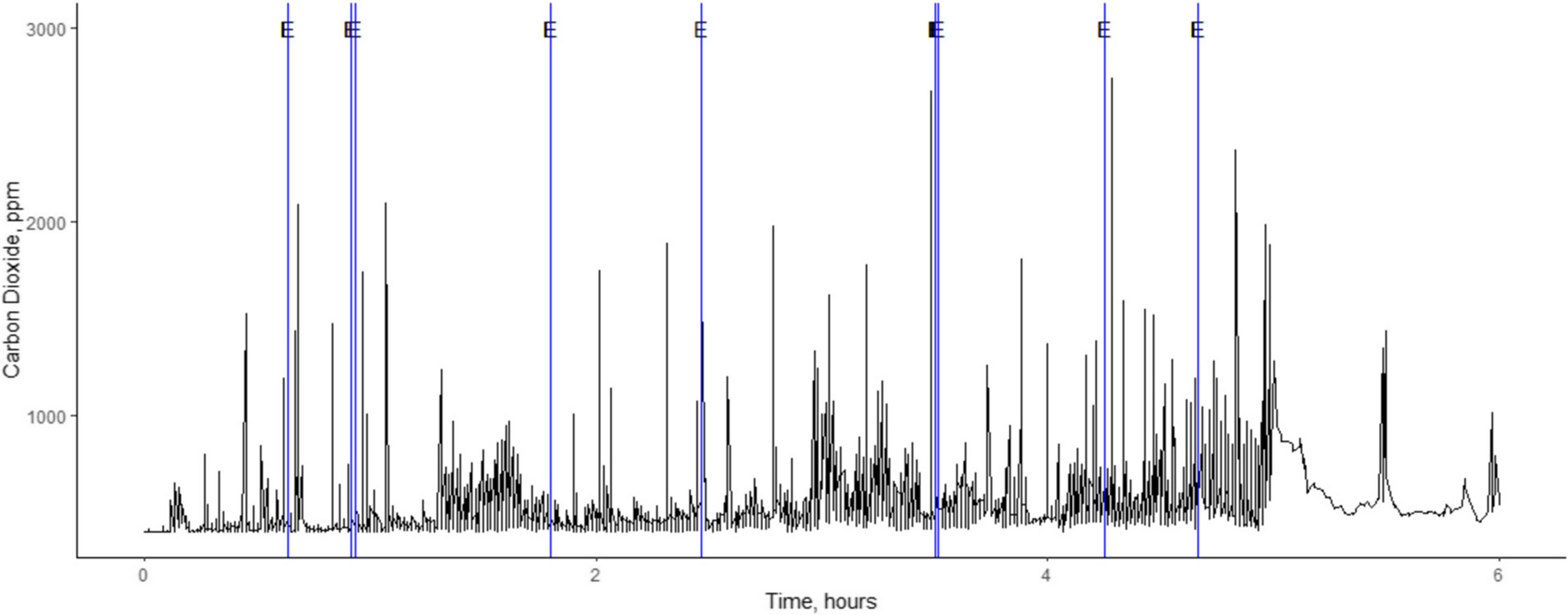
This figure shows CO₂ concentration readings from one horse over a single day. Spikes marked with vertical lines represent confirmed defecation or urination events. While some CO₂ peaks align with these events, many other peaks occur independently—highlighting the challenge of accurately detecting manure events based on gas concentrations alone.
*Figure 3 from Wright et al. (2025), Dairy Science and Management. Shared under CC BY-NC-ND 4.0. https://doi.org/10.1186/s44363-025-00003-z
Why It Matters
This study underscores both the promise and limitations of low-cost, open-source sensing technologies for behavior-based environmental monitoring in livestock. While there’s clear potential, the data show that simply detecting gas spikes is not enough—especially in complex barn environments where other sources of CO₂ may interfere.
Looking Ahead
Wright et al. suggest future research should:
-
Explore multi-sensor approaches (e.g., combining motion, gas, and temperature data)
-
Move experiments into open pastures, where environmental noise may differ
-
Consider edge computing strategies to reduce the data burden and improve real-time detection
Full Paper
Wright, R.K., Ganino, A. & White, R.R. Open-source carbon dioxide and volatile organic compound sensing and associations with defecation and urination events in horses. Dairy Sci. Manag. 2, 2 (2025). https://doi.org/10.1186/s44363-025-00003-z

I’m a vet epidemiologist and infodemiologist, basically a disease detective with Wi-Fi 😁, on a mission to use AI 🤖 to outsmart outbreaks before they even RSVP to the party 🎉🦠.
Follow the Topic
-
Dairy Science and Management
This is an open access peer-reviewed journal that aims to publish innovative research about the management of dairy animals, the production of dairy products and the related food security considerations.

Related Collections
With Collections, you can get published faster and increase your visibility.
Climate change and dairy: strategies for thermotolerance, methane reduction and sustainable grazing
Dairy production is not only vital for global food security but also significantly contributes to greenhouse gas (GHG) emissions, particularly methane. By focusing on strategies for thermotolerance, methane reduction, and sustainable grazing, we can enhance the resilience of milk cattle and ensure the sustainability of dairy systems in the face of climate challenges. Climate change poses a formidable threat to agricultural productivity, particularly in regions where dairy farming is a cornerstone of rural economies. Uniting four journals and scientific communities, this Collection is a part of the Climate Change and Livestock super Collection which highlights innovative, climate-smart approaches to safeguarding animal health and welfare across aquaculture, porcine, dairy and poultry.
Improving our understanding of thermotolerance in dairy animals can lead to better management practices that enhance animal welfare, productivity, and ultimately, food security. Research into dietary interventions and feed additives has shown promise in reducing methane emissions from enteric fermentation, highlighting the potential for improved feed efficiency and reduced environmental impact. Genetic selection for thermotolerant traits could become more sophisticated, enabling the development of breeds that are better adapted to a changing climate. Additionally, innovative approaches to grazing management, such as agroforestry systems and rotational grazing, could further enhance the sustainability of dairy production while promoting carbon sequestration. In light of these considerations, we invite researchers to contribute to this special Collection by submitting original research articles and reviews. Topics of interest include but are not limited to:
- Strategies for enhancing thermotolerance in dairy cattle
- Innovative practices in grazing management
- Methane reduction techniques in dairy farming
- The impact of climate change on dairy productivity
- Genetic selection for climate resilience in dairy animals
- Sustainable feed practices for reduced GHG emissions
- Economic implications of climate-smart dairy practices
- Policy frameworks supporting sustainable dairy management
This Collection supports and amplifies research related to SDG 13: Climate Action and SDG 15: Life on Land.
All submissions in this Collection undergo the journal’s standard peer review process. Similarly, all manuscripts authored by a Guest Editor(s) will be handled by the Editor-in-Chief. As a newly launched open access publication, this journal has waivers to cover article-processing charges (APCs). For more information about receiving a waiver, please contact alex.waite@springernature.com before submitting a manuscript. For additional support please visit OA funding and support, or email OAfundingpolicy@springernature.com or the Editor-in-Chief.
Publishing Model: Open Access
Deadline: Feb 15, 2027