How Organizational Change and Vocational Skills Development Shape Productivity in Ethiopia’s Textile and Garment Industry
Published in Sustainability, Business & Management, and Economics


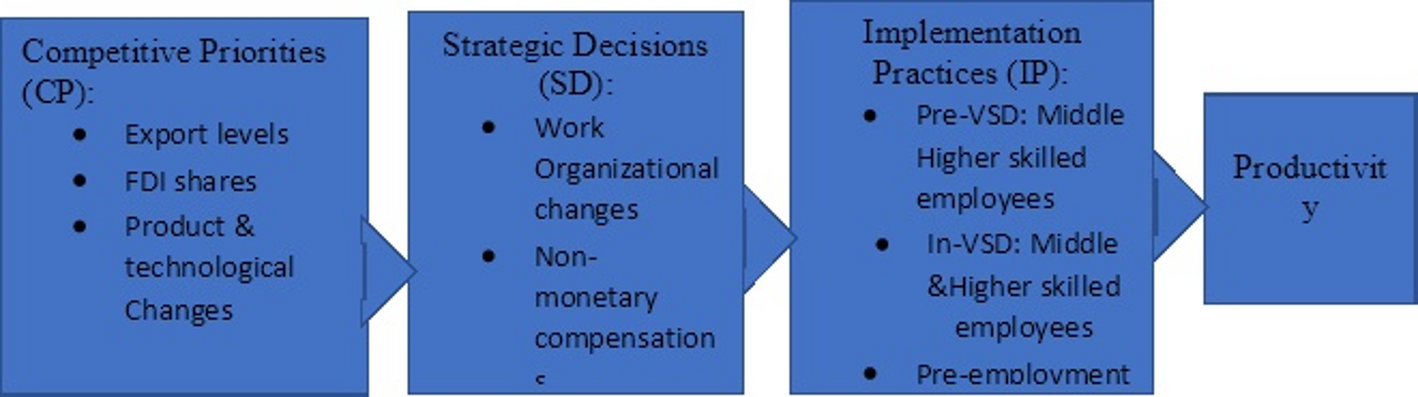

Ethiopia’s textile and garment industry has been positioned as a cornerstone of the country’s industrialization strategy, with strong emphasis on employment creation, export promotion, and structural transformation. Over the last decade, significant investments have been made in industrial parks, vocational education and training (TVET), and firm-level capacity building. Yet, productivity performance across the sector remains uneven. This puzzle formed the starting point of our research.
Our study, “The Role of Organizational Change and Vocational Skills Development Programs in Enhancing Productivity in Ethiopia’s Textile and Garment Industry,” seeks to understand why skills development initiatives do not always translate into higher productivity, and what role organizational change plays in bridging this gap.
Why this research matters
Much of the existing policy discourse assumes that productivity challenges in developing-country manufacturing stem primarily from skills shortages. As a result, vocational training programs are often promoted as a standalone solution. However, during field engagement and prior empirical work, we observed that firms receiving similar training interventions showed very different productivity outcomes. This raised a critical question: are skills enough on their own, or do firms need organizational transformation to effectively utilize those skills?
This question is particularly important in labor-intensive sectors such as textiles and garments, where productivity depends not only on worker competence, but also on production organization, management systems, workflow coordination, and incentive structures.
What we did
Using firm-level data collected from 64 textile and garment industries operating in Ethiopia, we examined the relationship between productivity, vocational skills development programs, and organizational change. The dataset captures key structural and operational characteristics, including firm size and age, workforce training initiatives, organizational improvements, compensation practices, and export behavior.
Methodologically, the study combines descriptive analysis with econometric modeling to isolate the effects of skills development and organizational change on productivity. This allowed us to go beyond surface correlations and assess how these factors interact within firms.
What we found
One of the central findings of our study is that vocational skills development alone is not sufficient to drive sustained productivity growth. Training programs produce stronger and more consistent productivity gains when they are accompanied by organizational change. Firms that invested in restructuring workflows, improving management practices, and adopting internal organizational reforms were better able to convert skills into measurable performance improvements.
We also found that organizational change acts as a critical enabling mechanism. In firms where production processes remained rigid or management systems weak, newly acquired skills were underutilized. In contrast, firms that embraced organizational improvements—such as clearer task allocation, performance monitoring, and incentive alignment—experienced higher productivity outcomes from the same training investments.
Another important insight concerns firm heterogeneity. Larger and more established firms tended to benefit more from skills development programs, largely because they had stronger organizational capacity to absorb and deploy new knowledge. Smaller and younger firms, while equally motivated, often lacked the managerial and structural foundations required to fully leverage training interventions.
Challenges behind the research
Conducting firm-level research in a developing-country industrial context comes with practical challenges. Access to reliable productivity data required extensive engagement with firm managers, and in some cases, trust-building to overcome concerns about data confidentiality. Additionally, the broader economic and institutional environment added complexity to data collection and analysis.
These challenges, however, reinforced the importance of empirical evidence grounded in firm realities. Understanding how policies and programs operate at the enterprise level is essential for designing interventions that work in practice, not just on paper.
Implications for policy and practice
The findings of this study have clear implications for policymakers, development partners, and industry stakeholders. Skills development initiatives should be designed and implemented alongside organizational development strategies. TVET institutions, firms, and policymakers need stronger coordination to ensure that training content aligns with firm-level production systems and organizational needs.
Rather than viewing training as a one-off intervention, firms should institutionalize continuous learning within adaptable organizational structures. For policymakers, this means complementing training investments with support for management development, organizational diagnostics, and firm-level transformation programs.
Looking ahead
Future research could build on this work by examining longitudinal productivity effects, comparing organizational change dynamics across manufacturing subsectors, or exploring how export participation moderates the training–productivity relationship. As Ethiopia continues to pursue industrial transformation, evidence-based approaches that integrate human capital development with organizational reform will be increasingly vital.
At its core, this research highlights a simple but often overlooked lesson: skills drive productivity only when organizations are prepared to use them effectively

Follow the Topic
-
Discover Sustainability
A multi-disciplinary, open access, community-focussed journal publishing results from across all fields relevant to sustainability research whilst supporting policy developments that address all 17 of the United Nations Sustainable Development Goals (SDGs).

What are SDG Topics?
An introduction to Sustainable Development Goals (SDGs) Topics and their role in highlighting sustainable development research.
Continue reading announcementRelated Collections
With Collections, you can get published faster and increase your visibility.
Food, Societies and Sustainability: Contemporary Concerns around Local Food Production and Consumption
Food goes far beyond nutrition. It reflects sociocultural identities and territorial heritage, consumption dynamics, economic development, public policies, sustainability concerns, food production, distribution and consumption. Understanding food production and food products, practices and strategies offers key insights into both historical traditions and contemporary lifestyles. Around the world, food and drink serve as powerful symbols of identity and attract interest through diverse value chains, economic interests and cultural expressions. On the other hand, traditional and local food systems contribute to cultural heritage, biodiversity conservation and sustainability matters from environmental, sociocultural and economic concerns.
The Collection "Food, societies and sustainability: Contemporary concerns around local food production and consumption" explores how food is locally produced, promoted and protected through public and private initiatives, food-based experiences, media platforms, and sustainable dietary and productive practices. It encourages contributions that examine how food concerns are shaped in contemporary societies, how globalization is affecting local food cultures, emphasizing the role of food as both tangible and intangible cultural heritage. Food preferences, food stereotypes, and attitudes towards food sustainability, analysed through the lenses of generational gaps and gender differences are also welcomed. This Collection seeks original research and case studies using both qualitative and quantitative methods.
Keywords: Food Systems, Food culture, Food Production, Locality, Heritage, Tourism, Gastronomy, Agricultural Biodiversity, Livestock Biodiversity, Food Sustainability, Regenerative Tourism.
This Collection supports and amplifies research related to SDG 2, SDG 3, SDG 4, SDG 5, SDG 10, SDG 12, and SDG 17.
Publishing Model: Open Access
Deadline: Sep 30, 2026
Weather and Climate Extremes: A Special Reference to Multidisciplinary Research and Policy Developments
This Collection, titled "Weather and Climate Extremes: A Special Reference to Multidisciplinary Research and Policy Developments," focuses on the increasing global challenges posed by extreme weather events and climate phenomena. As these events intensify due to changing climate patterns, their impacts on ecosystems, infrastructure, human health, and socioeconomic systems become more pronounced, necessitating a multidisciplinary approach to understanding and addressing these complexities.
The Collection aims to bring together research from diverse fields, including atmospheric sciences, hydrology, ecology, engineering, public health, and social sciences. It encourages innovative contributions that explore cutting-edge solutions to predict, manage, and mitigate the effects of climate extremes. Topics may include advanced modelling techniques, nature-based solutions, climate-resilient infrastructure, risk assessment frameworks, and strategies for equitable policy development. The emphasis is placed on integrating scientific understanding with actionable solutions that address vulnerability, resilience, and adaptation.
Moreover, this Collection seeks to foster cross-disciplinary collaborations to bridge the gap between scientific research and policy implementation. By highlighting case studies, theoretical advancements, and practical approaches, it aims to advance the dialogue on climate resilience and inform decision-making processes globally. This platform aspires to serve as a critical resource for researchers, practitioners, and policymakers striving to navigate the escalating challenges of a changing climate.
Given the increasing frequency and intensity of climate extremes, this topic holds critical importance. Such extremes profoundly affect ecosystems, infrastructure, and human livelihoods, demanding coordinated efforts across disciplines to analyse risks, develop mitigation strategies, and inform policy. This Collection seeks to bring together cutting-edge research and innovative approaches from diverse fields, bridging scientific understanding and actionable policy frameworks. The proposed focus areas include, but are not limited to:
• Advances in modelling and forecasting weather and climate extremes
• Impacts on ecosystems, agriculture, water resources, and public health
• Nature-based solutions and climate-resilient infrastructure
• Interdisciplinary frameworks for risk management and adaptation planning
• Policy advancements addressing vulnerability, resilience, and equity
This call aims to engage a broad community of researchers, practitioners, and policymakers to enhance global discourse and support evidence-based decision-making by emphasising multidisciplinary contributions.
This Collection supports and amplifies research related to SDG
Keywords: Weather Extremes Modeling; Climate Change Impacts; Risk Assessment Frameworks; Nature-Based Solutions (NbS); Resilient Infrastructure Design; Equitable Policy Development; Interdisciplinary Climate Research; Adaptation and Mitigation Strategies; Socioeconomic Vulnerability Analysis; Extreme Event Forecasting
Publishing Model: Open Access
Deadline: Feb 28, 2027