I Don't Mind Dying, as Long as I Live First
Published in Healthcare & Nursing, Social Sciences, and Neuroscience
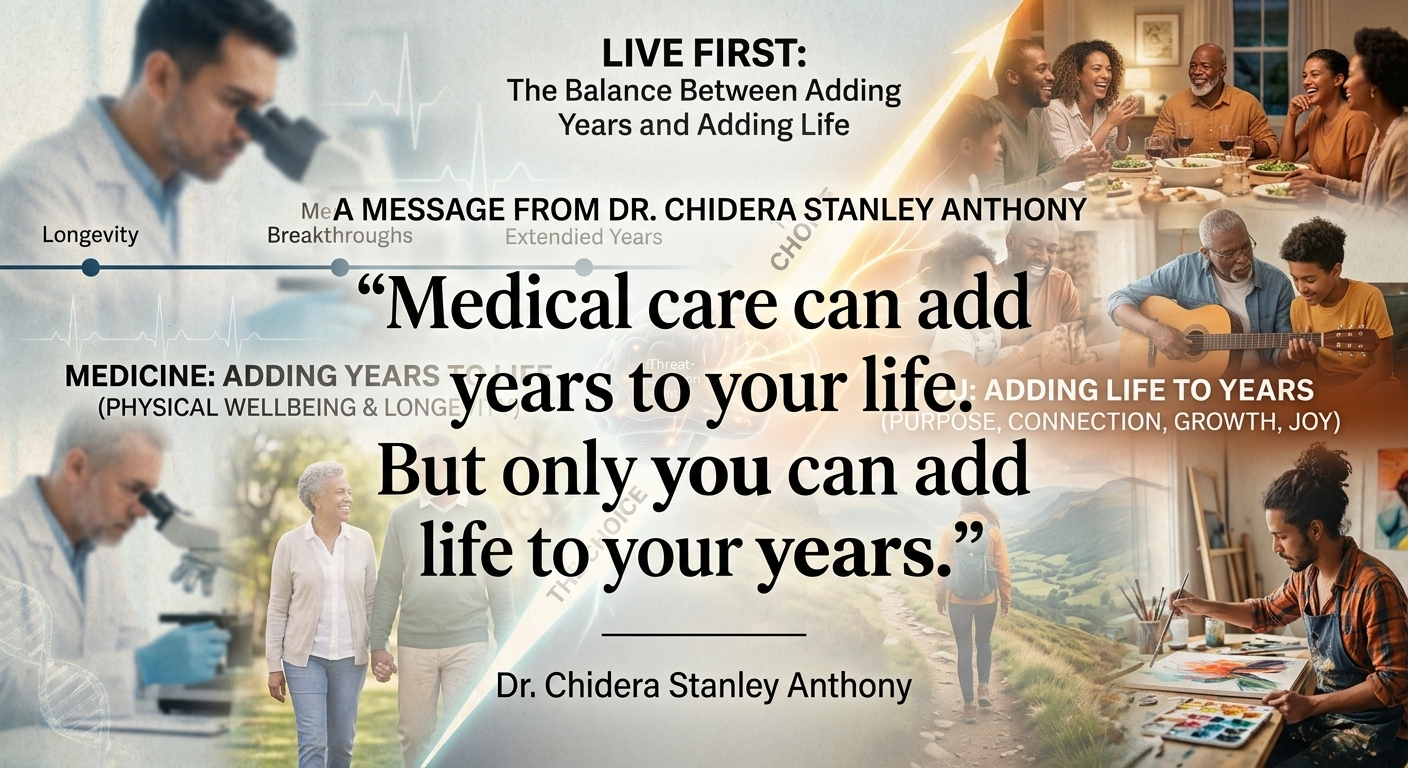
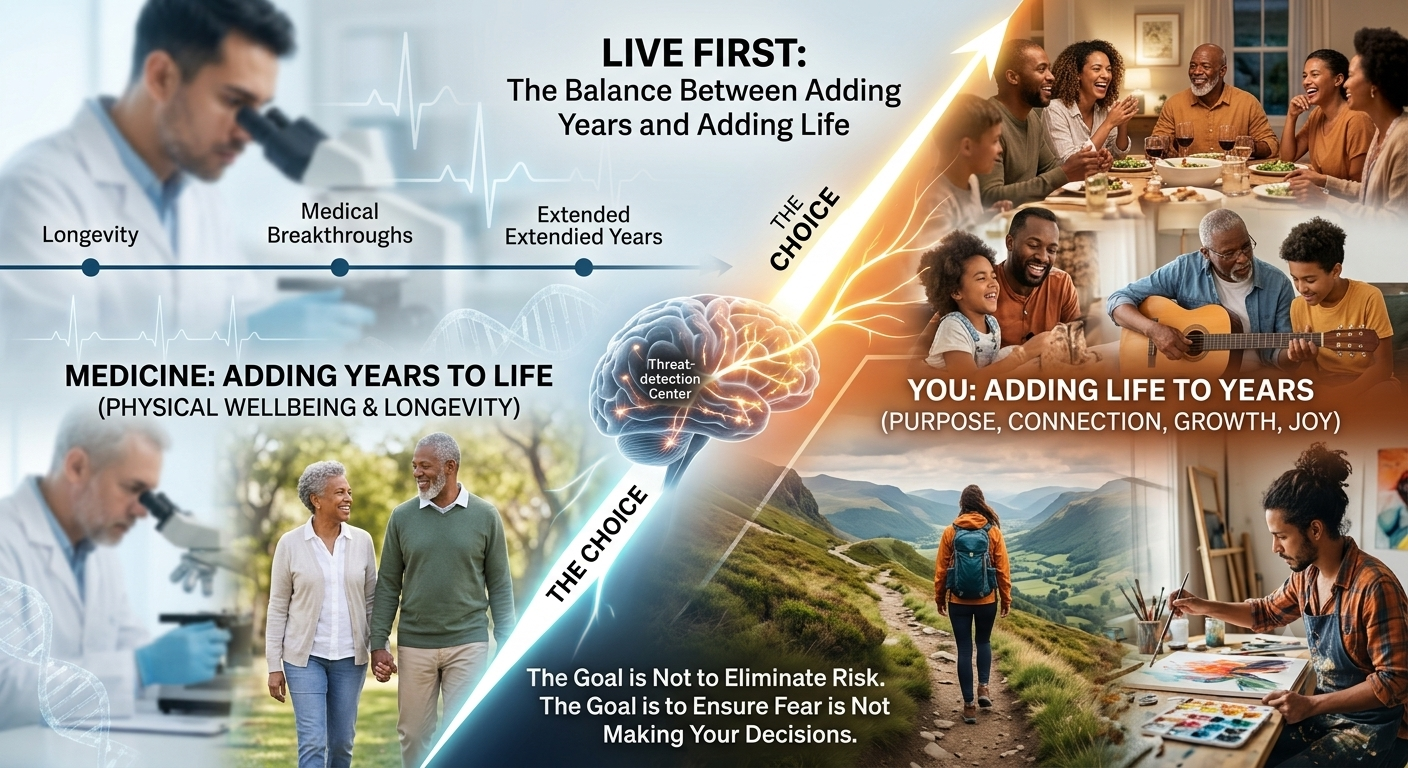
Medicine can add years to your life. But only you can add life to your years.
Every one of us is born with the same diagnosis.
It is not diabetes. It is not heart disease. It is not cancer.
It is mortality.
As both a medical doctor and researcher, no physician, scientist, or breakthrough treatment has ever changed that fact. Modern medicine has achieved remarkable things. We can replace failing hearts, transplant kidneys, eliminate infections that once devastated populations, and help people live longer than previous generations ever imagined. Yet despite all our progress, one certainty remains: every life has an ending.
Oddly enough, this is not the thought that troubles most people.
What troubles us is the possibility of suffering, failing, losing, being rejected, making the wrong decision, or stepping into uncertainty. We become so preoccupied with protecting ourselves from life's risks that we unintentionally protect ourselves from life itself.
In trying not to die, we sometimes forget to live.
Your Brain Is Doing Exactly What It Was Designed to Do
If you've ever chosen familiarity over opportunity or remained in a situation that no longer brought you joy simply because it felt safe, you're not weak. You're human.
The human brain is designed to keep us alive, not necessarily fulfilled.
Deep within the brain, structures involved in threat detection constantly scan our surroundings for danger. Whether the threat is physical or emotional, the body often responds in surprisingly similar ways. Stress hormones rise, the heart beats faster, muscles tense, and attention narrows. These reactions are lifesaving during genuine emergencies.
The problem is that our brains cannot always distinguish between a charging predator and an uncomfortable conversation, a career change, starting a business, or allowing ourselves to be vulnerable in a relationship.
Over time, many of us begin organizing our lives around avoiding discomfort rather than pursuing meaning.
The result is a life that feels safe but strangely small.
Survival mode is an extraordinary biological response.
Living in it permanently is another story.
Persistent psychological stress has been linked to anxiety, depression, poor sleep, cardiovascular disease, weakened immune function, and burnout. While caution can protect us from immediate harm, chronic fear slowly erodes both physical and emotional well-being.
Many people spend years waiting for the perfect moment.
When work becomes easier.
When they have more money.
When they feel more confident.
When life finally feels certain.
Yet certainty rarely arrives.
Life has never promised smooth roads. It has only promised movement.
The irony is that the safest life is not always the healthiest one.
A life without challenge can gradually become a life without growth. We mistake comfort for peace and routine for fulfillment, even when our minds quietly long for something more.
Healthcare professionals who care for people nearing the end of life often witness a remarkable shift in perspective.
Patients rarely spend their final days wishing they had answered more emails, accumulated more possessions, or avoided every difficult decision.
Instead, many speak about relationships they neglected, dreams they postponed, forgiveness they withheld, or experiences they convinced themselves they would pursue "someday."
These reflections remind us of an important distinction.
There is a difference between extending life and living it.
Medicine strives to preserve life because life is precious. But preserving life was never meant to become the same as postponing it.
A long life without meaning can feel unexpectedly short.
A meaningful life, even when imperfect, often feels remarkably full.
Health Is More Than the Absence of Disease
For decades, healthcare has increasingly recognized that health is not defined solely by laboratory results or the absence of illness.
Purpose matters.
Relationships matter.
Movement matters.
Laughter matters.
Curiosity matters.
Research continues to show that meaningful social connections, regular physical activity, lifelong learning, and a sense of purpose are associated with better mental and physical health (Holt-Lunstad et. al., 2010; Hill et. al., 2014; Sakal et. al., 2026; Zammit et. al., 2026). These experiences influence how we think, cope with stress, and even how our brains adapt throughout life.
Living fully is not the opposite of taking care of your health.
It is part of taking care of your health.
This does not mean being reckless.
It means understanding that avoiding every possible disappointment also means avoiding many of life's greatest joys.
Every meaningful achievement carries uncertainty.
Every deep relationship carries vulnerability.
Every worthwhile dream carries the possibility of failure.
The goal is not to eliminate risk.
The goal is to ensure that fear is not the one making your decisions. Perhaps one of the healthiest questions we can ask ourselves is surprisingly simple:
What would I do if I were trying to build a life instead of merely protect one?
Maybe you would finally have the difficult conversation.
Maybe you would reconnect with an old friend.
Maybe you would start exercising because you want more energy rather than simply avoiding disease.
Maybe you would learn a new skill, volunteer, travel, create something, or finally pursue the idea that has lived quietly in your mind for years.
None of these guarantees success.
But all of them increase the chances that your life becomes richer, not merely longer.
The body benefits from movement.
The brain benefits from challenge.
The heart benefits from connection.
And the human spirit benefits from purpose.
Death is life's inevitable conclusion.
One day, every one of us will look back over our lives. The question will not simply be how many years we lived, but how fully we inhabited those years.
Did we love generously?
Did we remain curious?
Did we forgive?
Did we grow?
Did we spend more time collecting meaningful moments than collecting reasons to wait?
Modern medicine will continue helping us live longer, and that is something to celebrate.
But longevity is only half of the equation; the other half belongs to us.
So take care of your body.
Protect your health.
Plan for the future.
But don't postpone your life until everything feels perfectly safe.
Because the finish line was never the point.
Living was.
I don't mind dying, as long as I live first.

ECFMG-certified medical doctor with research interest in internal medicine, Pediatrics, Neuropsychiatry, and Public Health.
I also play the guitar and can beat anyone in the game of Chess 🙂 ♟️
Associate Editor at Frontiers Journal: https://loop.frontiersin.org/people/2787458/editorial
Editor at Klarity, UK: https://my.klarity.health/author/stanley-anthony-chidera/

Please sign in or register for FREE
If you are a registered user on Research Communities by Springer Nature, please sign in