I Put Down My Pipette and Picked Up a Mouse
Published in Chemistry and Mathematical & Computational Engineering Applications


Around 2023, I first encountered several generative artificial intelligence (AI) systems and tested them using examples from my past research. These included the microbial natural product TMG-chitotriomycin and the engineered peptide-bond-forming enzyme aminolysin.
Their answers were fluent and detailed, but wrong. The systems combined facts and inventions so smoothly that readers unfamiliar with these studies might not have noticed. I could tell because I had done these experiments myself. I was stunned. And I decided that AI was almost useless for scientific research and nothing more than a “convincing liar”.
Why did I react so strongly?
I Was a Scientist Who Got It Wrong
My career as a scientist started more than 20 years ago, when I was a doctoral student studying natural product chemistry. At that time, I screened fermentation broths for active principles. The discovery of unknown compounds felt, to me, like revealing the secrets of nature. TMG-chitotriomycin was the research topic of my doctoral dissertation. I isolated this compound, examined its enzyme-inhibitory activity, proposed its structure, and named it. Nevertheless, part of the structure I proposed was wrong, and another research team later revised it through total synthesis. I still remember the complex emotions I felt at that time: frustration at my mistake and gratitude for finally seeing the true face of TMG-chitotriomycin.
After my PhD, I dreamed of producing useful chemicals myself rather than merely discovering them. Therefore, I went on to the field of protein engineering. I examined whether a peptide-bond-hydrolyzing enzyme could be converted into a peptide-bond-forming enzyme. In this process, I repeatedly hypothesized about the functional conversion of a peptide-bond-hydrolyzing enzyme, mutated it, measured its activity, and redesigned it. As a result, I generated a new peptide-bond-forming enzyme, aminolysin.
I loved this cycle. Nature routinely ignored my predictions, but failures always contained valuable information. Unexpected results made me consider which hypothesis was wrong and what should be changed in the next step.
After several years, I left the bench and wet-lab research.
For me, leaving the bench felt like more than the simple loss of a workplace. I missed the uncertainty of experiments, the physical sensation of the presence of samples and experimental instruments, and the thrill that a single result might overturn all of my predictions. For a long time, even though leaving the bench had been my own decision, I was made to feel that I was no longer an experimental scientist because I had no position in a laboratory.
My first contact with generative AI made me feel that loneliness and regret more strongly. Confident but wrong answers from AI seemed to confirm my doubt. That is, AI could not be trusted for serious scientific research. I shut down the window, and my motivation to use it again disappeared.
However, the performance of AI improved dramatically in a few years, and active researchers were becoming interested in the possibilities of these AI systems. Eventually, I retested AI, and then questions came to me.
Can the judgment I developed through wet-lab research be useful in emerging AI-related fields? Furthermore, is the use of AI itself a form of experimentation?
The Rhythm I Loved, Again
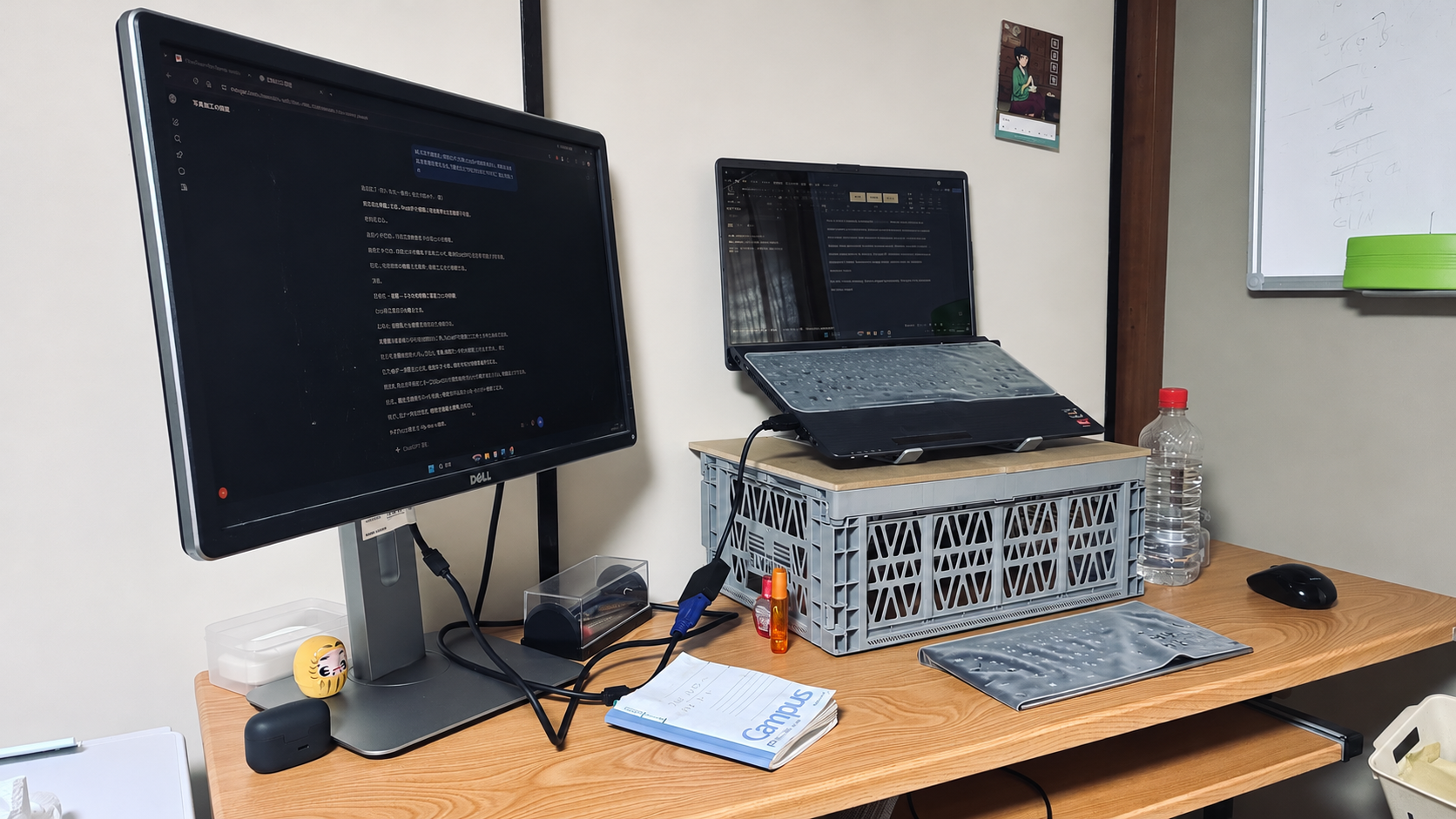
Now, I serve as a Scientific Consultant for Licklider, Inc., which develops software for AI-assisted research. As a scientist with experience in wet-lab research, I examine how our original tool can be effectively used, and I support its development. In this work, I actively use large language models and critically evaluate their outputs myself. Notably, my current work has a rhythm long familiar to me. In the past, I changed pH, substrate concentrations, and amino acid sequences at the bench, whereas now I change prompts, reference texts, and validation workflows in silico.
One day, I realized something: I had not stopped experimenting. The target of my experiments had simply changed.
The Bench Was My Teacher
Wet-lab experience is important for my present job.
It should be noted that AI has never watched a clear protein solution become cloudy after a change in conditions. It has also never struggled with the separation of two almost identical compounds. Furthermore, AI models sometimes overlook detailed experimental conditions, misunderstand what an assay actually measures, and provide seemingly elegant methods that may not work in the laboratory. These errors are more easily spotted by researchers with wet-lab experience who know the messy reality of experiments.
My initial skepticism about AI is now useful. If appropriately disciplined, this skepticism is one of my strengths in this job. I do not treat the outputs of AI as answers to be accepted at face value. Instead, I treat them as results to be evaluated.
Testing an AI system is not the same as conducting a biochemical experiment because AI cannot replace real-world validation. However, the habits developed through wet-lab research, that is, questioning what appears to be true, comparing results under controlled conditions, analyzing failures, and practicing KAIZEN, are absolutely essential for the evaluation of AI.
This is the most important realization for me after leaving the laboratory. Skills and abilities acquired in the laboratory remain even when the instruments used are changed. Furthermore, an identity as a scientist can persist outside a conventional academic career.
I put down my pipette and picked up a mouse.
Nevertheless, when unexpected outputs appear on the screen, I still ask myself the same questions that I asked at the bench.
Why did this phenomenon occur?
Which hypothesis was wrong?
What should be changed next?
It is not that AI made me a scientist again. I have never stopped thinking like one.
AI-use disclosure
I used ChatGPT as a sounding board to test and refine my ideas and to assist with English-language editing. I reviewed and revised the text and take full responsibility for the final content. I also used ChatGPT to edit the accompanying photograph, including removing stains from the wall.


